
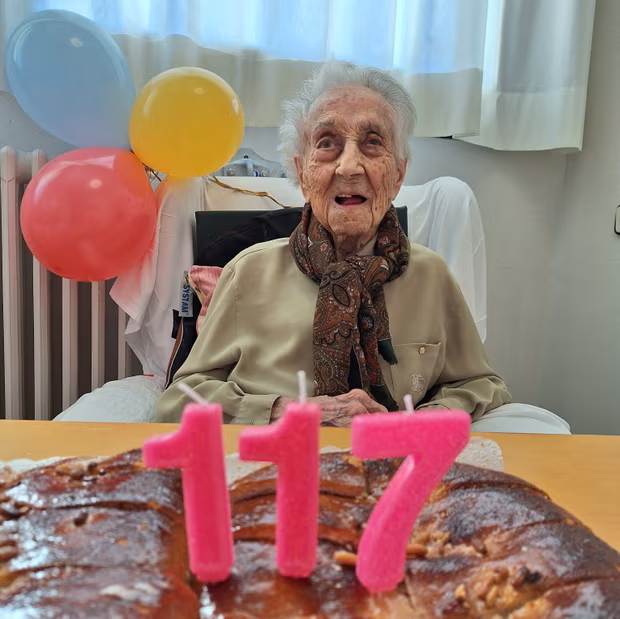
Maria Branyas Morera, the world’s oldest living person before her passing at age 117 in August 2024, attributed her longevity to “luck and good genetics” — a belief now backed by science. A study conducted on her microbiome and DNA before her death has confirmed that her genetic makeup allowed her cells to function as if they were 17 years younger than her actual age.
Led by genetics professor Manel Esteller of the University of Barcelona, the research revealed that Branyas’s microbiota — the bacteria in the gut that play a crucial role in overall health — closely resembled that of an infant. The study, first reported by the Catalan newspaper Ara, provided unprecedented insight into the biological advantages of so-called supercentenarians, those who live to be 110 or older.
Branyas remained mentally sharp until the very end of her life, with only minor health issues such as joint pain and hearing loss. Researchers highlighted her disciplined lifestyle, which helped her maximize her genetic advantages. She followed a Mediterranean diet, including three yogurts daily, abstained from alcohol and smoking, took regular walks, and surrounded herself with family and loved ones. These habits likely contributed to her extraordinary longevity, reinforcing the idea that aging does not necessarily have to mean a decline in health.
The findings challenge the traditional link between aging and disease, offering valuable insights for future medical treatments targeting age-related illnesses. Researchers hope Branyas’s case will help shape new approaches to extending healthy lifespans.
Born in San Francisco on March 4, 1907, to Spanish and Mexican parents, Branyas spent parts of her early life in Texas and New Orleans before her family returned to Spain in 1915. Over the next century, she witnessed major historical events, including the Spanish Civil War, both World Wars, and the 1918 flu pandemic. In 2020, she survived Covid-19 during Spain’s devastating early outbreak, recovering with no symptoms.
Branyas gained global recognition in January 2023 when she was confirmed by Guinness World Records as the world’s oldest person following the death of French nun Lucile Randon at age 118. Reflecting on her remarkable life, she once credited her longevity to “order, tranquility, good connections with family and friends, contact with nature, emotional stability, no worries, no regrets, lots of positivity, and staying away from toxic people.”
A widowed mother, grandmother, and great-grandmother, Branyas spent her final two decades at a nursing home in Olot, northeastern Spain, where she passed away on August 19, 2024. As of now, Brazil’s Inah Canabarro Lucas, 116, holds the title of the world’s oldest living person, according to longevity research organization LongeviQuest.