
A recent UK Supreme Court ruling connected to Northern Ireland’s post-Brexit human rights framework could have far-reaching consequences for future legal debates over gender identity and the legal definition of a woman in Northern Ireland.
The judgment, delivered in a case concerning the British government’s controversial Troubles legacy legislation, clarified the limits of using Article 2 of the Windsor Framework to challenge UK laws on human rights grounds. While the Labour government had abandoned the previous Conservative administration’s immunity plan for some Troubles-era crimes, it still sought judicial clarification on the scope of Article 2 — a provision designed to protect certain rights in Northern Ireland after Brexit.
Article 2 commits the UK to ensuring that rights protected under EU law in Northern Ireland are not weakened following Britain’s exit from the European Union. Since coming into effect in 2021, it has been used in legal challenges involving abortion, immigration, and legacy issues connected to the Troubles.
In its latest decision, the Supreme Court ruled that Article 2 cannot be broadly applied to all human rights disputes and must instead be tied to “clear and precise” obligations derived from EU law. Legal experts say the ruling narrows the circumstances in which Northern Ireland courts can strike down or disapply UK legislation.
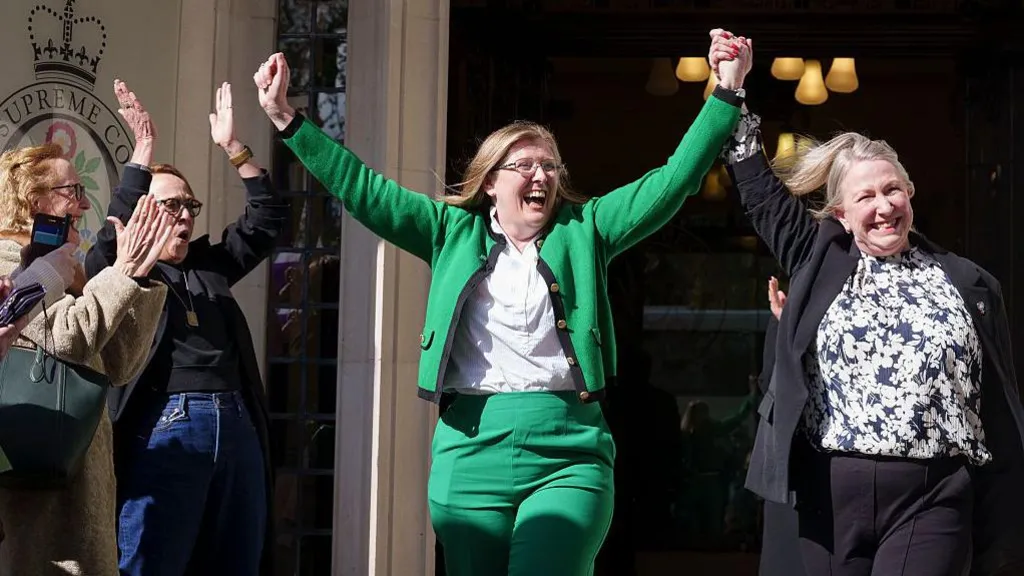
The judgment is now expected to influence an ongoing legal debate over whether the Supreme Court’s 2025 ruling defining a woman by biological sex under equality law should apply in Northern Ireland in the same way as in the rest of the United Kingdom.
That earlier ruling followed a challenge brought by campaign group For Women Scotland against the Scottish government’s position that transgender people with gender recognition certificates should receive the same sex-based protections as biological women. The Supreme Court ultimately ruled in favor of defining a woman according to biological sex under equalities legislation.
Northern Ireland’s Equality Commission is currently seeking guidance from the High Court on how that ruling should be interpreted locally, particularly because Northern Ireland remains subject to aspects of EU anti-discrimination law protected under the Windsor Framework.
Legal analysts remain divided over the implications. Some argue the Supreme Court’s latest ruling significantly restricts the ability to use Article 2 in future rights-based challenges, while others believe protections connected to sex and gender discrimination may still fall within the specific EU directives preserved in Northern Ireland after Brexit.