
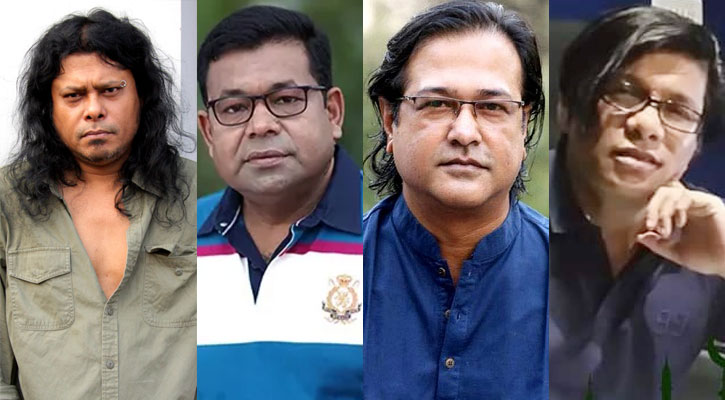
After nearly 16 years of cultural suppression, Bangladesh’s artists are finally regaining their rightful place in the country’s artistic and entertainment landscape. Under the previous administration, many musicians, actors, and cultural figures faced an unofficial ban from mainstream platforms due to their political affiliations or critical voices. With the change in leadership, the doors to artistic freedom are reopening.
A Song That Sparked a Ban
One of the most striking examples of artistic suppression was the banning of a song by legendary rock artist James. The song, penned by Prince Mahmud, paid homage to Bangladesh’s history, referencing the Language Movement, the Liberation War, and national figures. However, a single line mentioning “Shahid Zia’s dream” was enough for the Awami League government to sideline James from official events and state-run media for nearly 16 years.
This pattern of cultural exclusion was not limited to James. Other artists who were seen as having affiliations with the opposition, or who expressed dissent, faced similar consequences.
Censorship and Political Bias in the Arts
Prominent singer Monir Khan, famous for his song Anjana, was unable to perform on Bangladesh Betar, Bangladesh Television (BTV), or private channels during the Awami League’s rule. His political alignment with the Bangladesh Nationalist Party (BNP) resulted in an unofficial blacklisting that lasted over a decade.
Speaking to the media, Monir Khan expressed his frustration: “We, as artists, exist to entertain and empower people. But for 16 years, we were silenced simply because of our political beliefs. It was a painful time for us.”
Monir Khan finally returned to Bangladesh Betar in September 2024, where he recorded his first official song after more than a decade. His latest song, Swairachari Anjana (Tyrannical Anjana), written by Milton Khandakar and composed by Binod Roy, has been met with immense public enthusiasm.
A Long List of Suppressed Voices
Monir Khan was not alone in his struggle. Many celebrated musicians, including Asif Akbar, Baby Naznin, Kanak Chapa, Nazmun Munira Nancy, Ethun Babu, and Mausumi Chowdhury, faced similar exclusion from state-controlled platforms. Even legendary artists such as the late Shahnaz Rahmatullah and Bashir Ahmed were reportedly sidelined due to political biases.
Ethun Babu, a renowned lyricist and composer, saw his career take a hit despite his immense contributions to Bangla music. His song O Priya Tumi Kothay, performed by Asif Akbar in 2001, remains one of the most iconic Bangla pop songs. However, due to his affiliation with Jatiyatabadi Samajik Sangskritik Sangstha (JASAS), a cultural organization linked to BNP, Ethun Babu was blacklisted from the music industry.
“I have been one of the top music directors in this country, yet for 16 years, I was not allowed to work. Industry insiders were involved in blacklisting me. I challenge them to justify why I was not allowed on BTV for so long,” he stated.
His 2024 protest song Deshta Tomar Baper Naki gained traction during last year’s political movements, despite facing numerous attempts at suppression.
Silencing the Film Industry
The film industry also suffered under political bias. Many actors who did not align with the ruling party were deprived of opportunities. One such figure was actor Shiba Sanu, known for his roles in negative characters. He recalled being removed from a film co-produced by India’s Dev Entertainment Ventures and Bangladesh’s Shapla Media.
“Cinema is a reflection of society. But for years, political favoritism dictated who got opportunities. Many talented individuals were sidelined, and our industry suffered because of it.”
The Road to Cultural Revival
With the fall of the Awami League administration, artists are now reclaiming their rightful space. The new government has promised to ensure a nonpartisan cultural landscape where talent and creativity can thrive without political interference.
Latiful Islam Shibli, Director of the Nazrul Institute, emphasized the damage done: “For 16 years, culture was confined. Talent was stifled. We have lost nearly 50 years of progress in these past two decades.” He added that restoring artistic freedom is crucial for Bangladesh to regain its cultural prominence on the global stage.
Similarly, BNP’s Cultural Secretary and former film star Ashraf Uddin Ahmed Ujjal stated, “The Hasina government robbed artists of their rights for almost two decades. But today, we are once again free to express ourselves.”
As Bangladesh enters a new era, artists, musicians, and performers are hopeful that their voices will no longer be silenced. With renewed creative liberty, the nation’s cultural landscape is set to flourish once again.