

What can Bangladesh learn from past revolutions?
Bangladesh finds itself at a crossroads — this phenomenon, while unique in its local context, has parallels in global history. When students and inexperienced groups assume control of key decisions, the outcomes can be highly unpredictable, often leading to precarious situations for the nation. This is in relevance to the Bangladesh Student Revolution or insurgency, culminating in the ousting of the Awami League government from their 15 years of dominance on August 5, 2024, has triggered a massive shift in the country’s internal and external dynamics.
Before we predict the future of Bangladesh, Let’s dive at the past to understand what not to repeat from similar examples of world history and analyze the risks and consequences when students or non-political actors gain sudden power.
China, 1966: The Cultural Revolution
The Cultural Revolution, initiated by Mao Zedong, saw students (Red Guards) playing a significant role in “counter-revolutionary” elements. Schools and universities were closed, intellectuals were persecuted, and China’s economy was severely damaged. Young, inexperienced students took control, leading to widespread chaos and the near-total collapse of education and governance systems.
Ukraine, 2014: Euromaidan Revolution
Students and young activists played a pivotal role in ousting President Yanukovych during the Euromaidan Revolution. However, the transition was marred by inexperience, leading to prolonged instability, the annexation of Crimea by Russia, and an ongoing war in Eastern Ukraine. The absence of experienced political leaders led to a prolonged geopolitical crisis.
Venezuela, 1998: The rise of Hugo Chávez
Though not a student uprising, Venezuela’s populist wave led to the election of Hugo Chávez, a political outsider with no prior governing experience. His policies led to economic disaster, hyperinflation, food shortages, and a mass exodus of citizens. The initial appeal to anti-establishment sentiments resulted in long-term consequences that devastated the country’s economy and democracy.
Iran, 1979: The Islamic Revolution
The Iranian Revolution led by students and religious clerics ousted the Shah’s regime. While the students played a major role in the revolution, the post-revolution government led to the creation of a theocratic regime under Ayatollah Khomeini. Though initially fighting for democracy and freedom, the country has since faced decades of restricted political freedom, economic sanctions, and strained international relations. The consequences of inexperienced governance quickly became clear, with brutal purges and crackdowns.
Similar fate was prescribed to Sudan in 2019 when students’ inability to navigate hindered the country’s progress toward democracy and led to continued political violence after the fall of Omar al-Bashir. Likewise was the aftermath with Cambodia in 1975 and the Khmer Rouge, or the collapse of Yugoslavia in 1990 which later became 2 nations, Serbia and Montenegro. During my travels to these regions, I witnessed how the collapse still deeply affects the consciousness of their people and their lives.
With students now holding influential positions in Bangladesh, the nation faces significant risks due to them and their chosen representatives’ (predominantly chosen for their supportive role in the July 2024 protests) inexperience in governance, lacking the depth needed for complex economic, diplomatic, and security issues. This can lead to populist, short-term policies. The erosion of the rule of law and educational standards driven by mob justice could breed more corruption and abuse of power. Inexperienced diplomacy threatens Bangladesh’s international relations, risking isolation and severe economic fallout. Economic instability looms as students may struggle to manage critical sectors.
The Arab Spring and foreign influence
The situation in Bangladesh draws parallels to the Arab Spring, while Tunisia as the first “Arab Spring success” highlights the importance of inclusive governance and sustained efforts toward democracy, the flip side could lead to instability and long-term consequences if not carefully managed.
So what is the Arab Spring? It began in Tunisia in 2010, was a wave of anti-government protests, uprisings, and rebellions that swept across the Arab world (because of its success), fuelled by dissatisfaction with oppressive regimes, economic struggles, and corruption. People demanded democracy, freedom, and social justice.
While the Arab Spring initially promised widespread change, the results were mostly marked by failure. In Syria, peaceful protests devolved into a civil war that persists to this day, displacing millions. Libya has been mired in instability since the fall of Muammar Gaddafi, with various factions vying for power. Egypt saw a brief democratic transition, but the military reinstated authoritarian rule under Abdel Fattah el-Sisi in 2013. In contrast, Tunisia stands as the movement’s most notable success, transitioning into a democracy, though it still faces challenges. Morocco also experienced reforms, with the monarchy introducing a new constitution that granted more powers to elected officials while retaining royal authority.
The US, Russia, and Western powers played a complex, somewhat controversial role in the Arab Spring, marked by selective interventions. In Libya, Western airstrikes led to Gaddafi’s downfall but left a chaotic power vacuum. Egypt saw US support shift from Hosni Mubarak to endorsing democratic elections, only for a military coup to undo those gains. Syria’s brutal conflict was met with limited Western involvement, while Russia and Iran bolstered Assad’s regime. Tunisia stands apart, with US economic aid fostering its democratic transition — a rare success amid widespread turmoil.
How to avoid the pitfalls of past movements
To ensure that Bangladesh does not follow the path of nations that crumbled post-student movements or failed revolutions like the Arab Spring, a strategic roadmap is essential. First, students must shift from emotionally irrational decision-making to responsible civic engagement, prioritizing education and understanding of governance before taking leadership roles. Their passion for change should be channeled into advocating for dialogue, meritocracy, and institutional reform, rather than populist or mob-driven policies. Simultaneously, for the sake of transparency and fairness, the student leaders of the protest and the interim government must ensure full disclosure of their assets and income as per constitutional requirement.
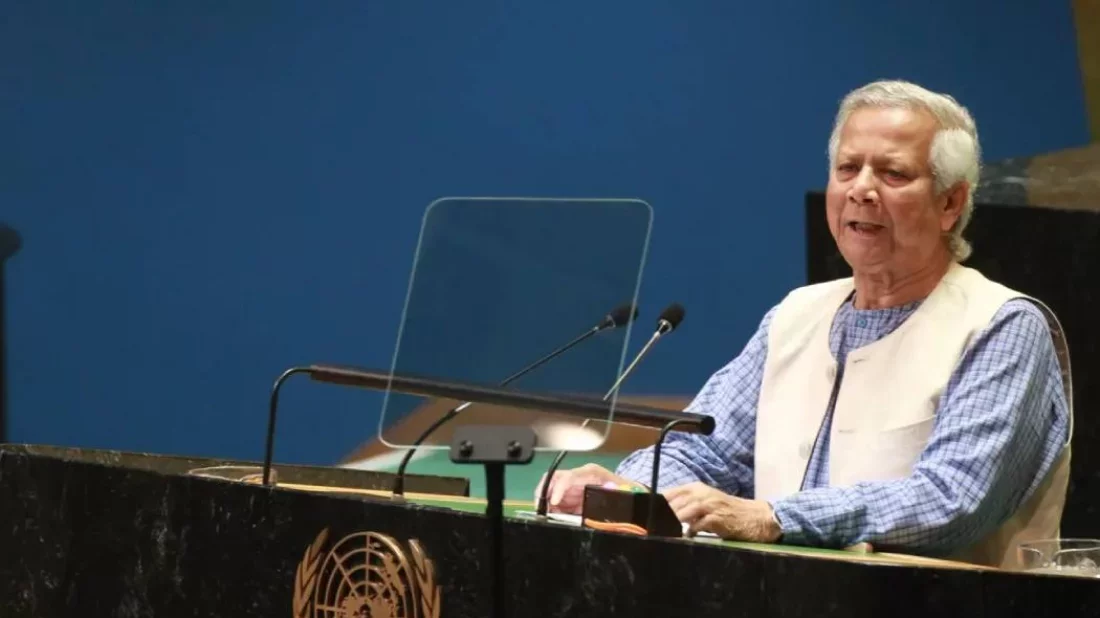
Bangladesh’s first Nobel Peace Prize laureate, one of only seven individuals in the world to receive the highest global honors, has ignited hope among the public for genuine change and progress. With his deep friendship with the US, which is again witnessed by Bangladesh through his United Nations assembly visit as Bangladesh head of state Yunus reconnected with his old friend Giorgia Meloni, the Prime Minister of Italy, who appointed him as Ambassador for Italy’s Expo 2025 with the goal of leveraging his influence and lobbying to help shift the event to Europe from Saudi Arabia.
Yunus also met with Bill Clinton, a long-time collaborator since Clinton’s days as governor of Arkansas in the 80s. Their partnership continued through Clinton’s presidency via the Clinton Global Initiative, culminating in Clinton’s pivotal role in advocating for Yunus’s Nobel Peace Prize in 2006. Professor Yunus’ jovial and unprecedented meeting with President Biden left the world in awe, further cementing his long-standing rapport with the US, highlighted by the Presidential Medal of Freedom (2009) and Congressional Gold Medal (2010) handed by Barack Obama. It’s clear that Professor Yunus, our esteemed chief adviser, holds unparalleled favour with the US, and Bangladesh stands poised to capitalize on this strategic camaraderie and leverage these strong ties.
Yunus and the interim government
Therefore, with such a mandate from global powerhouses and local people, the interim government must focus on restoring constitutional order, holding free and fair elections (the Army Chief hinted at an 18-month timeframe), and engaging all political factions in open dialogue. Economic stability should be a priority above all through sound fiscal management, fostering international relations, and ensuring investor confidence. Trade ties, particularly with key regional players like India and China should be handled diplomatically to avoid further isolation.
On a broader scale, rule of law must be upheld, and public institutions strengthened to prevent corruption and abuse of power. Rebuilding trust in governance requires transparency, accountability, and a commitment to human rights.
Bangladesh must learn from the successes of peaceful transitions like after South Africa’s apartheid, led by Nelson Mandela, another Nobel Laureate, where dialogue, forgiveness, and reconciliation formed the bedrock of lasting stability. From the poignant tale of Abu Sayed to his laudable visionary address on the UNGA stage, we can only hope Yunus’s diplomacy will be the mastermind that elevates Bangladesh as a beacon of resilient, forward-thinking governance amid a complex geo-political landscape.
This narrative embodies my deep commitment to youth empowerment, gender equality, and global justice. I believe stories told with truth and compassion can create real change.
The article was first published in the Dhaka Tribune on 02 October 2024 by Alisha Pradhan.