
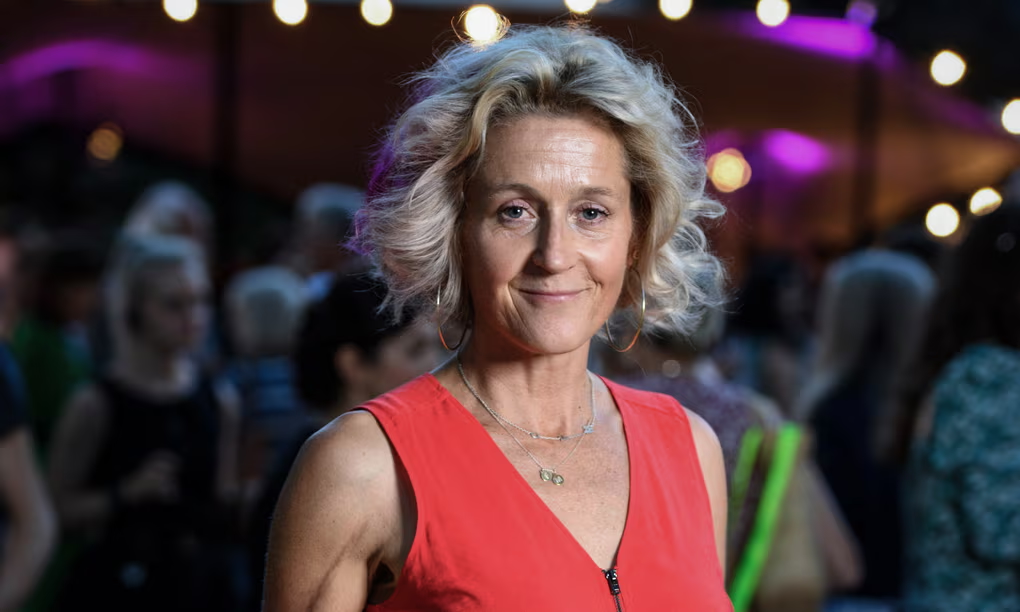
As Elon Musk stood in the Oval Office, flashing a triumphant grin, British entrepreneur and former Twitter board member Martha Lane Fox looked on with dismay. For Lane Fox, a veteran of the tech industry and president of the British Chambers of Commerce (BCC), the moment symbolized the dangerous direction in which Silicon Valley and corporate America are heading.
“He is absolutely horrendous. I have said it multiple times: I think it is horrifying what is happening,” Lane Fox remarked. She expressed grave concerns over Musk’s unchecked influence and his open disdain for diversity, equity, and inclusion (DEI) initiatives, which she believes is not only a social injustice but a significant economic misstep.
Musk’s presence in the White House comes at a time when Donald Trump’s administration has aggressively rolled back DEI initiatives, eliminating federal programs aimed at promoting workplace diversity. Musk’s self-styled “Department of Government Efficiency” (Doge) has further dismantled funding schemes related to social responsibility. Some of the world’s largest corporations, including Goldman Sachs, Accenture, and Amazon, have followed suit, withdrawing their own diversity programs amid the broader political pushback. Even in the UK, companies such as GSK have taken steps in a similar direction.
For Lane Fox, the implications are alarming. “He needs to be contained,” she said, referring to Musk’s growing influence over corporate policies. “I find it extraordinary that the richest man in the world is trampling all over these things and that we still have tech fanboys supporting him. It’s already been corrosive for society, and I would argue it’s going to continue to be.”
Beyond the ethical concerns, Lane Fox highlights the economic folly of abandoning DEI initiatives. Companies that embrace diversity benefit from a wider talent pool and are better equipped to engage with a diverse customer base, she argues. “This is about profit as much as it is about justice. The bottom line is clear: diversity strengthens businesses.”
The global shift away from diversity programs is being keenly felt in the UK. While some British firms are resisting the trend, there is growing concern that American corporate culture will influence UK companies. Deloitte, for instance, recently instructed employees working on US government contracts to remove pronouns from their emails while ending its DEI program. However, its UK leadership has attempted to distance itself from these changes, reaffirming its commitment to diversity.
Lane Fox sees this as a crucial moment for UK businesses to differentiate themselves. “There’s an opportunity to do something different here. I think we’ll build more robust companies, attract talent, and have a much better shot at building the most resilient companies of the future.”
A pioneer in the tech world, Lane Fox first gained prominence as co-founder of Lastminute.com in 1998, later joining the Twitter board in 2016. She was among those who profited from Musk’s $44 billion takeover of Twitter in 2022, before he dissolved the board and took sole control of the platform. Her concerns extend beyond Musk’s business decisions to his public persona. Seeing him parading through the White House with his young son on his shoulders made her reflect on the gender dynamics at play. “Can you imagine if that was a woman? Can you imagine what that would look like? I just think the whole thing is really gross.”
Despite her personal stance against Musk, Lane Fox acknowledges the challenges of navigating corporate and political realities. “You have a responsibility to your customers and your employees that might be different from your personal views sometimes.” Instead of government-imposed diversity targets, she advocates for greater transparency in corporate reporting on diversity efforts, believing that progress will be driven by public accountability and investor scrutiny.
Yet, she fears that the pace of progress is slowing. A recent analysis revealed that the UK has slipped behind Canada in global workplace equality rankings among major economies, with female workforce participation declining. The gender pay gap remains stubbornly persistent, with women earning on average 7% less than men.
“In this week of International Women’s Day, we see representation at the executive level going backward,” Lane Fox said. “Progress on FTSE 100 boards is still solid, but in FTSE 250 and 350 companies, it’s faltering. The numbers are really depressing.”
She acknowledges that some might dismiss her concerns. “I know there will be people in the sector thinking: ‘Oh, here she goes again.’ That’s true of many women who speak up about these issues. But it is so important to keep making these arguments.”