
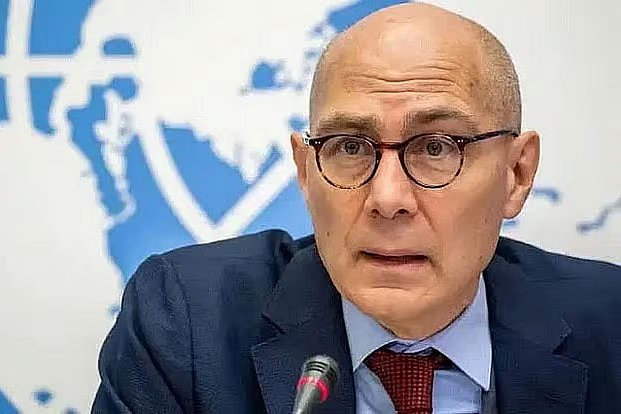
UN High Commissioner for Human Rights Volker Türk has stated that his warning to the Bangladeshi military not to participate in the repression of student protests in July–August last year was followed by a change in government.
Speaking on BBC World Service’s HARDtalk, Türk cited Bangladesh as an example of how international pressure can influence domestic affairs. The episode, published on the BBC’s website on Wednesday, featured an interview with journalist Stephen Sackur, where they discussed human rights violations in various global conflicts, including Gaza, Sudan, and Ukraine. When asked whether the UN was powerless in upholding international law and values, Türk responded by pointing to Bangladesh.
Referring to the mass student protests under Sheikh Hasina’s administration, Türk said that during the crackdown, students found hope in the international community’s response. “What we said, what I said, and how we shed light on the situation gave them hope,” he explained. He revealed that the UN had issued a direct warning to the Bangladeshi military, cautioning that if they became involved in the suppression, it could jeopardize their ability to contribute to international peacekeeping missions. “As a result, we saw change,” he said.
Türk further mentioned that when Nobel laureate Professor Muhammad Yunus assumed the role of Chief Adviser in the interim government, he immediately reached out to him. “He asked me if I could send a fact-finding team to assess the situation and investigate what was happening on the ground. We did exactly that, and it was effective,” Türk stated. Reflecting on his visit to Bangladesh last year, he noted that students were deeply grateful for the UN’s intervention.
Addressing the recent suspension of USAID support in various countries, Türk criticized the decision, emphasizing that it had immediate consequences for the world’s most vulnerable populations. He expressed hope that Washington would reconsider, acknowledging the vital role foreign aid plays globally.
Türk also discussed human rights crises elsewhere, stating that in Sudan, the UN maintains regular contact with those working on the ground and victims of violence in neighboring countries. Regarding Ukraine, he reaffirmed the UN’s persistent efforts to end the war.
Concluding on Gaza, Türk described the situation as catastrophic, adding that global concern over the humanitarian crisis continues to grow.