
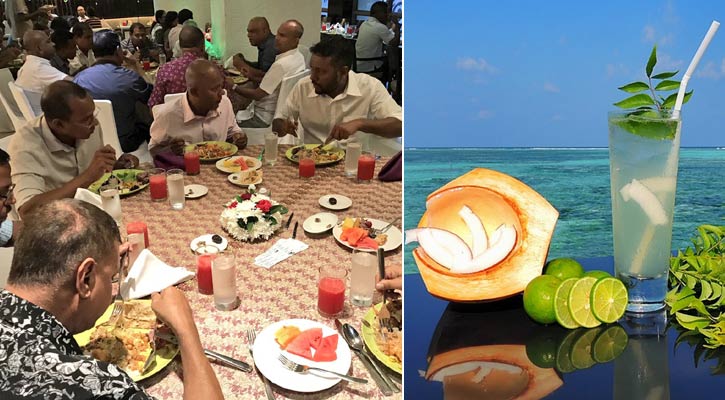
The island nation of the Maldives, nestled in the Indian Ocean, is known for its deep-rooted Islamic traditions. As a Muslim-majority country, its culture and customs revolve largely around religious practices, and Ramadan holds a special significance for its people.
With the sighting of the Ramadan crescent moon, Maldivians eagerly prepare for a month of fasting and devotion. In the Maldives, the act of breaking the fast, commonly referred to as iftar in most Muslim nations, is locally known as ‘Roaadha Vilun.’ Like many other Islamic countries, Maldivians traditionally begin their iftar with dates, following the Sunnah of the Prophet Muhammad (PBUH).
Across the country, luxury restaurants offer elaborate iftar spreads, while mosques provide free iftar meals to the public. At these communal gatherings, dates are a staple, ensuring that everyone can break their fast in a spiritually fulfilling manner. In addition to dates, fresh fruits dominate the iftar tables in Maldivian households. Beverages prepared with seasonal fruits are a common sight, with coconut water being the preferred choice for breaking the fast due to its natural availability and refreshing properties. Other popular fruits include watermelon, mango, passion fruit, and pineapple. Salads made with a variety of fruits and vegetables are also a cherished component of Maldivian iftar.
Traditional Maldivian sweets and snacks further enrich the iftar experience. One such delicacy is ‘Boakiba,’ a type of sweet treat, while ‘Hedhikaa,’ a salty pastry, is another popular snack enjoyed by locals. These dishes reflect the country’s rich culinary heritage and add to the festive spirit of Ramadan.
During this sacred month, working hours across the Maldives are reduced to accommodate those observing the fast. Additionally, eating and smoking in public spaces from sunrise to sunset are strictly prohibited, with even children and the sick refraining from consuming food in public. Tourists visiting the Maldives during Ramadan are also expected to respect these rules by not eating in public during fasting hours.
As Ramadan nears its end, excitement builds for Eid-ul-Fitr, one of the two most significant religious celebrations in the Muslim world. The final days of Ramadan see an increase in shopping activities as families prepare for the joyous occasion. With cultural traditions deeply intertwined with Islamic faith, the Maldives embraces Ramadan as a time of spiritual devotion, communal harmony, and festive preparation.