
Berlin, Germany – In the weeks preceding Germany’s elections, Friedrich Merz, the likely chancellor candidate, shattered a long-standing political barrier by collaborating with the far-right Alternative for Deutschland (AfD) to push stringent migration policies. The move, which followed two deadly attacks linked to asylum seekers, ignited widespread criticism, including a fierce condemnation from former Chancellor Angela Merkel and members of her own Christian Democratic Union (CDU).
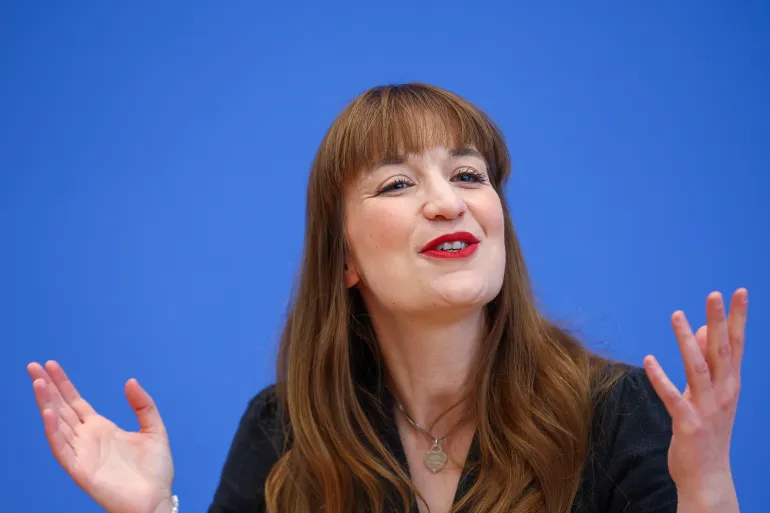
Among the most vocal opponents was Heidi Reichinnek, the co-leader of Die Linke, Germany’s leftist party. In a heated Bundestag address, she directly accused Merz of aligning with right-wing extremists just days after commemorating Holocaust Remembrance Day. “Now you’re collaborating with those who carry on this same ideology,” she declared. The speech quickly gained traction, amassing over seven million views on TikTok and propelling Reichinnek into the national spotlight.
As the election neared, Reichinnek intensified her engagement, collaborating with queer influencers, leveraging social media to rally her followers, and addressing pressing issues such as rising housing costs and the surge of the far-right. The strategy paid off; on February 23, Die Linke secured 9% of the vote—more than doubling its support since the last election in 2021. Notably, a quarter of young voters backed the party, the highest among any political group.
Speaking after the election, Reichinnek called the results a victory for social justice, solidarity, and democracy. “This is just the beginning. The cost of living crisis isn’t over, social inequality is still growing, and the far right remains a threat. We will continue to be a loud and uncompromising voice in parliament and on the streets,” she asserted.
Political analysts attribute Die Linke’s resurgence to Reichinnek’s leadership, particularly after years of internal party strife. Following the 2023 departure of high-profile leader Sahra Wagenknecht, who opposed immigration and later formed her own party, many had dismissed Die Linke as politically obsolete. But Reichinnek’s direct communication style, grassroots approach, and progressive policies reinvigorated the party, especially among young voters concerned about economic hardship and the growing influence of the far-right.
Born in East Germany’s Saxony-Anhalt in 1988, Reichinnek has long championed social justice causes. Influenced by economic inequalities she witnessed growing up, she studied Middle Eastern Studies and Political Science, later working as a researcher and in the social sector, including teaching German to refugees. She joined Die Linke in 2015 and swiftly climbed the ranks, becoming the party’s youngest state chairwoman in 2019 and securing a Bundestag seat in 2021.
Reichinnek’s East German working-class background and grassroots activism have cemented her credibility among young voters and progressive circles. Experts note that her leadership emerged at a crucial time, as Die Linke faced existential challenges, including internal disagreements over immigration policies and the fallout from Russia’s invasion of Ukraine. Her vocal pro-immigration stance and human rights advocacy positioned the party as a leading progressive force amid Germany’s shifting political landscape.
Observers also highlight Reichinnek’s savvy use of social media, contrasting it with the far-right AfD’s dominance in digital spaces. By engaging with younger audiences online and addressing their key concerns, she helped reverse the trend of youth support drifting towards right-wing populism.
As Germany grapples with economic uncertainties and a resurgent far-right, Reichinnek’s ability to mobilize young voters signals a significant shift in the country’s political trajectory. Supporters view her as a modern progressive leader capable of revitalizing Die Linke and countering extremist narratives. With her party’s electoral success, Reichinnek has cemented her role as a formidable force in Germany’s evolving political landscape.