
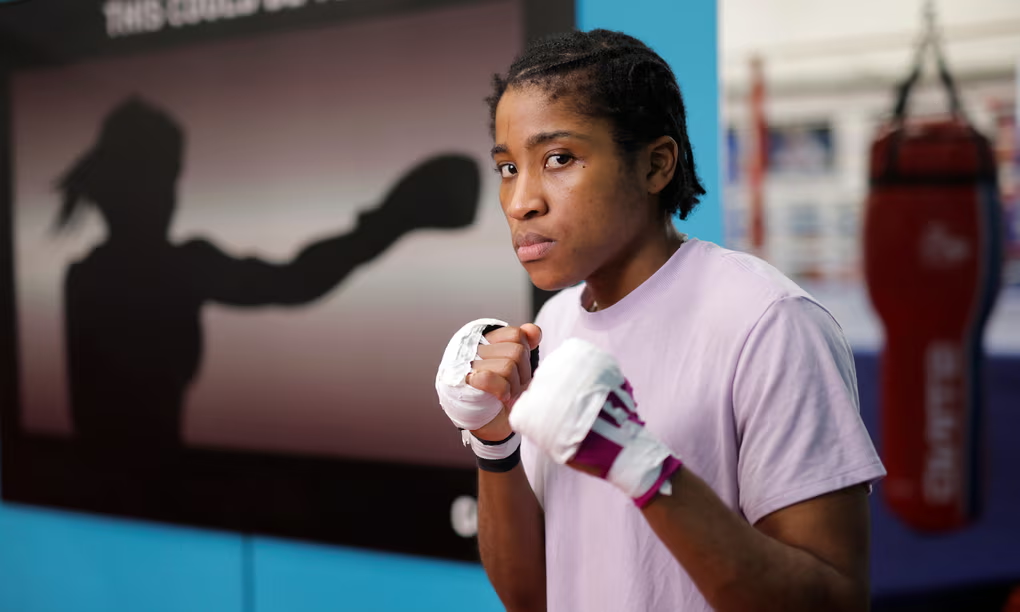
Cindy Ngamba, the trailblazing LGBTQ+ Olympic medallist, is set to make her professional boxing debut at the Royal Albert Hall on an all-female card this Friday night. Fresh off her historic achievement of winning the first-ever Olympic medal for the Refugee Team at the Paris Games last year, the 26-year-old fighter is already making waves beyond the ring with her outspoken views on the sport’s growing ties with Saudi Arabia.
Ngamba, who fled Cameroon due to her sexuality, remains undecided on her boxing nickname, though she currently favors “One in 100 Million,” a nod to the vast number of refugees worldwide. “On my gumshield it says ‘One in 100 Million’ because I am just one of the many refugees around the world. We are special, and I want a nickname that reflects that,” she shared.
Known for her power and technical skill, Ngamba has been compared to a female version of the legendary Tommy Hearns. Her professional debut against European welterweight champion Kirstie Bavington marks a significant transition from amateur to professional boxing. “I’m excited for this new journey. Once I step into the pro ring, everything will be different,” she admitted, acknowledging the challenges ahead in the fiercely competitive world of professional boxing.
Despite enticing offers from various promoters, Ngamba chose to turn pro with GB Boxing, where she still trains under Rob McCracken. “They didn’t see me as a payday but as a girl with amazing talent and a story worth supporting. When I had nothing, they believed in me, and that’s why I chose to stay with them,” she explained.
However, her enthusiasm for professional boxing is tempered by concerns about the sport’s increasing ties with Saudi Arabia, a country known for its strict laws against LGBTQ+ individuals and gender inequality. Ngamba openly voiced her disappointment, stating, “They really disappoint me. I don’t think I ever want to go to Saudi until I hear from women that they’ve changed their laws. Even if they do, I would still feel scared for my life.” She emphasized that female boxers should be treated equally, without discrimination based on gender or sexuality, and expressed concern over the safety of LGBTQ+ athletes in Saudi Arabia.
Her dismay grew when she learned that Riyadh Season, a Saudi-backed promotional initiative, was sponsoring the all-female event at the Royal Albert Hall. “I’m lost for words right now because I didn’t know that,” she admitted upon hearing the news. “I guess they have to play their power, but I’m staying out of it. I’m focusing on my boxing and letting my team handle it.”
Ben Shalom, head of Boxxer, defended Saudi Arabia’s involvement, arguing that their sponsorship signals an effort to modernize. “Riyadh Season sponsors all our events. There are major changes happening in Saudi, and they’ve never shown discrimination against our fighters,” he said. “To have them supporting an event like this shows the changes they are making.”
Ngamba remains undeterred by the controversy and is determined to succeed in the professional ranks. Confident ahead of her debut against Bavington, she remarked, “If you don’t get nervous, you shouldn’t be in the ring. I train hard, work hard, and have a great team behind me. No matter what my opponent brings, I’ll be ready.”
As she steps into the ring for her first professional fight, Cindy Ngamba is not just fighting for victory but also standing as a symbol of resistance against the growing influence of Saudi Arabia in boxing. Her voice adds to the ongoing debate about the future of female and LGBTQ+ athletes in a sport increasingly driven by financial power rather than ethical considerations.