
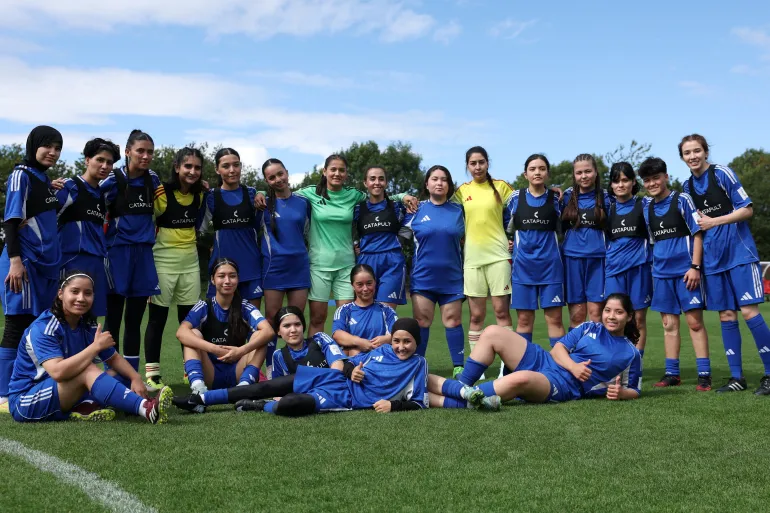
In a significant step for women’s sport and refugee athletes, FIFA has granted international eligibility to the Afghan women’s refugee team, allowing the side to represent Afghanistan in global football competitions after nearly five years in exile. The team, which has been playing under the name Afghan Women United, can now take part in international tournaments under recognition from world football’s governing body.
The decision was approved by the FIFA Council at a meeting in Vancouver, Canada, through an amendment to the regulations. Although the team will not be able to enter qualification for the 2027 Women’s World Cup in Brazil, it could still compete in qualification for the 2028 Los Angeles Olympics, opening a new chapter for players who fled Afghanistan after the Taliban returned to power in 2021 and shut down women’s sports.
FIFA President Gianni Infantino said the initiative was intended not only to support Afghan Women United but also to help other member associations that may be unable to register a representative team for FIFA competition. The move followed years of lobbying by players, former captain and activist Khalida Popal, and human rights groups who argued that Afghan women footballers should not be erased from international sport because of discriminatory policies at home.
The team’s players are now scattered across Australia, the United States, and Europe, with more than 80 Afghan refugee footballers living abroad. Recent training camps were held in England and Australia, and the squad, coached by Pauline Hamill, is expected to play two exhibition matches during the June international window. For many players, the decision carries deep emotional weight, as it restores the possibility of once again wearing Afghanistan’s flag in official competition.
Human rights advocates welcomed the decision as an overdue correction. They said FIFA had closed a loophole that allowed the Taliban’s gender-based exclusion to affect the international stage. The ruling is being seen not only as a victory for Afghan women footballers, but also as a broader precedent for how global sports bodies should respond when athletes are denied participation because of gender, ethnicity, or belief.