
The United States is one of Bangladesh’s primary export markets, with annual exports amounting to approximately $8.4 billion, primarily consisting of garments. In 2024 alone, ready-made garments worth $7.34 billion were exported to the US, making it the most vital export sector for Bangladesh.
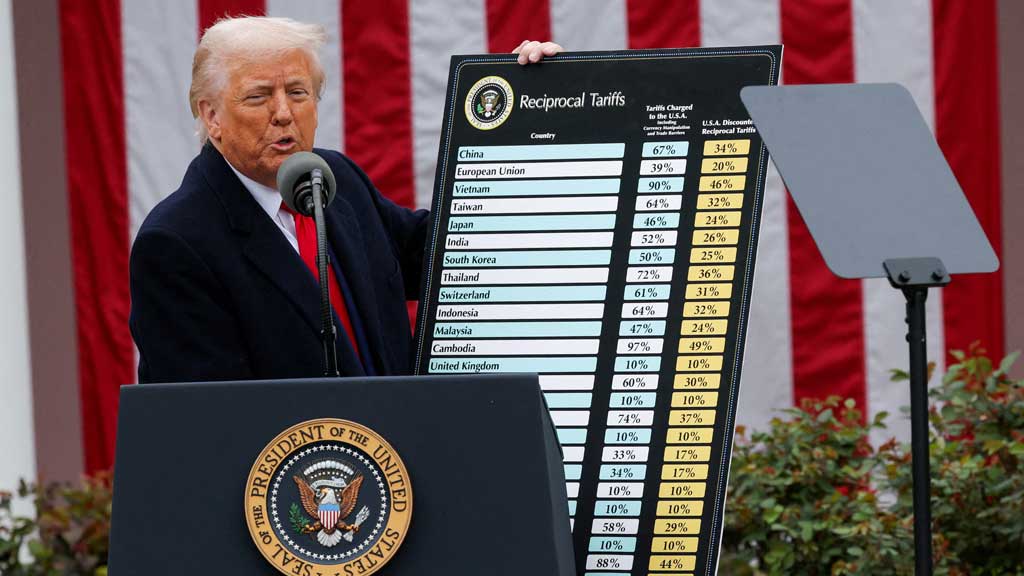
On Wednesday, US President Donald Trump announced the imposition of new tariffs on products from various countries, marking the latest development in what many are calling a “trade war.” As part of these changes, the tariff on Bangladeshi goods has been increased to 37%, up from the previous average rate of 15%. The new tariffs are expected to have significant repercussions, particularly for Bangladesh’s key export sector of ready-made garments (RMG), which forms a substantial part of its exports to the United States.
Economists are concerned that the higher tariffs will adversely affect Bangladesh’s export sector, especially in the garment industry. The increased tariffs come at a time when the global market is already facing challenges, and the price hikes are likely to create even greater pressure on the export-driven economy.
President Trump made the announcement during a press conference at the White House, calling the day a celebration of “economic independence.” He emphasized that the decision was long-awaited and marked a key milestone for the US in asserting its economic power on the global stage. The new tariffs are part of a broader strategy where the US seeks to mirror the tariff rates imposed by other countries on US products. For instance, the tariff on Chinese products has been set at 34%, while India and Pakistan face tariffs of 26% and 29%, respectively.
Other countries that have faced high tariff rates include the European Union at 20%, Vietnam at 46%, Sri Lanka at 44%, and Cambodia at 47%. The US has also imposed tariffs on products from various other nations, including Japan, South Korea, and Switzerland, with rates ranging from 10% to 36%.
Trump defended his decision, stating that the tariffs would help level the playing field in trade, as many countries had imposed higher tariffs on US goods for years. He described the tariffs as part of his “America First” policy, which aims to protect American industries and reduce the trade deficit.
For Bangladesh, the impact of these tariffs is mixed. While some predict that competitors like Vietnam, China, and Cambodia will be more heavily affected due to their higher tariffs, Bangladesh could still face difficulties. The additional costs associated with the tariffs could result in higher prices for Bangladeshi products in the US market, potentially diminishing the competitiveness of the country’s exports.
To mitigate these challenges, experts suggest that Bangladesh could negotiate a reduction in tariffs on US goods, which might result in a reciprocal lowering of tariffs on Bangladeshi goods. By lowering its own tariffs on US products from 74% to 30%, Bangladesh could potentially reduce the tariff burden on its exports, helping to maintain its position in the US market.
Despite the challenges, some analysts believe Bangladesh’s focus on low to medium-priced products, especially in the garment sector, may shield it somewhat from the full impact of these tariffs. Unlike competitors that export higher-priced garments, Bangladesh’s products generally fall into a lower price range, which may help maintain their appeal in the US market despite the tariff hikes.
Overall, the increased tariffs are expected to cause significant disruptions, especially for developing countries like Bangladesh that rely heavily on export markets. The situation calls for strategic adjustments and negotiations to navigate the new economic landscape created by these tariff changes.