
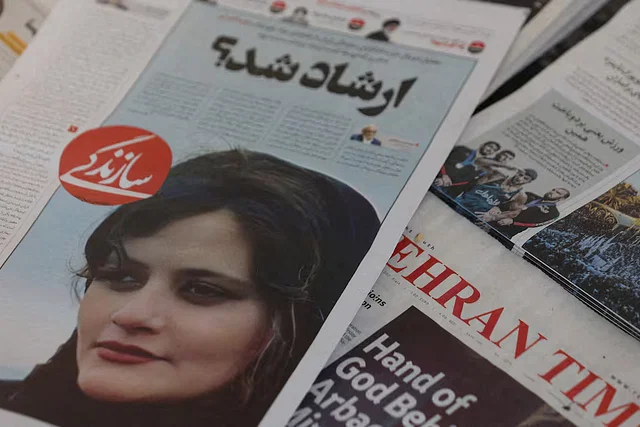
Two years ago, on September 16, 2022, 22-year-old Kurdish woman Mahsa Amini died while in police custody in Iran. Her crime? Violating Iran’s strict hijab law. Her death sparked widespread protests across the country, igniting hope for a revolution that could reshape Iran’s four-decade-old system. However, two years later, the landscape appears bleak, with harsh crackdowns, continued oppression, and executions of dissenters. Yet, for many, Mahsa Amini remains a symbol of hope.
Amini’s death, under the custody of Iran’s “morality police,” triggered nationwide protests, primarily led by women. The movement initially started as a fight against the country’s stringent hijab laws but soon evolved into a broader movement questioning Iran’s entire political system. The protests shook the pillars of Iran’s power structure, causing concern among the country’s leaders.
However, the Iranian regime responded with brutal force. According to Amnesty International, the government used assault rifles and shotguns to suppress the protesters. Human rights organizations reported that 551 protesters were killed, and thousands were arrested during the crackdown. The regime also executed ten people in connection with the protests.
The protests may have been subdued, but the underlying discontent remains. Amnesty International’s Deputy Regional Director for the Middle East and North Africa, Diana Eltahawy, emphasized that many Iranians are still grappling with the consequences of the government’s brutal repression. The regime has also doubled down on enforcing hijab laws, implementing a new plan called “Nour,” which has increased police patrols and strict surveillance on women.
Women’s rights organizations have pointed out that Iranian women, who once considered their vehicles as a safe haven, are now facing new forms of oppression. The government can seize vehicles for even minor hijab violations, marking another invasion of personal freedom.
United Nations experts have echoed concerns about the increasing repression against women in Iran, citing instances of women being beaten, kicked, and slapped. While the Iranian government claims that law and order have been restored following the protests, many external observers argue that the social fabric of the country has been irreversibly altered.
The protests sparked by Mahsa Amini’s death continue to serve as a potent reminder of the ongoing struggle for freedom in Iran. For the countless Iranians still fighting for change, her memory is not just a symbol of resistance but a beacon of hope for a future where justice prevails.