
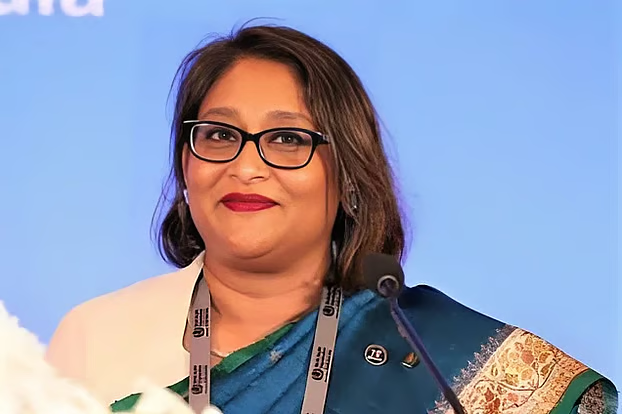
Saima Wazed has resigned as the World Health Organization’s (WHO) Regional Director for South-East Asia, amid an ongoing investigation into allegations involving financial irregularities during a trip to China and questions surrounding her educational credentials.
Wazed, the daughter of Bangladesh’s ousted former Prime Minister Sheikh Hasina, submitted her resignation to WHO Director-General Tedros Adhanom Ghebreyesus on Wednesday, according to Reuters, which reviewed her resignation letter.
Wazed has denied the allegations against her.
She was elected WHO Regional Director for South-East Asia in November 2023 following a vote by member states of the region and formally assumed the five-year position in February 2024. Her resignation comes after she had already been placed on unpaid leave by the organisation in July 2025.
The WHO has been investigating allegations concerning financial irregularities linked to Wazed’s travel to China as well as claims that she provided inaccurate information about her educational qualifications. Her lawyers have rejected the accusations.
In a letter sent to the WHO in July, Wazed’s legal representatives said the travel-related issue involved approximately $901 and resulted from an administrative error by an assistant during the processing of a routine travel reimbursement claim.
Wazed also disputed the allegations concerning her academic qualifications. She said she had received an honorary doctorate in recognition of her work on autism in Bangladesh and that she had informed Tedros about the nature of the qualification.
Another allegation concerns a plot of land in Bangladesh. In her resignation letter, Wazed said the WHO had raised concerns over the acquisition of the property. She maintained that she had acquired the land before joining the WHO and said she obtained the rights under legislation applicable to members of the family of Bangladesh’s founding leader, Sheikh Mujibur Rahman.
Wazed’s departure also comes against the backdrop of wider investigations involving members of the Hasina family following the fall of the Awami League government during the mass uprising in Bangladesh. During the interim government led by Professor Muhammad Yunus, Bangladesh’s Anti-Corruption Commission began investigations involving Hasina and several members of her family, including Wazed.
The WHO placed Wazed on unpaid leave in July 2025 as the investigations unfolded. She remained on unpaid leave until her resignation.
In her resignation letter, Wazed expressed frustration with the circumstances surrounding her tenure and accused the WHO leadership of preventing her from effectively carrying out her responsibilities.
She wrote that she had been elected to serve the countries of the region and had carried out that responsibility sincerely. She also said that after nearly a year without remuneration while on unpaid leave, her financial situation had become increasingly difficult.
Wazed declined to provide further comment on the matter.
The WHO also did not immediately respond to a request for comment. The organisation had previously confirmed that Wazed was on leave but declined to provide further information, citing confidentiality requirements.
The resignation now sets the stage for a new selection process for one of the WHO’s most influential regional leadership positions.
According to a source cited in the report, nominations for the next Regional Director could be announced on October 12, followed by a screening process in December. An election could then take place on January 24, although the schedule remains subject to the WHO’s formal process.
Regional directors play a significant role in shaping and implementing WHO policies across their respective regions, particularly during disease outbreaks and public-health emergencies. They are also responsible for adapting the organisation’s global health priorities to local circumstances.
The WHO’s South-East Asia Region includes countries such as Bangladesh and India, with member states electing a regional director every five years.
Wazed’s resignation therefore closes a highly contentious chapter in her tenure at the WHO, while the allegations that prompted the investigations remain disputed by her. The organisation’s forthcoming selection process will determine who takes over leadership of the South-East Asia region at a time when public-health preparedness, disease outbreaks and regional health challenges remain major priorities.
A news by Alisha Pradhan, General Secretary, HerNet Foundation