
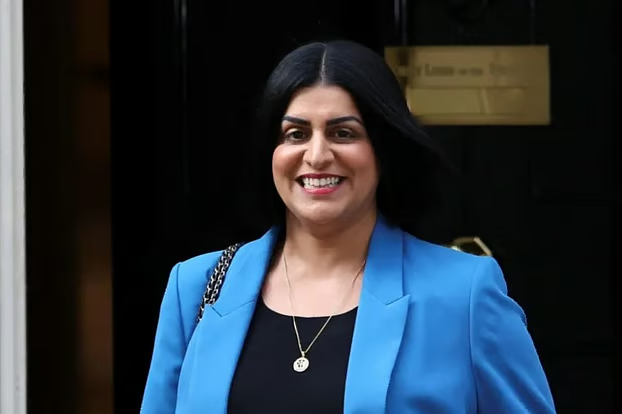
With Westminster gripped by turmoil over the fallout from the Epstein-related controversy and a disputed diplomatic appointment, senior figures inside the ruling Labour Party are quietly gaming out who could succeed Prime Minister Keir Starmer if a leadership contest is triggered. One name is moving rapidly to the forefront: Home Secretary Shabana Mahmood — a scenario that would make her the United Kingdom’s first Muslim prime minister.
Mahmood, a barrister by training and an Oxford-educated MP first elected in 2010 alongside fellow Muslim women pioneers Rushanara Ali and Yasmin Qureshi, is viewed by allies as disciplined, loyal, and battle-tested. As Home Secretary since 2025, she has taken a firm line on immigration — arguing that permanent settlement is a privilege rather than an automatic right and proposing to extend the typical route to settlement from five to ten years — a stance that has sparked debate within Labour but also signaled toughness to centrist voters.
The succession talk intensified after the government’s decision to name Peter Mandelson as ambassador to Washington reignited scrutiny of his past links to Jeffrey Epstein, inflaming unrest in Labour ranks. The resignation of Starmer’s powerful chief of staff, Morgan McSweeney, intended to shield the prime minister, has instead deepened questions about transparency and political judgment, party insiders say.
For now, there is no formal challenge. Under Labour’s rules, any contender would need a significant bloc of MPs to nominate them (current talk suggests dozens would be required), and Starmer could yet steady the ship. But Mahmood’s combination of a top cabinet brief, legal background, and proximity to the party leadership puts her near the top of any emergency short list.
Other names in circulation include Health Secretary Wes Streeting, whose media profile and sharp debating style make him a perennial contender; former deputy prime minister Angela Rayner, still influential with Labour’s grassroots despite past controversy; Greater Manchester mayor Andy Burnham, popular but hampered by the convention that a prime minister must sit in the Commons; and Energy Secretary Ed Miliband, a seasoned operator whose allies insist he is not seeking a return to the top job.
Path-to-power arithmetic remains fluid. Mahmood’s allies argue she could bridge Labour’s internal divides — reassuring centrists with her Home Office record while re-energizing disillusioned Muslim and pro-Palestinian voters — yet critics warn her immigration stance could alienate parts of the party. If a contest emerges and she prevails, the monarch would invite the new Labour leader to form a government, completing a historic first for Britain.
Until then, everything hinges on whether Starmer can ride out the storm. If he cannot, Shabana Mahmood will be under intense pressure to decide whether to turn mounting speculation into an overt bid for No. 10.