
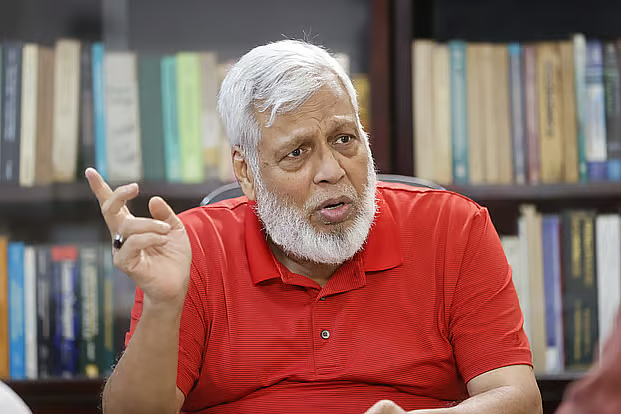
International agreements cannot be scrapped “just because we wish to,” said power and energy adviser Muhammad Faozul Kabir Khan, adding that the fate of the power purchase agreement (PPA) with India’s Adani Group will be decided by the next elected administration. He spoke to reporters at Power Bhaban after a stakeholder meeting on the Power & Energy Sector Master Plan (EPSMP) 2026–2050 in Dhaka.
Khan said the interim government has maintained an “arm’s-length” posture toward foreign investors and avoided any perception of a witch hunt, noting a national committee’s review of deals has been completed. “We’re leaving this to the elected government,” he said, adding his ministry will hand over a roadmap so successors “don’t struggle,” and that endorsement of the EPSMP would also rest with the incoming cabinet.
Participants pressed for a faster pivot to renewables. Bangladesh Energy Regulatory Commission chairman Jalal Ahmed urged alignment with export-market requirements, citing the European Union’s 2030 thresholds for sectoral electricity use from renewable sources. Industry representative Salauddin Yusuf of BNO Lubricants questioned how closely the plan tracks global net-zero pathways, while Department of Environment official Mirza Shawkat Ali advised excluding coal to avoid headwinds in climate negotiations.
Civil society voices, including BASAD’s Rajekuzzaman Ratan and Rastroshongskar Andolon’s Didarul Alam, called for consumer-friendly pricing, restraint on hikes, and stronger accountability mechanisms.
Reiterating that long-term energy policy choices will be made by elected leaders, Khan said the EPSMP draft will be left as guidance the next government may revise, with near-term focus on reliability, affordability, and a credible transition pathway for Bangladesh.