
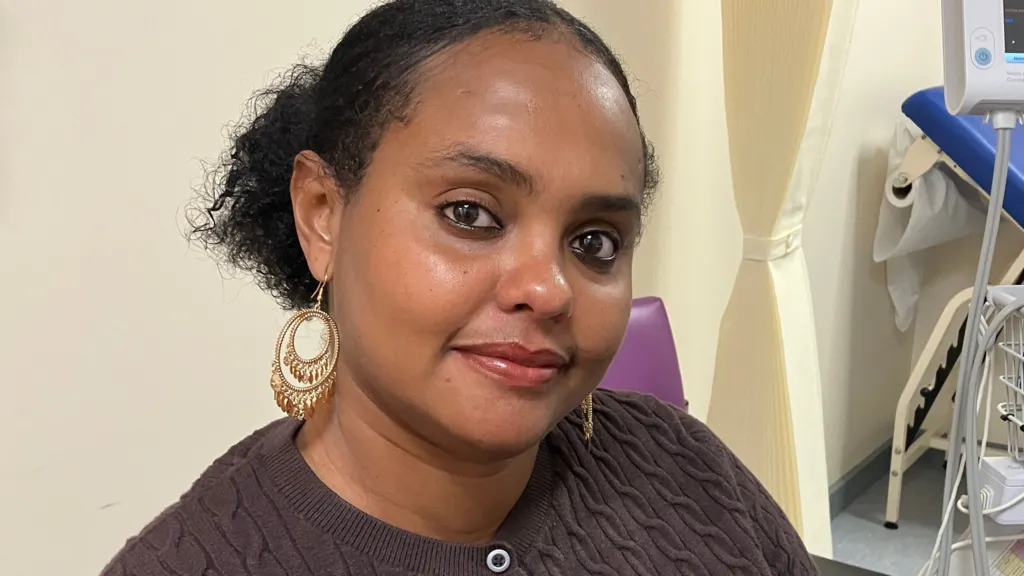
When Sara Kahsai moved from Sudan to Birmingham in 2022 after marrying a bus driver from the city, she was beginning a new chapter of her life. But settling into her marriage and new surroundings also brought an unexpected and painful discovery about her childhood.
Sara learned that she was a survivor of female genital mutilation (FGM), a procedure she had undergone when she was very young. The realisation forced her to confront physical pain and emotional consequences that she had not previously understood.
“The shock was massive,” Sara said, describing how the discovery affected her relationship with her husband. She said he responded with patience and kindness as she came to terms with what had happened to her.
Seeking an explanation, Sara eventually spoke to her mother, who still lives in Africa. Her mother told her that Sara had been a baby when the procedure was carried out and that it was regarded as a cultural practice within their community.
When Sara confronted her about it, her mother became upset and apologised.
For Sara, the conversation was an important part of understanding a decision made on her behalf when she was too young to understand or consent to it.
FGM refers to the partial or total removal or alteration of female genitalia for non-medical reasons. It is practised in parts of Africa, the Middle East and Asia and also affects women and girls in some migrant communities in the United Kingdom.
In the UK, FGM is illegal and is treated as a form of child abuse. It is also illegal to take a girl abroad for the purpose of undergoing the procedure.
The practice can be driven by a range of social and cultural factors, including pressure for social acceptance, misconceptions surrounding hygiene, beliefs about sexuality and virginity, and, in some communities, religious justifications that do not reflect the teachings of major religions.
The World Health Organization estimates that millions of girls undergo FGM each year, with the majority of cases occurring in Africa.
Sara did not seek specialist medical support immediately. It was only after she became pregnant that she told healthcare professionals about her experience.
She was referred to the specialist FGM clinic at Birmingham Women’s Hospital, where midwife Renata Hanif works with women who have experienced the practice.
Hanif deals with around 200 cases a year and says specialist care is important not only for the wellbeing of survivors but also for protecting mothers and their babies during pregnancy and childbirth.
Certain forms of FGM can complicate vaginal delivery. In appropriate cases, women may be offered deinfibulation, a medical procedure used to separate scarred or fused tissue and help facilitate safer childbirth.
The physical consequences of FGM can extend far beyond the original procedure. Survivors may experience difficulties with urination and menstruation, recurrent infections, severe or persistent pain and complications during childbirth. The experience can also have psychological consequences, including anxiety, depression and trauma.
But seeking treatment can itself be difficult.
Hanif says many women struggle to discuss what happened to them, particularly when the procedure was performed during childhood and was treated as an accepted part of their community’s traditions.
At the specialist clinic, healthcare workers try to help survivors understand their bodies and the possible consequences of FGM. Counselling and guidance are also available, including advice for partners and husbands on how they can provide support.
For Sara, receiving this information helped her make sense of experiences that had previously been difficult to understand.
She now wants other women who have experienced FGM to know that they do not have to remain silent or suffer without support.
“If I knew I could seek help, I would not have waited until I was expecting,” she said, reflecting on the years she spent without specialist assistance.
Her message is particularly directed at women who arrive in the UK after experiencing FGM elsewhere.
She encourages survivors to speak to their GP or seek specialist medical support as soon as they feel able to do so.
“There’s help here—go to their GP, seek help, ask for help,” she said.
The need for prevention and early intervention has also become an increasingly important part of the UK’s response to FGM. The National FGM Centre, established by children’s charity Barnardo’s in 2015, works to prevent the practice, raise awareness and support affected women and girls.
The centre has also highlighted the role of education in prevention. Schools are required to teach pupils about FGM and the law surrounding it as part of relationships and sex education, although the way the subject is taught can vary between schools. The centre has called for greater attention to the issue in primary education as well.
Rohma Ullah of the National FGM Centre has emphasised that preventing FGM is critical because legal action can only take place after harm has occurred. While prosecutions can provide accountability, prevention and early identification are essential to protecting girls before they become victims.
The UK government held its first dedicated FGM Summit in a decade in April, bringing together stakeholders to discuss measures aimed at strengthening protection for women and girls. Among the planned improvements are updated guidance to help identify girls who may be at risk of being taken overseas for FGM.
Sara’s experience illustrates why those measures matter. Her story is not only about an act carried out during childhood; it is also about the years that followed, the difficulties of understanding what had happened, the effect on her adult life and the importance of finally finding professional support.
She believes that knowing help is available can make a profound difference.
Her own journey began with shock and pain, but it has led her to a determination that other survivors should not have to wait as long as she did.
For Sara, speaking about her experience is now a way of encouraging other women to seek support, reclaim control over their bodies and understand that they do not have to face the consequences of FGM alone.
A news by Alisha Pradhan, General Secretary, HerNet Foundation.