
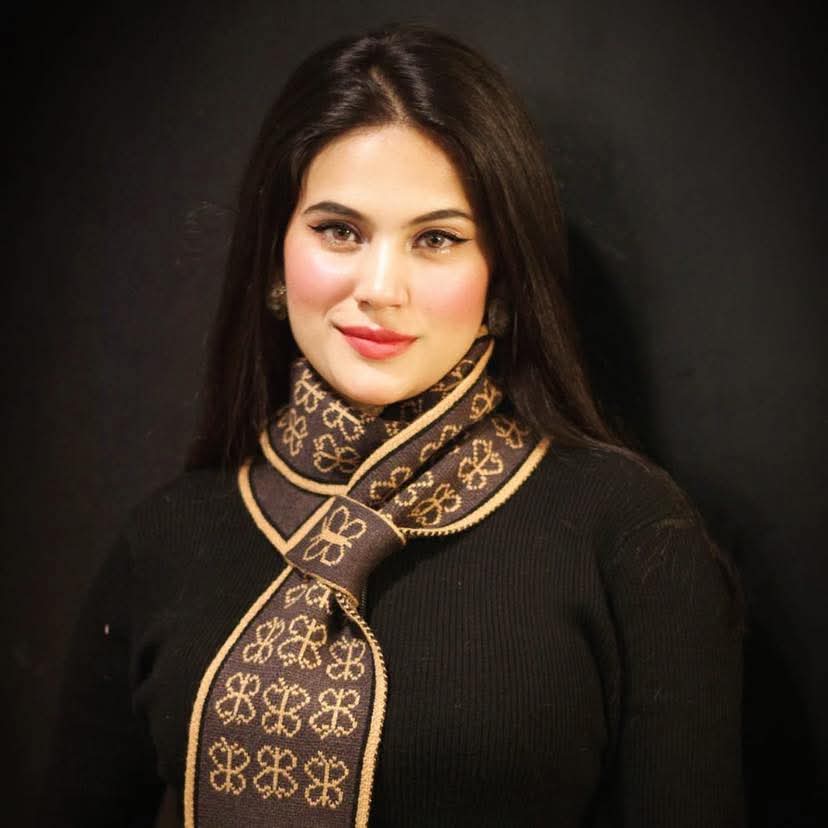
For Bangladeshi visual artist and Arabic calligrapher Zabin Nahima, art is more than a form of visual expression. It is a way of exploring faith, human emotion, cultural heritage and the connections that bring people together.
A graduate of the University of Dhaka, Zabin has developed an artistic practice that moves between tradition and contemporary experimentation. Her work brings together realism and abstract expressionism while maintaining the disciplined visual language of Arabic calligraphy. Through this combination, she seeks to create artworks that carry both aesthetic depth and emotional meaning.
Zabin is currently the Founder, CEO and Calligraphy Mentor of Zabin’s Art Gallery, an organisation through which she continues to develop her own artistic practice while encouraging others to explore calligraphy and visual art.
Her artistic journey has increasingly extended beyond Bangladesh. Her works have been showcased internationally, including in North-Western South Korea, Indonesia, Europe and Norway, while she has also participated in group exhibitions involving the Bangladeshi community abroad. These opportunities have helped her establish a broader artistic identity and connect her work with audiences across different cultural settings.
At the heart of Zabin’s practice is a dialogue between heritage and innovation. Arabic calligraphy, with its centuries-old visual and cultural traditions, provides an important foundation for her work. Rather than treating tradition as something fixed, she experiments with form, composition and contemporary artistic approaches to develop a language of her own.
Her work reflects what she describes as a new-generation creative voice—one rooted in experimentation, innovation and artistic depth. The movement between realism and abstraction allows her to explore subjects that cannot always be communicated through literal representation. Emotion, spirituality, identity and cultural memory become visual elements within her compositions.
Yet Zabin’s journey has not been without obstacles. As a woman working in the art world, she says she has faced persistent challenges, including differences in market value, limited institutional opportunities and the often invisible demands of domestic work and caregiving.
For generations, women artists have faced social structures that placed them primarily within the private sphere. Artistic production was frequently regarded as a secondary pursuit, while domestic responsibilities were treated as their principal role. Restrictions on women’s mobility also limited opportunities to participate in outdoor and plein-air painting, travel for artistic education or engage freely with public artistic spaces.
Even subjects drawn from women’s everyday lives were often dismissed by male-dominated artistic institutions as ordinary or lacking intellectual significance. For artists like Zabin, overcoming these historical patterns requires not only creative ability but also persistence and strategic independence.
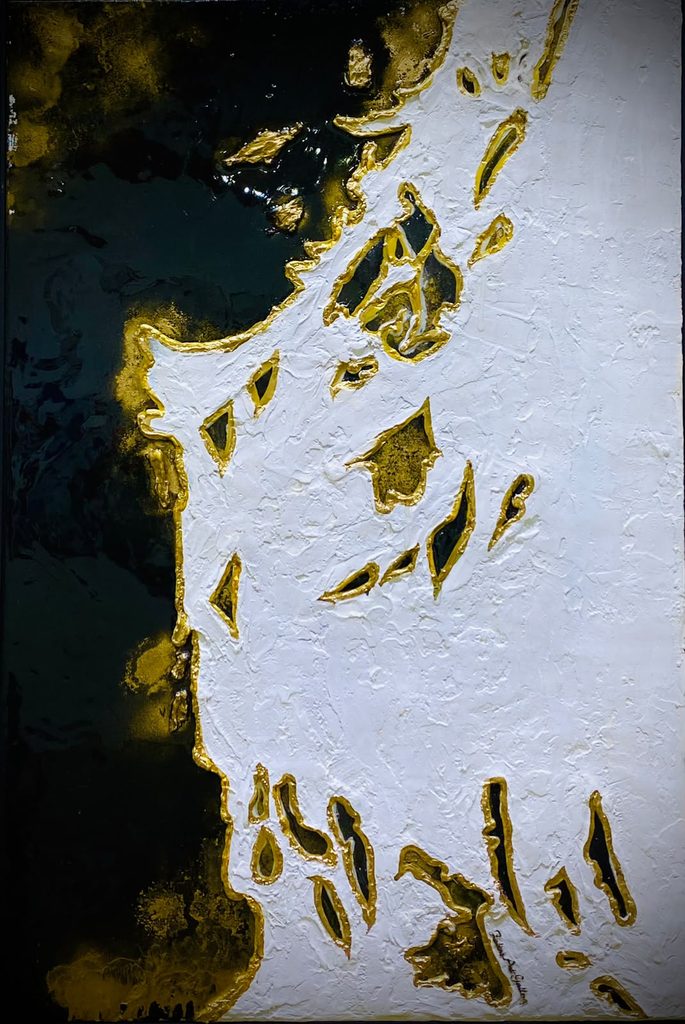
Zabin says she has responded to these challenges through what she describes as collective pragmatic action, strategic adaptation and the creation of alternative spaces. Rather than depending entirely on traditional institutions, she has sought to create platforms through which artists can develop their skills, gain visibility and build professional independence.
Her experience reflects a broader transformation taking place in the contemporary art world. While academies, galleries and museums historically offered greater opportunities to men, emerging women artists are increasingly using independent organisations, digital platforms, community exhibitions and collaborative networks to establish their presence.
For Zabin, building an artistic career therefore involves more than producing paintings. It also means creating opportunities for learning, connecting with audiences and developing sustainable spaces for artistic expression.
Her role as a calligraphy mentor is an important part of that vision. Through teaching and mentoring, she aims to share the discipline and creative possibilities of calligraphy with a new generation while continuing to develop her own work.
Looking ahead, Zabin’s ambitions combine artistic development with professional growth. She wants to refine a distinctive artistic voice and expand the reach of her work through juried exhibitions, established gallery programmes and, eventually, permanent museum collections.
She also sees audience-building as an important part of the future of her practice. Social media, collaborative art fairs, local organisations and international artistic networks offer opportunities to connect directly with audiences beyond conventional gallery spaces.
Her ambitions are not limited to personal recognition. Through her organisation and mentoring work, she hopes to contribute to a stronger creative community in which artists—particularly women—can access visibility, professional opportunities and financial independence.
Zabin Nahima’s journey is ultimately one of negotiation between heritage and modernity. Her Arabic calligraphy carries the discipline of a centuries-old artistic tradition, while her engagement with realism and abstraction reflects the experimental character of contemporary art.
As she continues to exhibit, teach and develop her practice, Zabin represents a generation of Bangladeshi artists seeking to take traditional artistic languages into new spaces. Her journey demonstrates how creativity can become both a personal form of expression and a means of creating greater opportunities for others.
For Zabin, the future lies in continuing to experiment, building a recognisable artistic identity and creating a lasting place for her work within Bangladesh’s evolving contemporary art landscape and the wider international art community.
A news by Alisha Pradhan, General Secretary, HerNet Foundation