
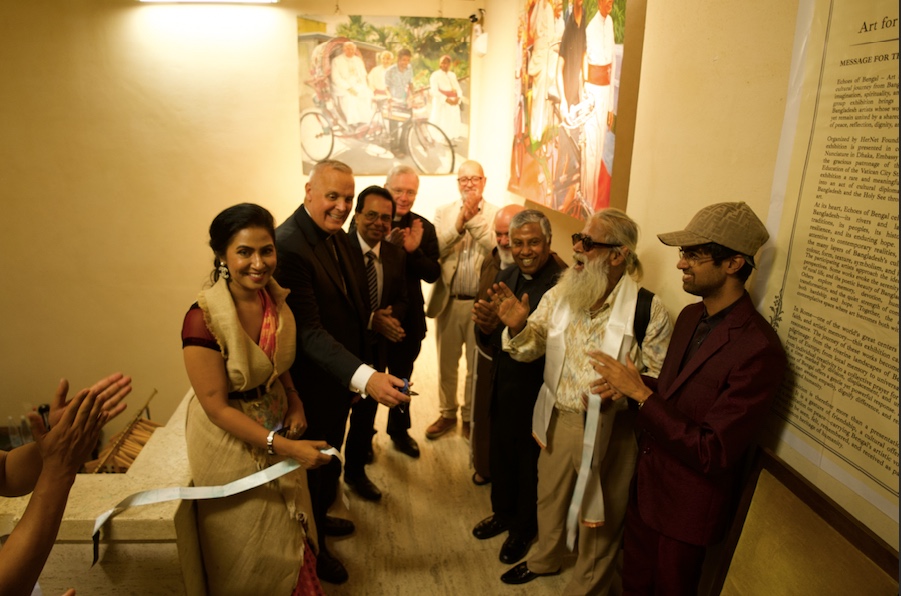
The Vatican Museums have inaugurated “Two Apostolic Visits to Bangladesh,” an exhibition celebrating two landmark moments in the recent history of relations between the Catholic Church and Bangladesh while highlighting the country’s rich artistic and cultural heritage.
Opened on 4 August, the exhibition brings together a three-wheeled traditional riksha used by Saint John Paul II during his historic apostolic visit to Dhaka in 1986, together with two paintings by distinguished Bangladeshi artists Alokesh Ghosh and Ahmed Shamsuddoha. Through these works, the exhibition recalls the messages of fraternity, peace, interreligious dialogue and human solidarity conveyed during the visits of Saint John Paul II and Pope Francis.
The traditional Bangladeshi riksha stands at the heart of the exhibition. More than an everyday means of transportation, the rickshaw represents the cultural identity, creativity and daily life of Bangladesh. Its presence in the Vatican Museums also carries a deeply symbolic meaning, reflecting the Popes’ desire to meet the people of Bangladesh within the context of their own culture and traditions.
The first featured painting, by renowned Bangladeshi watercolourist Alokesh Ghosh, recalls Saint John Paul II’s visit to Bangladesh on 19 November 1986. The Pope is portrayed travelling on a rickshaw surrounded by members of the local Church and the Bangladeshi people. The artwork evokes the spirit of his journey, during which he spoke strongly about fraternity, justice and peace and recognised the importance of cooperation among Muslims, Hindus, Buddhists and Christians in building the common good.
The second painting, by celebrated contemporary Bangladeshi artist Ahmed Shamsuddoha, commemorates Pope Francis’ apostolic visit to Bangladesh from 30 November to 2 December 2017, undertaken under the theme “Harmony and Peace.”
In vivid colours inspired by the artistic traditions of Bengal, Shamsuddoha depicts Pope Francis seated on a richly decorated rickshaw, greeting the crowds with a gesture of blessing. The work reflects the central themes of the 2017 visit, including interreligious dialogue, reconciliation, solidarity with vulnerable communities and the humanitarian crisis faced by Rohingya refugees fleeing Myanmar.
Together, the two paintings and the historic rickshaw create a visual narrative spanning more than three decades. They demonstrate how cultural heritage and artistic expression can preserve the memory of diplomatic, religious and humanitarian encounters while communicating messages of peace across generations.
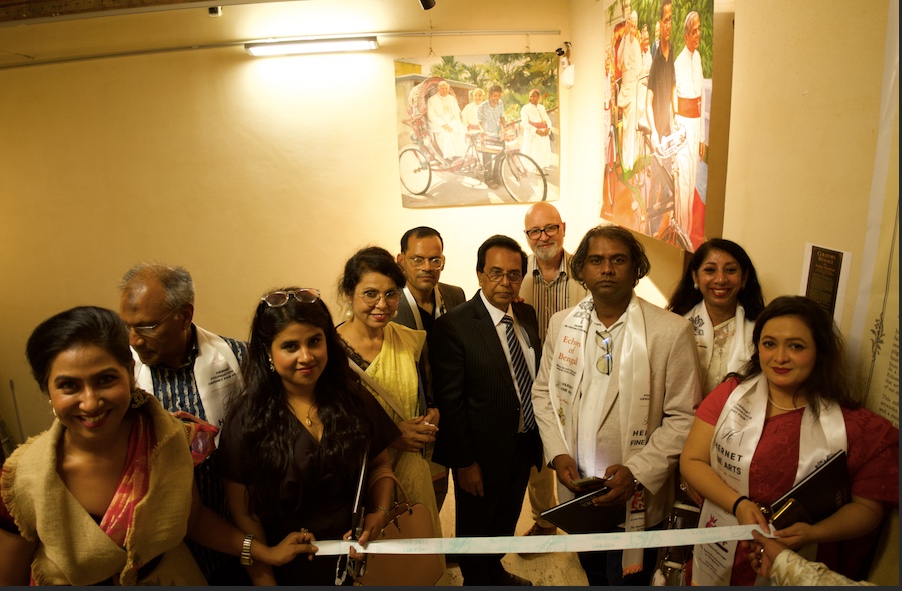
HerNet Foundation and HerNet Fine Arts: Building a Cultural Bridge
The exhibition also forms part of a wider cultural initiative involving HerNet Foundation and its artistic platform, HerNet Fine Arts, which have worked to bring Bangladeshi art and artists to international audiences.
HerNet Foundation, a Bangladesh-based organisation engaged in social, cultural and community initiatives, has developed programmes promoting inclusion, creativity, public engagement and social responsibility. Its work has increasingly included cultural initiatives designed to provide artists with international platforms and to demonstrate the role of culture in strengthening understanding among communities.
HerNet Fine Arts, the cultural and artistic platform of HerNet Foundation, was established with the objective of promoting Bangladeshi artists nationally and internationally and developing connections with museums, galleries, embassies, cultural institutions and collectors. The platform seeks to create sustainable opportunities for Bangladeshi and South Asian artists within the international art community.
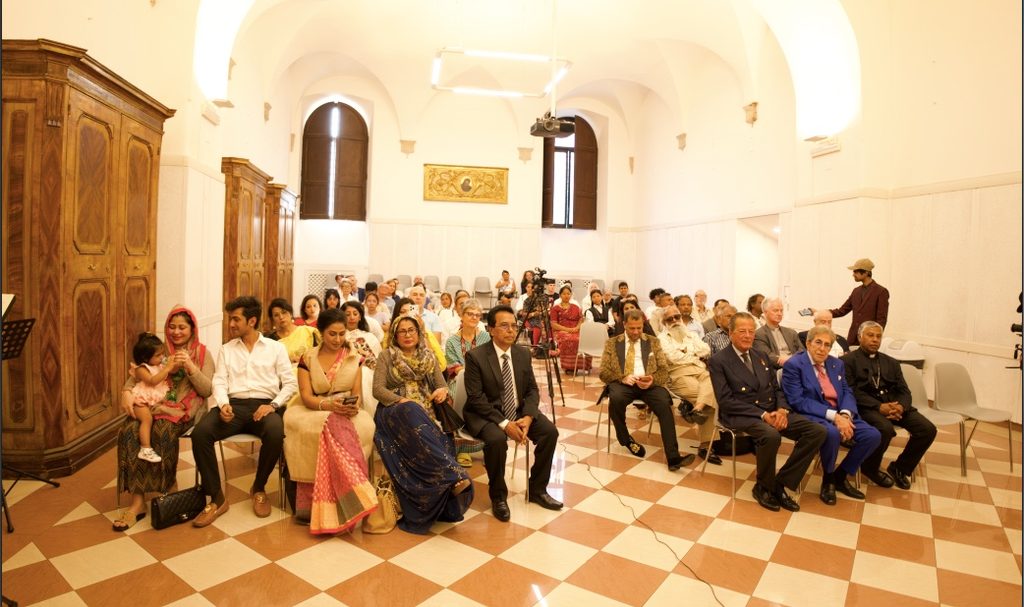
This broader mission was demonstrated through “Echoes of Bengal – Art for Peace Pilgrimage,” presented by HerNet Foundation and HerNet Fine Arts at the Grand Hall of Palazzo della Cancelleria in Rome in July 2026. Curated by Alisha Pradhan, Founder and General Secretary of HerNet Foundation and Chief Curator of HerNet Fine Arts, the exhibition brought the artistic heritage of Bengal into one of Rome’s important cultural settings under the patronage of the Vatican and in collaboration with the Apostolic Nunciature/Embassy of the Holy See in Dhaka.
The Rome initiative represented an important milestone in Bangladesh’s cultural diplomacy, providing an international platform for established Bangladeshi artists, contemporary voices, women artists, emerging talents and members of the diaspora. It also sought to position Bangladeshi art within a wider international conversation about peace, faith, culture and shared humanity.
The initiative included an Art Camp on 1 July 2026 in the historic courtyard of Palazzo della Cancelleria, where Bangladeshi and international artists worked together and exchanged ideas. The participation of British artist Peter Jonas and Italian artist Paola Belfore added an international dimension to the programme.
The involvement of HerNet Foundation and HerNet Fine Arts therefore extends beyond the presentation of individual artworks. It reflects a larger effort to use art as a vehicle for cultural diplomacy, international friendship, intercultural dialogue and peace.
Special Appreciation to the Apostolic Nuncio
HerNet Foundation and HerNet Fine Arts have expressed their immense gratitude and appreciation to His Excellency Archbishop Kevin S. Randall, Apostolic Nuncio to Bangladesh, whose support and engagement have been of exceptional importance to these cultural initiatives.
Archbishop Randall’s presence at the Rome programme, including his engagement with artists during the Art Camp, represented a meaningful gesture of encouragement towards Bangladeshi artists and the broader vision of strengthening cultural connections between Bangladesh, the Holy See and the international community. His interaction with the artists and organisers helped reinforce the message that culture and art can serve as bridges between peoples, faiths and nations.
HerNet Foundation and HerNet Fine Arts extend their deepest thanks to the Apostolic Nuncio for his gracious support, encouragement and commitment to cultural dialogue. His role has contributed to creating an environment in which Bangladeshi artistic expression can be presented with dignity and confidence on an international stage.
The Foundation also recognises the importance of the collaboration and goodwill extended by the Apostolic Nunciature and the Embassy of the Holy See in Dhaka, which have helped strengthen the cultural bridge between Bangladesh and the Holy See.
Restoring the Artistic Memory
In preparation for the Vatican Museums exhibition, the two paintings belonging to the Apostolic Nunciature in Bangladesh underwent careful conservation at the Vatican Museums’ Paintings and Wooden Materials Restoration Laboratory. Cleaning of the painted surfaces and reintegration of areas of loss restored the works’ visual clarity and allowed their artistic details to be appreciated once again.
The conservation process adds another important dimension to the exhibition: the preservation of Bangladeshi artistic heritage within an international cultural institution.
Ultimately, “Two Apostolic Visits to Bangladesh” is more than a presentation of historical objects and paintings. It is a story of encounter—between Bangladesh and the Holy See, between different religious traditions, and between artistic heritage and contemporary cultural diplomacy.
From the rickshaw that carried Saint John Paul II through Dhaka to the artistic interpretations of two papal visits, the exhibition demonstrates how memory can become a bridge between cultures.
For HerNet Foundation and HerNet Fine Arts, the initiative represents part of a continuing commitment to place Bangladeshi art and culture on the international stage. It affirms their belief that art can transcend borders and differences, creating opportunities for dialogue, friendship, empathy and peace.
As Bangladesh’s artists continue to reach new international audiences, initiatives such as these offer a powerful reminder that the country’s cultural identity is not simply something to be preserved—it is something to be shared with the world.