
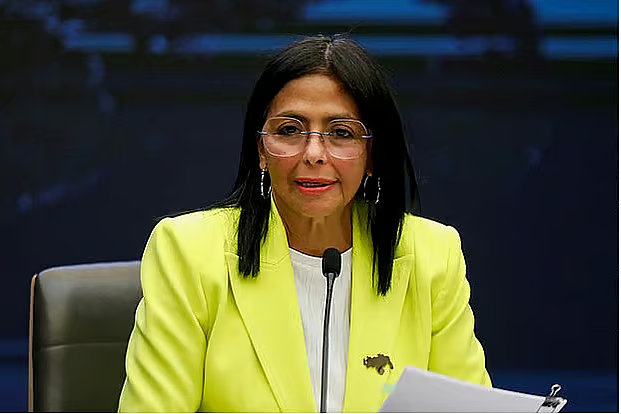
U.S. intelligence assessments question whether Venezuela’s interim president, Delcy Rodríguez, will sever Caracas’s ties with U.S. adversaries and cooperate fully with the Trump administration’s strategy, according to four sources familiar with recent reporting.
Officials in Washington have urged Rodríguez to expel diplomats and advisers from Iran, China, and Russia—states whose envoys attended her swearing-in earlier this month—and to unwind security and energy relationships built under Nicolás Maduro, detained by the United States on Jan. 3. Rodríguez has not issued any formal break with those partners.
CIA Director John Ratcliffe met Rodríguez in Caracas on Jan. 15 to discuss Venezuela’s political roadmap, the sources said, but the meeting did not dispel analytic skepticism. While Rodríguez has taken steps seen as conciliatory—releasing some political detainees and authorizing the sale of 30–50 million barrels of crude to the United States—she also publicly complained of U.S. “interference” in a weekend speech.
The administration views curbing rival influence in the Western Hemisphere and unlocking U.S. energy investment in Venezuela as key objectives; if Rodríguez resists, officials fear Washington’s leverage could diminish and plans to avoid direct military intervention could fray. As a hedge, U.S. interlocutors are also maintaining quiet contacts with senior military and security figures, the sources said.
Intelligence reporting also casts opposition figure María Corina Machado as a potential long-term leadership option, though analysts judge she currently lacks the institutional ties in the security forces and state oil sector needed to govern. President Trump has said he wants her “connected” to the leadership and advisers are weighing a formal advisory role, according to officials.
The CIA and the Venezuelan government did not comment. A senior U.S. official said the administration will maintain “maximum pressure” and expects continued cooperation from Venezuela’s leaders.