
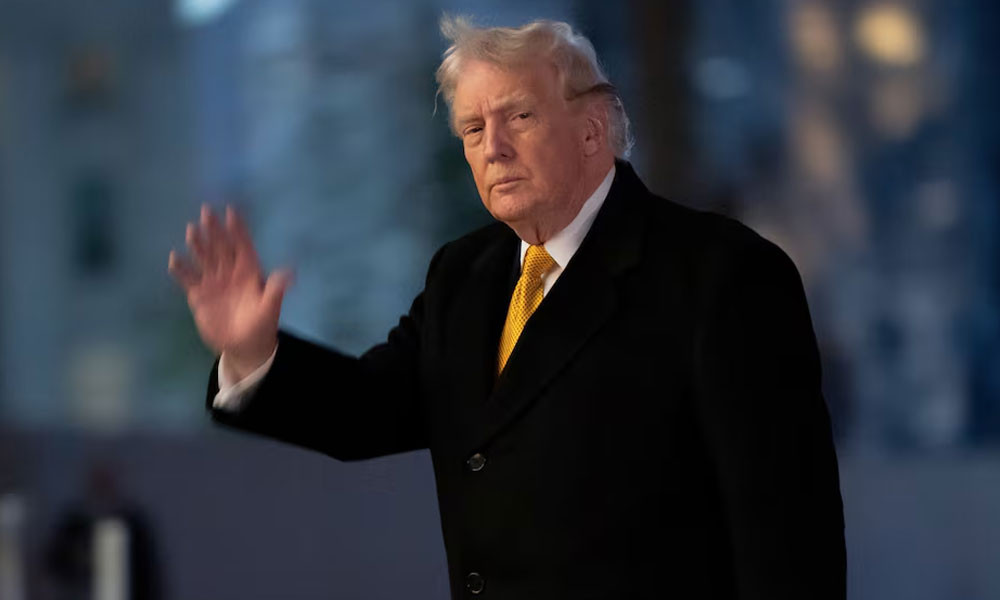
U.S. President Donald Trump said he does not need international law to guide his foreign policy, insisting his “own morality” is sufficient as Washington faces global backlash over a clandestine operation that seized Venezuelan President Nicolás Maduro.
In an interview with the New York Times, Trump said adherence to international law “depends on how you define it,” adding, “I don’t want to hurt people,” while signaling willingness to wield hard military power. His comments follow Saturday’s pre-dawn strikes in Caracas, where explosions were reported near key military sites before U.S. forces extracted Maduro—an action critics call a clear breach of the UN Charter’s prohibition on the use or threat of force against another state’s territorial integrity or political independence.
Trump has since said the United States will “run” Venezuela temporarily and leverage the country’s oil resources, while offering cooperation to interim leader Delcy Rodríguez—warning in a separate Atlantic interview that she could face consequences “greater than Maduro’s” if she resists U.S. plans. He has also hinted at possible action against Colombia’s leftist government and renewed interest in asserting control over Greenland, after previously ordering strikes on Iranian nuclear facilities in June.
Legal scholars and UN officials cautioned that sidelining international law risks a broader unraveling of global norms. Yasra Suedi, professor of international law at the University of Manchester, called the stance “extremely dangerous,” arguing it could encourage powers like China or Russia to mirror U.S. behavior in flashpoints such as Taiwan or Ukraine. UN special rapporteur Margaret Satterthwaite warned of a slide back toward an “imperial era,” while Northwestern University political scientist Ian Hurd said U.S. interventions in Latin America—from Chile to Haiti—offer a “grim record” that seldom yields long-term benefits.
On Capitol Hill, senators are pursuing measures to curb further Venezuela operations absent congressional authorization, intensifying a domestic fight over war powers as the administration signals a more aggressive global posture.