
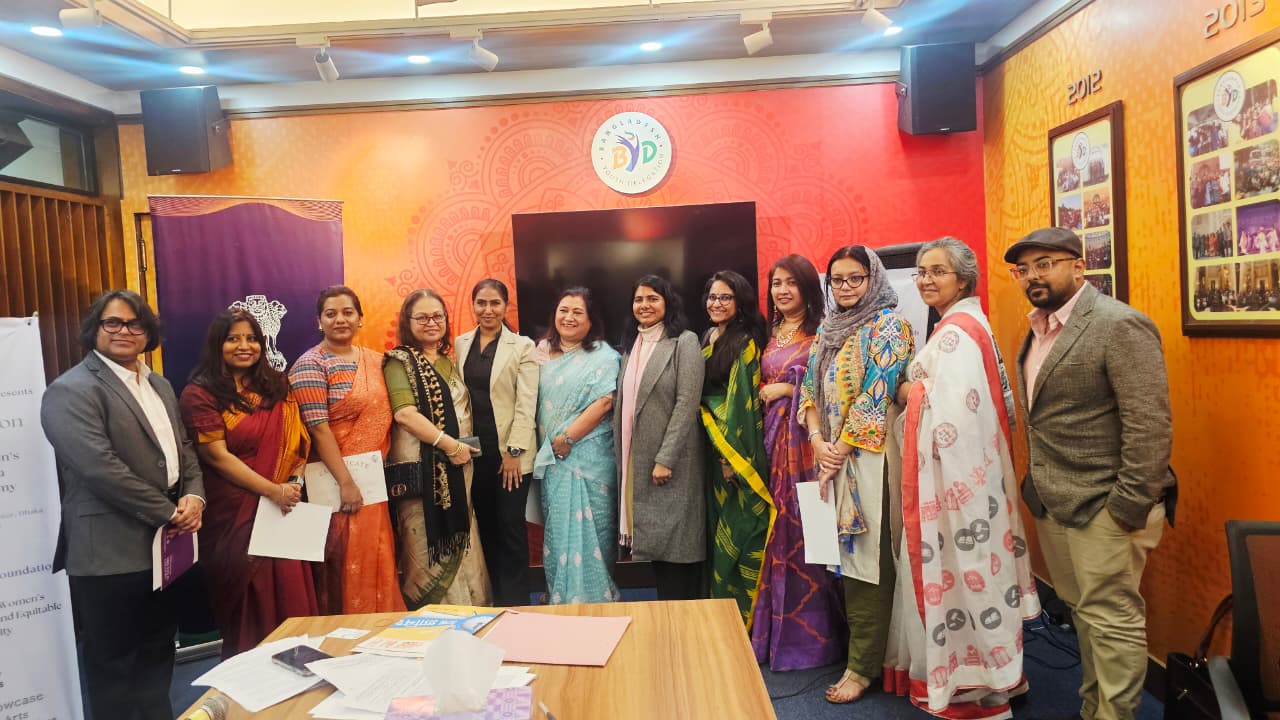
HerNet Foundation and HerNet TV, in partnership with the Indira Gandhi Cultural Centre (IGCC), the cultural wing of the High Commission of India in Dhaka, hosted a high-impact panel discussion titled “Breaking the Barriers: Pathways to Women’s Formal Employment in a Changing Economy” at the IGCC auditorium on 11 December 2025. The dialogue brought together leading policymakers, corporate leaders, academics, development practitioners and mental health and social sector experts to examine practical reforms to expand women’s access to formal, secure and equitable work.
The session was moderated by Alisha Pradhan, Secretary General, HerNet Foundation and CEO, HerNet TV. In her opening, she recalled Bangladesh’s historic victory of 16 December and framed women’s economic participation as central to the country’s next phase of inclusive growth. Citing recent labour-force data, she highlighted the decline in female labour-force participation and the falling share of women in the ready-made garment (RMG) sector, calling it “a structural warning sign and a moral challenge” that requires urgent, coordinated action from both public and private sectors.
On behalf of the host institution, the Director of ICCR in Dhaka, Ms. Ann Mary, welcomed the guests and reaffirmed ICCR/IGCC’s commitment to platforms that link culture, democracy and inclusive development.
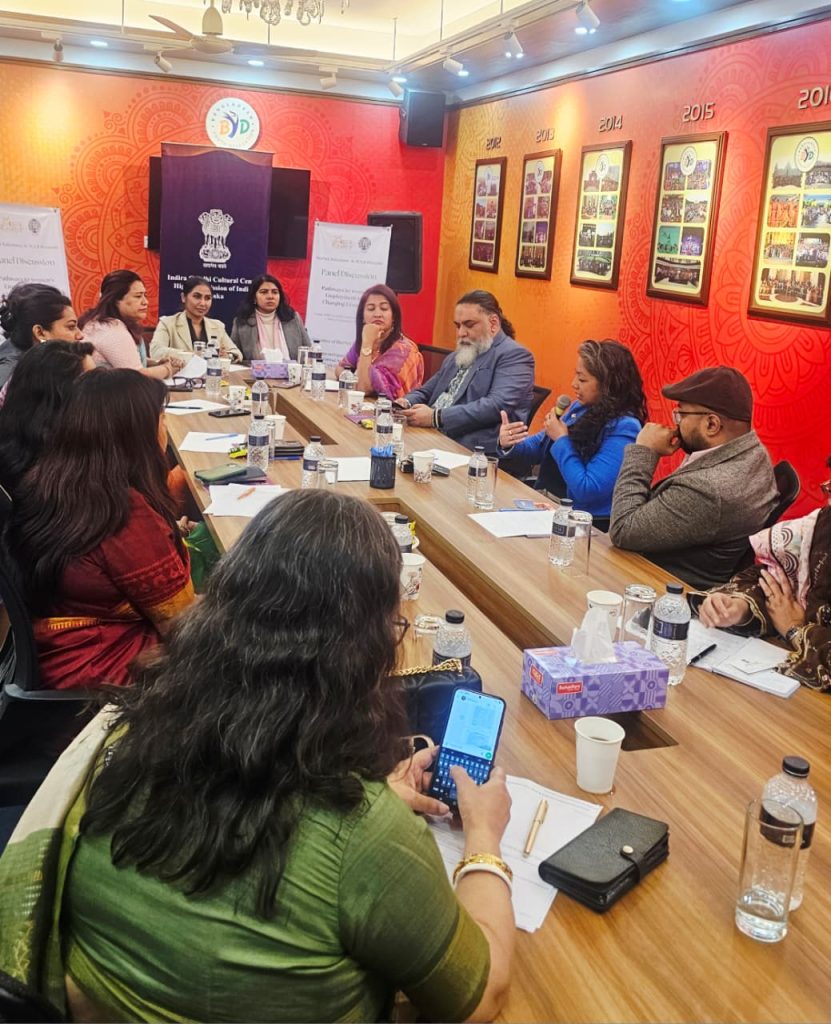
Cross-Sector Panel of Distinguished Guests
The panel featured a diverse group of leaders representing climate, gender, business, academia, mental health, fashion, media and civil society, including:
- Rupali Chowdhury, Chairman & CEO, Berger Paints
- Valentina Spinedi, Climate Specialist, UNICEF
- Humaira Aziz, Gender Specialist, UNICEF
- Prof. Sadia Mahjabin, University of Liberal Arts Bangladesh (ULAB)
- Tasnuva Ahmed, CEO, Celestial Tech
- Prof. Rafiqul Islam, Jagannath University
- Nazim Farhan Choudhury, ADCOM, Managing Director
- A. Mashroor Huda, Managing Director, Tronix
- Tootli Rahman, President, Heritage Palli NGO
- Ms. Tawhida Shiropa, Founder & CEO, Moner Bondhu
- Priti Chakraborty, Senior Vice President, Bangladesh Chamber of Industries; Chairman, United Medical College and Hospital
- Supa Barua, Country Coordinator, Terre des Hommes Netherlands (TdHNL)
- Adv. Masuma Akter, Fashion Designer
- Ms. Sharin Naomi, Academic
- Azmeeri Rezaq, Shajgoj, Chief Retail, SVP
Together, the panelists examined structural and social barriers keeping women out of formal work — from unpaid care burdens, unsafe or unreliable transport, and childcare gaps to harassment, lack of enforceable contracts and limited access to formal finance, skills and networks. Also students of ULAB participated in this dialogue reinforcing the notion of women empowerment.
Across the panel segments, speakers discussed:
- Binding constraints by sector (RMG, BPO, retail, health and care work) and how to move women into more stable, skill-based and formal roles.
- Childcare, transport and flexible work as core conditions for women’s sustained participation and advancement, including cost-sharing models between firms, the state and workers.
- Contracts and benefits that “stick” in SMEs, including grievance mechanisms, anti-harassment enforcement and director-level accountability.
- Finance as an on-ramp, such as payroll-linked credit, return-to-work grants and gender-responsive financial products that de-risk formal hiring and retention.
- Skills-to-placement pathways that prioritise retention and promotion over short-term training numbers.
- Public procurement and disclosure as levers for change, including gender inclusion scores, independent audits and quarterly indicators on women’s employment.
Corporate Perspective: Emphasis from Rupali Chowdhury
Bringing in a private-sector and corporate governance lens, Rupali Chowdhury, Chairman & CEO of Berger Paints, stressed that women’s formal employment must be treated as a core business and competitiveness issue, not a side project. She underlined three key points:
Inclusive workplaces as a strategic investment
She highlighted that companies with more women in formal, decision-making roles are better positioned to understand diverse consumer needs, innovate and manage risk. She noted that gender diversity should be tied to business strategy and performance indicators, rather than being viewed solely as a corporate social responsibility add-on.
Accountability from the top
She emphasised that policies on safe transport, anti-harassment, maternity and paternity benefits, and flexible work need visible backing from boards and CEOs to be effective. Without leadership-level accountability and regular reporting, she cautioned, even well-written policies can remain “documents on paper” instead of lived realities for women workers.
Building pipelines, not just entry points
She also stressed the importance of building a pipeline of women from entry-level roles to mid-management and leadership positions through mentoring, targeted training, and transparent promotion criteria. Creating pathways into supervisory and technical roles, she argued, is critical if Bangladesh is to move from a low-wage model to a skills- and innovation-driven economy.
Her intervention reinforced the message that corporate houses can and must play a catalytic role in normalising women’s leadership, institutionalising safe and dignified workplaces, and making gender metrics part of mainstream corporate performance dashboards.
Panelists throughout the session reiterated that women’s economic empowerment is not only a human rights imperative but also essential for productivity, export competitiveness and the long-term resilience of businesses and the national economy.
Call to Action and Next Steps
In her concluding remarks, moderator Alisha Pradhan urged all sectors represented in the room — diplomats, business leaders, academics, advocates and development partners — to translate the evening’s insights into concrete institutional commitments, with measurable benchmarks and transparent progress tracking. She reiterated that the success of Bangladesh’s development trajectory would be judged not only by GDP, but by “the dignity, opportunity and agency afforded to every citizen, regardless of gender.”
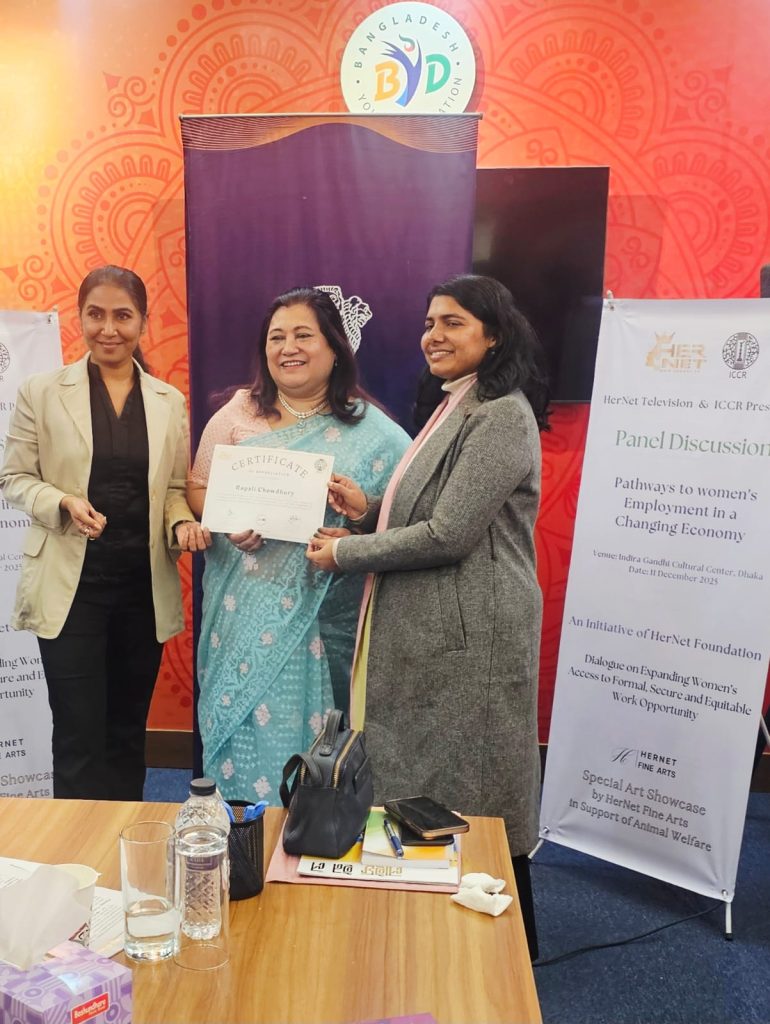
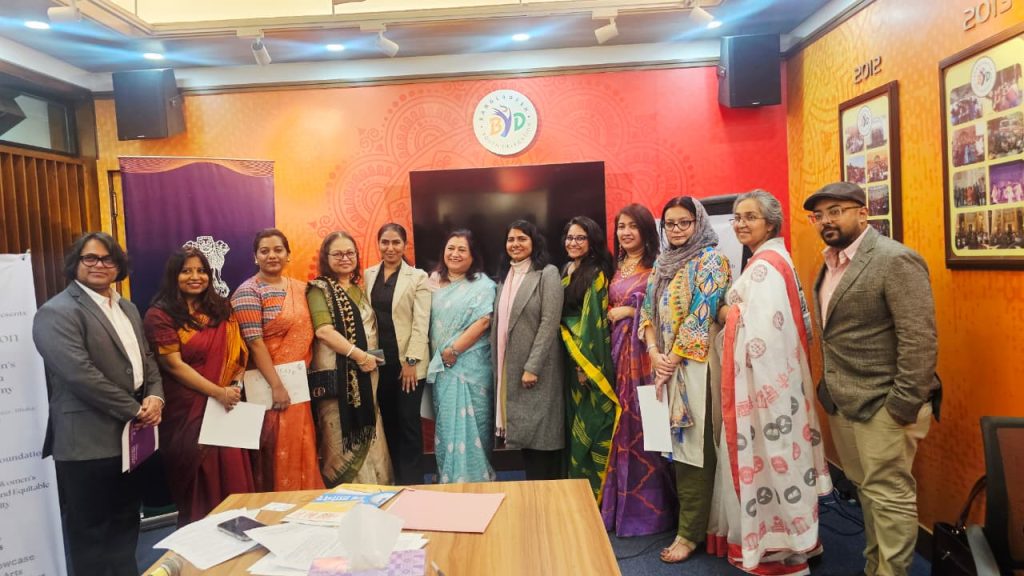
The session closed with a commitment-round from panelists, a networking segment, and distribution of digital certificates. HerNet Foundation committed to producing a concise policy brief summarising key recommendations and next steps emerging from the discussion, to support ongoing advocacy and reform for women’s formal employment in Bangladesh.