
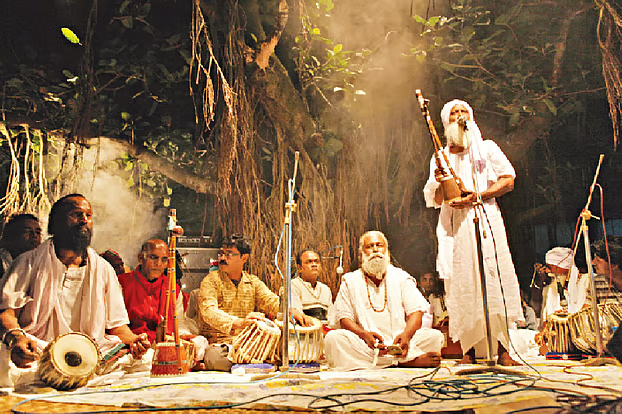
The recent surge of hostility toward Baul singers, palagaan troupes and shrine-centered observances is being driven as much by money and local power as by theology, analysts and cultural organizers say, warning that Bangladesh’s countryside is entering a new phase of cultural and political contestation.
Each year in Agrahayan, when farmers sell newly harvested paddy and disposable cash briefly rises, villages across Bangladesh host winter-night entertainments—Baul and palagaan shows, shrine urs, jalsa and, increasingly since the 1990s, mass religious sermons (waz mahfil). For decades these competing traditions coexisted uneasily. This season, clashes and legal actions have multiplied.
Demographic and market shifts have thinned village audiences: tens of millions now live in cities or abroad, while television and smartphones have displaced open-air shows. With a smaller pie of ticket sales and donations, rivalry among rural organizers has intensified—and turned violent.
Conservative platforms, whose preachers routinely denounce Baul music, shrine rituals and folk stages, are now leveraging organization, legal complaints and street pressure to push rivals off the calendar, according to cultural workers. The objective, they argue, is not only moral policing but the capture of the seasonal influx of village spending—and the local political influence that follows the money.
Data cited by government communications earlier this year recorded at least 44 attacks on shrines in the first five months of the interim period; incidents have continued, including assaults on Baul akhras and cases filed against singers. The arrest of palagaan performer Abul Sarkar triggered beatings of supporters in Manikganj and Thakurgaon; in Dhaka, a man “suspected” of being a Baul was thrashed near Paltan while a separate protest at Shahbagh was attacked. In Brahmanbaria, a family of visually impaired street performers say they were warned off a public stage, briefly silencing a 50-year livelihood.
Observers link the post–July 2024 political realignment to the trend. With the fall of the previous government and the fragmentation of the protest coalition, right-leaning religious forces have pressed for dominance in village public spheres. Marginalizing Bauls and folk performers—unlikely to back those forces electorally—serves both ideological gatekeeping and election-season mobilization, critics contend.
The stakes are also economic. Controlling winter events means controlling donations, vendor fees and patronage networks. “Whoever monopolizes the stage,” one rural organizer said, “monopolizes the marketplace—and then the union politics.”
Cultural historians warn that fear-driven cancellations and selective enforcement are eroding centuries of syncretic practice—Baul humanism, palagaan’s narrative ethics and shrine-centered hospitality—that once mediated village pluralism. The longer violence and intimidation go unanswered, they say, the more normalized coercion becomes.
Mainstream parties have been largely muted, and the state response has been inconsistent—silences that activists argue embolden vigilantes. Without clear protections for peaceful performance and neutral policing of local permits, they caution, Bangladesh’s rural cultural economy could slide from competition into capture, trading coexistence for a politics of exclusion.