
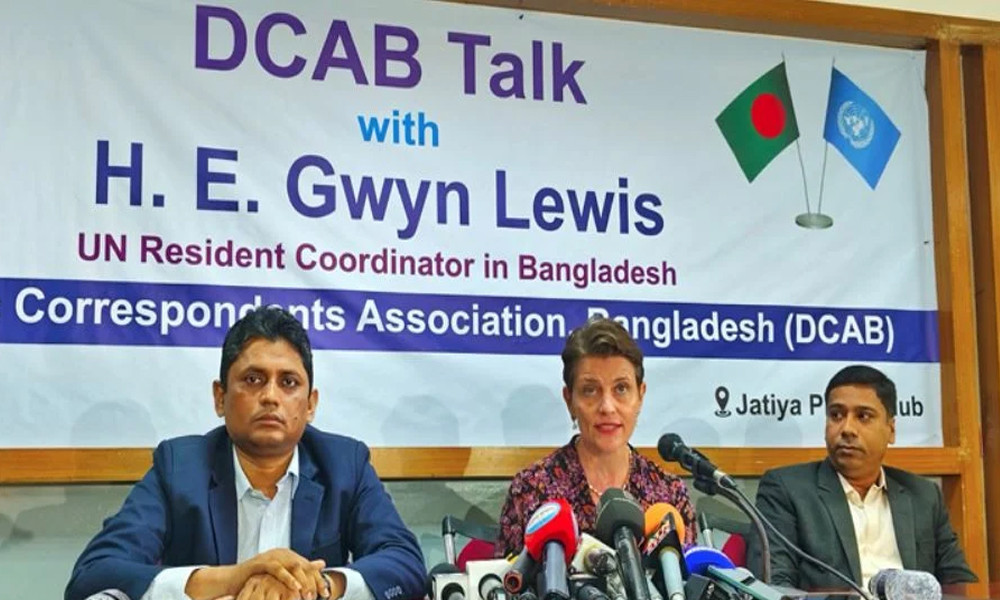
The establishment of a humanitarian corridor in Myanmar’s Rakhine State hinges entirely on the mutual consent of both the Bangladesh and Myanmar governments, according to Gwyn Lewis, the United Nations Resident Coordinator in Bangladesh. She stated that if both nations agree, the UN stands ready to assist in facilitating the corridor, but emphasized that the UN itself will not make the decision.
Lewis made these remarks on Wednesday while speaking at an event organized by the Diplomatic Correspondents Association, Bangladesh (DCAB) at the VIP Lounge of the National Press Club in Dhaka. Addressing questions from journalists, she reiterated that the United Nations is willing to provide technical support in the upcoming national elections of Bangladesh, but the timing and conduct of the elections remain solely within the jurisdiction of the Bangladeshi government and its people.
Responding to another query, she highlighted the increasing difficulty and challenges in delivering humanitarian aid in Rakhine, urging global attention to the issue. Regarding the long-standing Rohingya crisis, Lewis reiterated the UN’s position favoring the safe and voluntary repatriation of Rohingya refugees to Myanmar and called for a political solution to the crisis. She underscored that the matter has transcended being a domestic concern and is now a global issue. The UN, she noted, has continuously provided support to safeguard the lives of Rohingya refugees.
On the subject of governance reforms in Bangladesh, Lewis expressed the UN’s support for the government’s reform initiatives, while clarifying that the scope and nature of such reforms are decisions for the government to make. When asked whether the UN prioritizes elections or reforms in Bangladesh, she stated that this is not a matter for the UN to decide, but rather for the government and the people of Bangladesh.
Regarding the establishment of a UN human rights office in Dhaka, Lewis confirmed that the plan is finalized and the office will begin operations soon, albeit on a small scale initially. When asked for her views on the possibility of banning the ruling political party Awami League, she responded that such decisions are not within her purview and fall under the authority of the government, based on the prevailing political circumstances.
Lewis concluded by praising Bangladesh’s significant role in UN peacekeeping missions, particularly in challenging environments such as Liberia and the Democratic Republic of Congo. She commended the dedication and performance of Bangladeshi peacekeepers in maintaining global peace and security.