
At Nairobi’s international airport, it is a common sight to see groups of Kenyan women, dressed in matching T-shirts, eagerly taking selfies before boarding their flights. They are filled with hope and anticipation, discussing how they will use their earnings from their new jobs in Saudi Arabia. Many dream of building homes, educating their children, and securing a better future. However, reality often diverges starkly from their expectations.
A contrasting scene unfolds at the airport’s arrivals section. Women return home, some unpaid, others malnourished, and many bearing physical and emotional scars from abuse. Worse still, some return in coffins, their deaths shrouded in mystery. Over the last five years, at least 274 Kenyan workers have died in Saudi Arabia, the majority of them women. In 2024 alone, the toll reached 55—double that of the previous year. Autopsy reports offer vague and often contradictory causes of death, including trauma, electrocution, and burns. One case was simply listed as ‘brain dead.’
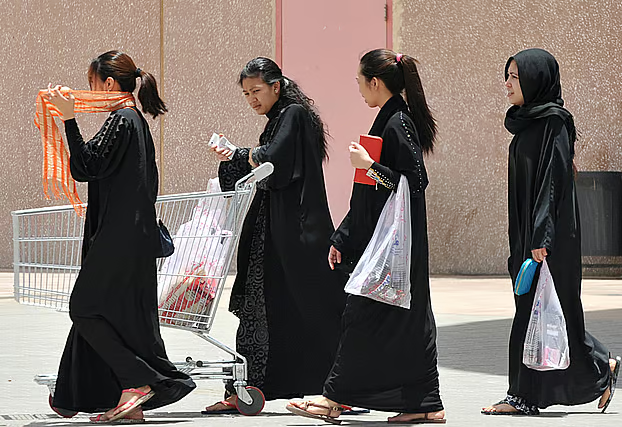
Economic hardship in Kenya and Uganda has driven thousands of women to seek employment in Saudi Arabia, lured by recruitment agencies and government-backed initiatives. Saudi Arabia hosts nearly 500,000 workers from these two countries, primarily women employed as domestic workers. While many return home with improved fortunes, others endure appalling conditions, including withheld wages, physical abuse, sexual violence, and even enslavement. Human rights groups have long documented widespread abuse, attributing it to outdated labor laws that leave domestic workers vulnerable.
However, the exploitation is not limited to Saudi employers alone. Investigations reveal that powerful political figures in Kenya and Uganda own many of the recruitment agencies sending these women abroad. For instance, Fabian Kauli Muli, vice chairman of Kenya’s parliamentary labor committee, is expected to advocate for workers’ rights and push for better protection. Yet, he himself owns a labor recruitment agency. Margaret Mutheu Mueni, one of the workers sent abroad through his company, recounted harrowing experiences of being starved and having her passport confiscated by her Saudi employer, who openly declared that she had been ‘bought.’ When she sought help from the recruitment agency, she was mockingly told to ‘swim across the Red Sea back to Kenya.’
Similarly, Ugandan women have suffered extensively, though the government has not disclosed official death tolls. One recent case involved four Ugandan women who had been held captive in Saudi Arabia for six months. In a desperate video appeal, one of them pleaded, ‘We are exhausted from being detained against our will.’ Their recruitment agency, it was later revealed, was owned by a relative of Uganda’s president.
Despite having laws to protect foreign workers, Saudi Arabia has been criticized for failing to enforce them effectively. Complaints from domestic workers frequently go ignored, and many victims fear speaking out due to threats from both their employers and the agencies that placed them in these jobs. Kenyan President William Ruto has expressed interest in increasing labor migration to Saudi Arabia, with a goal of sending half a million workers in the coming years. Notably, his senior advisor, Moses Kuria, and his brother both own labor export firms.
When questioned about the ethical concerns surrounding government officials owning recruitment agencies, the Kenyan president’s spokesperson dismissed allegations of a conflict of interest, stating that the advisor ‘does not handle labor issues.’ In Uganda, a high-ranking police official and a former military attaché to the U.S. were found to be among those profiting from sending workers to Saudi Arabia, maintaining close ties with the Saudi recruitment firms responsible for many of the abuses.
For many families, the tragic homecoming of their loved ones in wooden coffins has become an all-too-frequent reality. Each month, grieving relatives travel from remote villages to Nairobi to receive the remains of those who left in search of a better life. They return home carrying not just the weight of a casket, but also the burden of unanswered questions and unfulfilled dreams.