
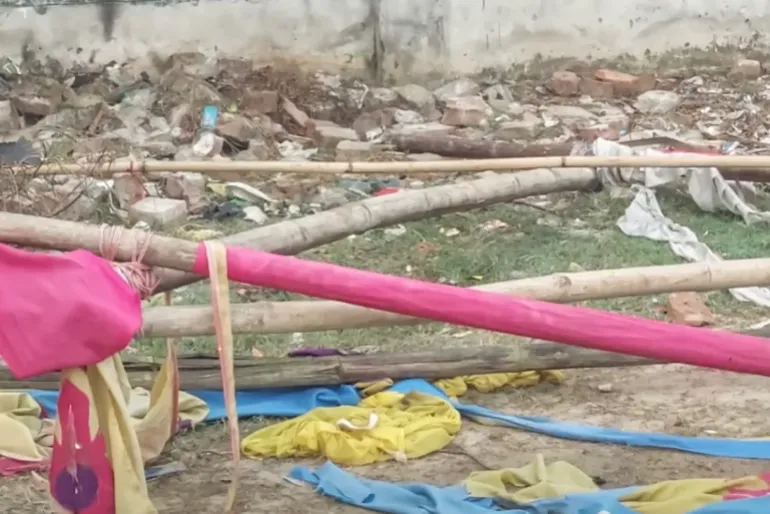
A women’s football match in northwestern Bangladesh was cancelled on January 29, 2025, after local religious protesters vandalized the venue, marking the second such incident in as many days. The match, scheduled to take place in the city of Joypurhat between the district’s women’s football team and a team from Rangpur, was disrupted by a group of protesters, including students from a local religious school.
According to tournament organizer Samiul Hasan Emon, a large group of demonstrators marched towards the match venue, where tensions escalated, leading to the cancellation of the event. “The Islamists in our area gathered in a field and marched toward the venue. There were hundreds of them. The situation worsened, and we had to cancel today’s event,” Emon told AFP.
The protests were led by Abu Bakkar Siddique, the headmaster of a local religious school, who joined forces with his students, as well as teachers and students from other religious institutions. Siddique expressed that women’s participation in football was un-Islamic, emphasizing that it was their religious duty to stop activities they perceived as contradictory to their beliefs.
This cancellation follows a similar incident in the nearby city of Dinajpur the day before, where protesters wielding sticks forced the postponement of a women’s match just half an hour before kickoff. In this case, the players were swiftly moved to safety, and four individuals were injured when protesters and counter-demonstrators clashed with bricks, although all the injured were later discharged from the hospital.
The Bangladesh Football Federation (BFF) swiftly condemned the violent protests, reiterating the importance of upholding women’s rights to participate in sports. Despite the setbacks, these incidents have sparked further conversations about the challenges women face in sports in the region, particularly when it comes to clashes between religious beliefs and women’s empowerment initiatives.
The protests highlight the ongoing tension between traditional views and the growing participation of women in various fields, including sports. Women’s football, in particular, continues to face resistance from certain segments of society, which see such activities as incompatible with their interpretation of cultural and religious norms.