
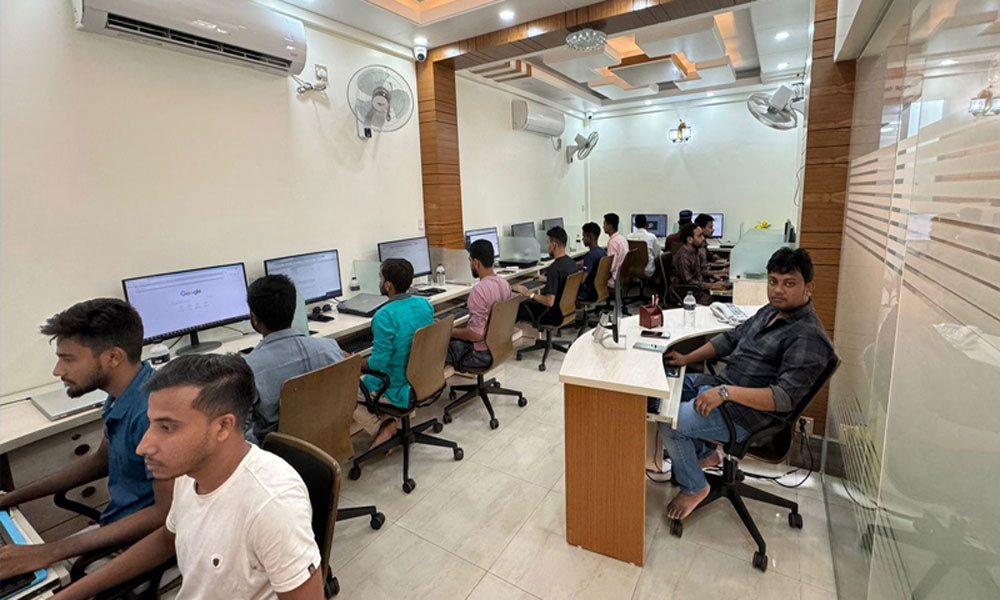
Bangladesh is facing an alarming situation with its job market, particularly affecting the country’s youth. Despite a growing labor force, with millions of new faces joining annually, job creation is not keeping pace. Official estimates reveal that there are around 2.6 million unemployed people in the country, and among them, 800,000 are highly educated individuals, with a significant 2.1 million being youth. This mismatch between labor market demand and supply has left many young people frustrated and searching for alternatives.
Rising Youth Unemployment
A recent labor force survey in 2022 estimated that 2.6 million people in Bangladesh were officially unemployed, with more than 83% of this figure being young people. Compared to 2017, the number of highly educated unemployed individuals has nearly doubled. Approximately 20-22 million young people are entering the workforce every year, but neither public nor private sectors are able to absorb this large influx. Even though more than 500,000 positions in the public sector remain vacant, recruitment has been slow and ineffective.
Government job recruitment processes have been stalled due to political unrest and prolonged delays caused by the COVID-19 pandemic. The Public Service Commission (PSC), for example, has struggled to conduct exams on time, with many scheduled tests postponed. A telling statistic is the competition for public sector jobs: in the most recent 46th Bangladesh Civil Service (BCS) examination, over 338,000 applications were submitted for just 1,140 positions—meaning each candidate faced more than 200 competitors.
Turning to Alternative Employment
Faced with limited opportunities in traditional sectors, many young people have started exploring alternative avenues to make a living. Graduates are increasingly taking up temporary jobs like tutoring, ride-sharing, delivery services, and even opening small tea stalls to support themselves. Some, disillusioned by the lack of opportunities, are turning to agriculture and freelancing.
Freelancing, in particular, has become a lifeline for many educated youths. Reports from the Bangladesh Freelancer Development Society indicate that at least 1 million freelancers in Bangladesh work across 153 global platforms. Meanwhile, e-commerce and content creation on platforms like YouTube and Facebook have also gained popularity. Additionally, many graduates have ventured into agriculture, starting businesses like mushroom farming, poultry farming, and fisheries. While these alternative paths are providing some income, they are often far from the desired or ideal job roles these individuals aspired to during their education.
The Exodus of Educated Youth
An increasing number of young people are looking abroad for better opportunities. Statistics indicate that 42% of educated youths in Bangladesh want to go overseas, either for higher education or employment. According to UNESCO’s “Global Flow of Tertiary-Level Students,” more than 52,000 students left Bangladesh for higher education in 2023, compared to 49,000 the year prior. Most of these students do not return to Bangladesh, choosing instead to settle abroad, where they see better economic and social opportunities.
The reasons behind this exodus are manifold. Many young people cite political instability, the high cost of living, inadequate healthcare, and a lack of job security as reasons for leaving the country. One Bangladeshi expatriate, who left a high-paying job in the country to pursue further studies in the United States, explained that political instability and economic uncertainty were the key factors driving his decision to leave. “Even with a six-figure salary, it’s difficult to live comfortably due to inflation, poor air quality, and daily traffic jams,” he said.
Private Investment Stagnation
Economists have pointed out that one of the reasons for the sluggish job creation in Bangladesh is the stagnation of private investment. For over a decade, private sector investment has been stuck at around 22-23% of GDP. Without significant increases in investment, particularly in key industries, the creation of new jobs will continue to lag behind the growing demand from an ever-expanding workforce. This stagnation is directly contributing to the country’s high unemployment rate, especially among the educated youth.
Government Responses and the Path Forward
In response to the growing crisis, senior government officials have acknowledged the severity of the issue. The Ministry of Public Administration has promised that recruitment will be accelerated in the coming months, and the Public Service Commission will be restructured to speed up the examination and hiring processes. However, the government’s efforts alone will not suffice without significant growth in the private sector.
To resolve the current situation, economists emphasize the need for a more dynamic approach to boosting private investment, modernizing the education system to align with market demands, and expanding skill development programs, especially in sectors like IT, freelancing, and agriculture. Additionally, policy reforms that create a more business-friendly environment could incentivize both local and foreign investments, creating the much-needed jobs to sustain the country’s growing labor force.
The youth of Bangladesh are looking for opportunities, and without immediate action, the risk of a “brain drain” increases, as more and more educated individuals seek better prospects abroad. To preserve the country’s future prosperity, it is essential for both the government and private sector to work hand in hand to ensure that Bangladesh’s workforce is equipped with the skills, resources, and opportunities to thrive.
Bangladesh’s current job market paints a grim picture, especially for its youth. While alternative avenues like freelancing, agriculture, and small businesses are providing some relief, they are not enough to address the root causes of youth unemployment. With tens of thousands leaving the country every year and a lack of robust private sector investment, the government must act swiftly to address these challenges. A holistic approach, involving government reforms, private investment, and skills development, is needed to reverse the current trends and ensure that Bangladesh’s youth have a bright future in their own country.