
In a bid to assist the communities devastated by severe flooding in central, eastern, and southeastern Bangladesh, the Turkish Cooperation and Coordination Agency (TIKA) has dispatched emergency relief to the region.
TIKA, Turkey’s principal international aid organization, announced the distribution of 3,000 relief packages to the flood victims across Feni, Noakhali, Laksmipur, and Cumilla districts, demonstrating its commitment to aid those in crisis. The relief efforts were detailed in a press release issued today.
Dinmoni Sharma, Deputy Director of the Fire Service and Civil Defence Chattogram Division, received 500 of these packages on Wednesday at Maijdi Fire Service Station in Noakhali. The packages were handed over by TIKA’s Country Coordinator Sevki Mert Baris, on behalf of Brigadier General Md. Main Uddin, the Director General of Fire Service and Civil Defence.
Established in 1992, TIKA has expanded its humanitarian and developmental initiatives globally, establishing its Dhaka Programme Coordination Office in 2014. This office also coordinates TIKA’s projects in Maldives, Nepal, Sri Lanka, and Bhutan, reinforcing Turkey’s role in regional development and humanitarian assistance.
The Ministry of Disaster Management and Relief reported that the current floods have affected over 5.48 million people across 492 unions and municipalities within 68 upazilas in 11 districts. The ongoing efforts by TIKA aim to alleviate some of the hardships faced by these communities, showcasing Turkey’s solidarity with the people of Bangladesh during this challenging time.
Bangladesh Faces Widespread Industrial Unrest as Government Vows Crackdown
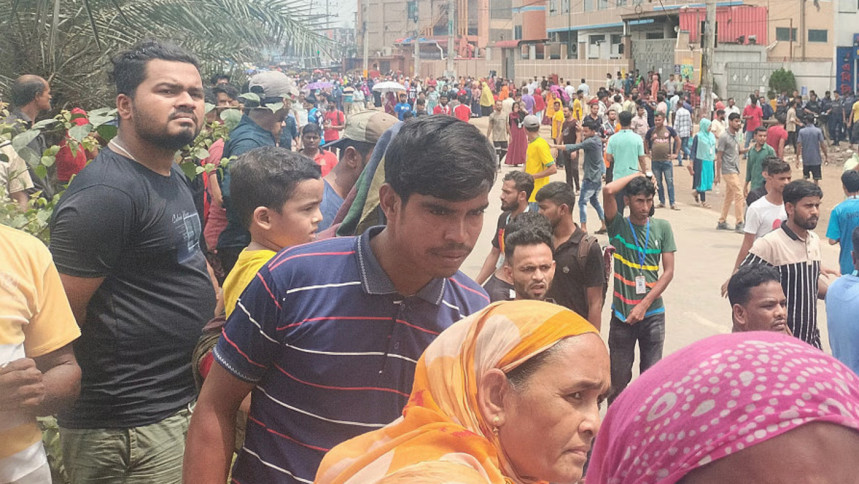
DHAKA, August 30, 2024 – Bangladesh is currently experiencing a significant escalation in labor unrest, with approximately 200 factories across key industrial zones including Gazipur, Savar, and Ashulia halting production due to ongoing strikes. The interim government has issued a stern warning against those inciting violence, describing some of the agitators as “outsiders.”
During an emergency meeting on Wednesday, local government ministry adviser AF Hassan Arif expressed the government’s determination to protect factories and the economy from escalating unrest. “We have not forgotten that a government does not use force against the citizens. But in the given situation, stern action has to be taken,” he stated.
The unrest, which has been intensifying over the past five days, saw the closure of at least 167 garment factories along with over a dozen pharmaceutical units. Khandoker Rafiqul Islam, president of the Bangladesh Garment Manufacturers and Exporters Association (BGMEA), highlighted that the shutdowns had spread across multiple locations, impacting significant production capabilities.
As the protests gained momentum, demonstrators, including many workers demanding better pay and regularization, took to major highways causing significant disruptions. According to local reports, blockades were set up on the Nabinagar-Chandra Highway, the Dhaka-Mymensingh Highway, and the Bhogra bypass road among others.
In response to the escalating situation, industrial police, army, and border guards have been deployed in the affected areas to maintain order and prevent further disruptions.
The government has pointed out that the agitation involves not only factory workers but also external elements. “Most of those who are doing this are outsiders,” Hassan noted during the meeting, urging workers to help identify and stop the agitators to restore peace and normalcy.
The BGMEA has announced that factories are expected to resume operations starting today, with enhanced security measures including deployments of army, border guards, and rapid action battalions near factory premises to ensure safety and prevent vandalism.
The unrest not only affects the garment sector but has also severely impacted the pharmaceutical industry, where production at 19 major plants has been halted. Abdul Muktadir, president of the Bangladesh Association of Pharmaceutical Industries (BAPI), expressed concerns over the lack of proactive government support and the importance given to the sector amid these challenges.
This industrial unrest comes at a critical time for Bangladesh’s economy, which relies heavily on both the garment and pharmaceutical sectors. The government’s resolve to take a tough stance against those responsible for the unrest underscores the urgency of restoring stability to these vital industrial sectors.