
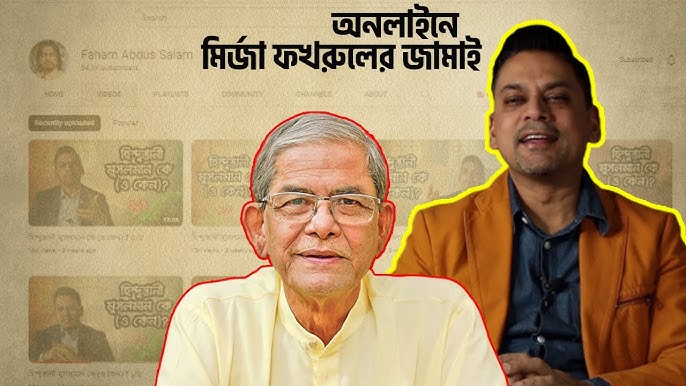
Faham Abdus Salam, a name resonating deeply within the Bangladeshi community and beyond, stands out as a luminary in multiple arenas—from authorship and research to political criticism and cultural documentation. Born in Dhaka, Bangladesh, Faham’s academic journey led him from the halls of Cumilla Cadet College to the prestigious University of Dhaka, where he studied microbiology. His thirst for knowledge propelled him further abroad to Australia, where he obtained his PhD in Molecular Therapeutics from the Australian National University.
Settling in Australia since 2004, Faham’s pen has vigorously tackled a variety of topics that grip the socio-political and cultural fabric of Bangladesh. He started his writing career with two regular columns, “Pinjar” and “Swadesh Vihanga,” in the JaiJaiDin Newspaper, and continued to contribute thought-provoking articles to the Dhaka Tribune. His profound engagement with Bangladeshi psychology, language, politics, science, and religion culminated in his first book, “In Search of Bengali Mediocrity,” a compelling collection of essays penned over a decade.
Beyond the written word, Faham ventured into filmmaking, producing a documentary that explores the rich history of Dhaka. This piece remains a valuable resource on YouTube, offering insights into the city’s past and present.
Faham’s personal life intertwines with the political sphere of Bangladesh, being married to Shamaruh Mirza, the daughter of Mirza Fakhrul Islam Alamgir, a prominent political figure. His marriage aligns him with a family deeply embedded in the political discourse of the nation. Known for his candid and often critical views on the Awami League and its governance, Faham has become a figure of significant influence and a voice of reform, especially among the youth.
His multi-dimensional career and outspoken views not only highlight his diverse talents and deep commitment to his roots but also his enduring influence on discussions around Bangladeshi identity and governance. Faham Abdus Salam continues to challenge, educate, and inspire, making him a pivotal figure in contemporary Bangladeshi and diasporic intellectual circles.