
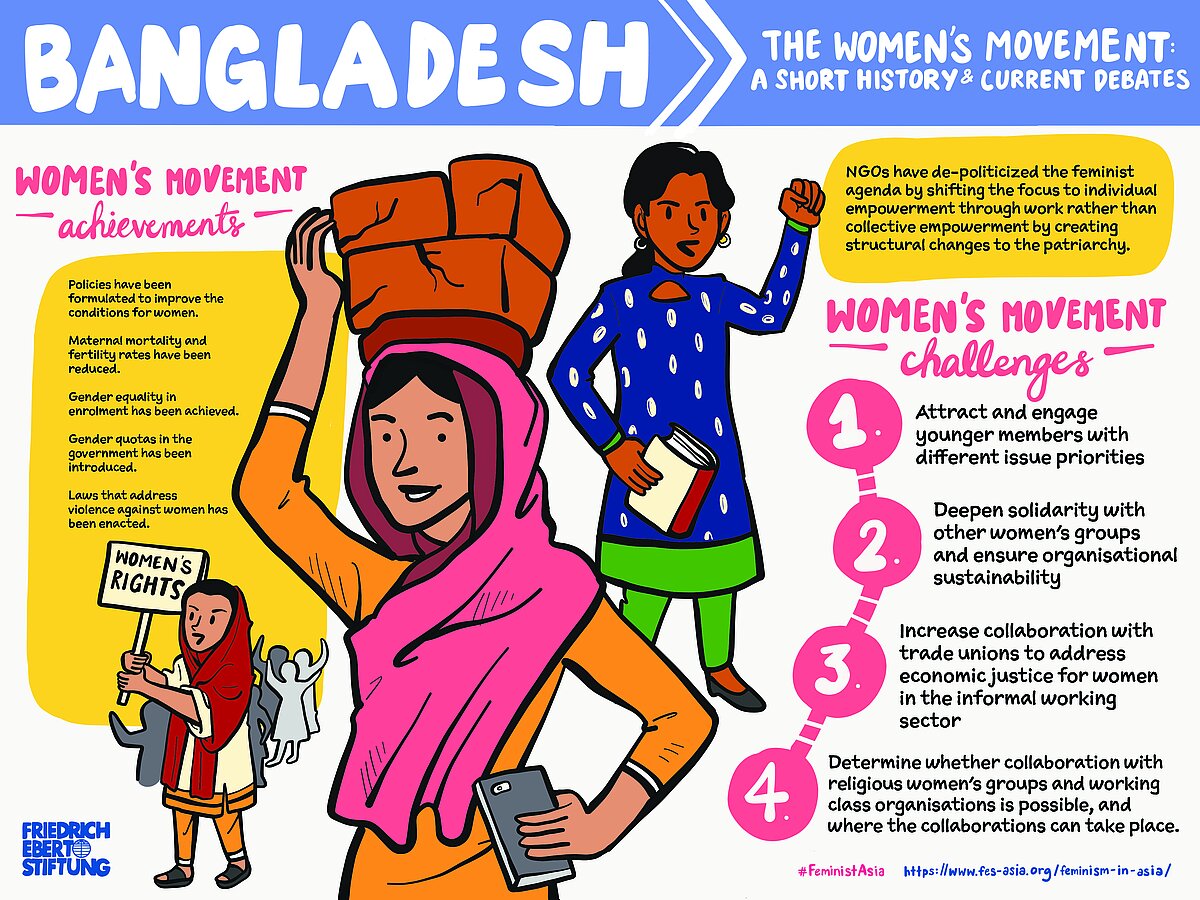
Women’s empowerment in Bangladesh has been a critical factor in the country’s development over the years. Remarkable transformations have occurred in various aspects of Bangladeshi society, including social, economic, and political realms, driven by concerted efforts to empower women. Initiatives like microfinance programs, educational access, healthcare improvements, and advocacy have significantly elevated the status of women and contributed to the nation’s overall progress.
- USAID: The initiatives by USAID have played a pivotal role in empowering women economically, socially, and politically. Through training and support, women have been able to assume leadership roles, access education, and achieve financial independence. Anti-sexual harassment committees within union factories have been established, ensuring essential amenities for female workers.
- Tarango: Tarango, a prominent NGO in Bangladesh, focuses on women’s development through skill-building programs, microcredit initiatives, and advocacy for women’s rights. By empowering women in rural and disadvantaged communities, Tarango fosters economic self-sufficiency and social empowerment, contributing to a more equitable future.
- BRAC: BRAC’s comprehensive programs encompass education and skills training, enabling women to break barriers and lead fulfilling lives. By reaching millions of women in rural and urban areas, BRAC has been a key player in promoting gender equality and fostering positive change throughout Bangladesh.
- The Manusher Jonno Foundation: The Manusher Jonno Foundation (MJF) is a catalyst for women’s development in Bangladesh, focusing on enhancing women’s access to education, healthcare, and economic opportunities. Their initiatives promote gender equity, address violence against women, and strengthen women’s participation in decision-making processes.
- Grameen Bank: Grameen Bank, founded by Muhammad Yunus, has been instrumental in women’s development through microcredit programs, providing financial support to impoverished women and enabling them to start small businesses, thus gaining economic independence.
The future of women’s development in Bangladesh is promising, exemplifying resilience, progress, and empowerment. NGOs and institutions have played crucial roles in advancing gender equality, resulting in a surge of women assuming leadership positions and actively contributing to the nation’s progress. Challenges remain, but with continued dedication, collaboration, and policy support, Bangladesh can further enhance opportunities for women, fostering a nation where gender equality thrives.