
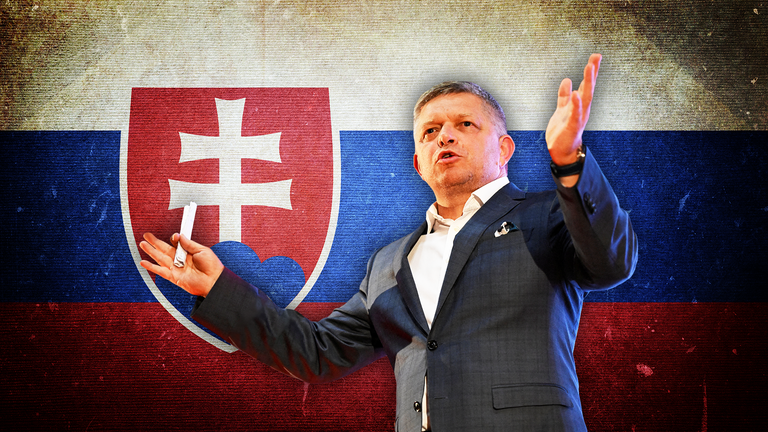
In Slovakia’s recent election, the Smer party led by former prime minister Robert Fico is positioned to win, garnering more support than its rival Progressive Slovakia in a closely contested race. With over 98% of districts reporting, Smer is set to secure over 23% of the vote, followed by Progressive Slovakia with over 17% and Hlas with 15%.
The outcome of the election raises concerns about Slovakia’s future foreign policy direction, especially regarding its stance on military aid to Ukraine, sanctions against Russia, and LGBTQ+ rights, given Fico’s positions. Initially, exit polls suggested Progressive Slovakia was leading, but as the votes were counted, Smer took the lead.
The shape of Slovakia’s next government remains uncertain, with coalition-building being a crucial factor. Smaller parties like Hlas and OĽaNO will play significant roles. Former Fico colleague and Hlas leader Peter Pellegrini could become a decisive figure in this coalition-building process.
Slovakia’s next government will grapple with a soaring budget deficit, the highest forecasted in the euro zone. Fico capitalized on dissatisfaction with the previous centre-right coalition, emphasizing concerns about rising migrant numbers passing through Slovakia to western Europe. His views reflect warm sentiments towards Russia, particularly in light of the Ukraine conflict.
Fico’s potential return to power could influence Slovakia to challenge the European Union’s consensus on supporting Ukraine and impact the bloc’s unity concerning Russia’s invasion. The incoming government’s stance on these critical issues will significantly shape Slovakia’s trajectory in the coming years.