
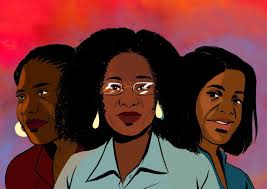
From private struggles to public conversations, community-led gatherings are helping women discuss menopause, challenge stigma and become stronger advocates for their own health.
By HerNet Health & Wellbeing Desk
September 2026
For generations, menopause has often been treated as a subject to endure rather than discuss.
The physical and emotional changes can be significant, yet conversations about them are frequently limited to whispers, private exchanges between friends or brief discussions inside a doctor’s office. For many Black women, the silence can be even more complicated, shaped by family traditions, cultural expectations, medical experiences and the absence of open conversations between generations.
But that silence is beginning to change.
Across communities, women are creating spaces where menopause can be discussed without embarrassment or judgment. Brunches, women’s circles, community meetings and health-focused gatherings are increasingly becoming places where women can ask questions, share experiences and learn from medical professionals.
One such initiative emerged from an unexpected conversation in Atlanta.
A discussion between two women approaching or entering their 50s began with laughter about familiar experiences: waking during the night drenched in sweat, struggling with concentration, experiencing unexplained aches and wondering why the body suddenly seems to behave differently.
Then came a simple question:
Who actually teaches women about menopause?
For many, the answer is uncomfortable: no one.
An Information Gap Passed From Mother to Daughter
Menopause is a natural stage of life, but knowledge about it is not always passed naturally from one generation to the next.
Many women grow up hearing about menstruation, pregnancy and childbirth but receive little preparation for what happens later in life. Mothers may not discuss their experiences with daughters, sometimes because they themselves were never informed or encouraged to speak about them.
The result can be an intergenerational information gap.
Women entering perimenopause may suddenly experience hot flashes, sleep disturbances, mood changes, changes in menstrual patterns, fatigue or difficulties with concentration without immediately understanding what is happening.
Instead of recognizing these experiences as potential signs of the menopausal transition, some women may interpret them as ordinary aging, stress or something they simply have to tolerate.
That uncertainty can delay conversations with healthcare professionals.
It can also leave women feeling isolated.
The organizers behind community menopause gatherings argue that the missing ingredient is not simply medical information. It is permission to talk.
When women are given a safe environment to discuss subjects that have traditionally been considered private, questions that might otherwise remain hidden begin to surface.
From “Mimosas and Menopause” to a Wider Movement
What began as an idea for an informal gathering evolved into a series of conversations bringing women together around an issue that is rarely given enough public attention.
The concept was deliberately social.
Rather than creating another clinical environment, organizers placed menopause within a setting where women could relax, connect and speak openly. At gatherings, women arrived dressed for brunch and social interaction, but the conversations quickly moved beyond food and fashion.
Doctors and healthcare professionals were invited to participate, creating an important bridge between lived experience and medical knowledge.
The format proved significant.
Women who might hesitate to raise intimate questions during a conventional appointment were willing to ask them in a room surrounded by other women experiencing similar changes.
A question from one participant often opened the door for several others.
A story about sleepless nights could lead to a discussion about hormone changes. A conversation about weight could lead to questions about metabolism. Someone describing anxiety could prompt another woman to speak about changes she had previously kept private.
The gatherings demonstrated the power of collective conversation.
Women were not necessarily leaving with every medical answer. They were leaving with something that could be just as important: better questions to take to their healthcare providers.
When Women Feel Dismissed
For some participants, the problem extends beyond a lack of information.
It is also about whether women feel heard when they seek medical assistance.
Some women describe experiences in which their symptoms were minimized or attributed to other factors without a deeper exploration of what they were experiencing.
Weight is one example.
Women who are experiencing significant changes in their bodies may be told to lose weight without receiving a broader discussion of the hormonal, metabolic, psychological and lifestyle factors that can accompany midlife changes.
Such encounters can discourage women from returning to healthcare providers or asking additional questions.
The concern is not that every symptom should automatically be attributed to menopause. Rather, women deserve healthcare conversations in which their concerns are taken seriously and investigated appropriately.
That distinction matters.
A community discussion cannot diagnose a medical condition. Nor should it replace professional care.
But it can help women recognize when they need to seek professional advice and give them the confidence to participate more actively in those conversations.
The Medical Conversation Belongs in the Room
Community support alone, however, is not enough.
Menopause is a biological transition, and accurate information matters.
That is why healthcare professionals are an important part of community-based menopause discussions. Physicians, nurses, gynecologists, mental health professionals and other qualified experts can help separate evidence-based information from myths and misinformation.
The most effective model may therefore be neither purely medical nor purely social.
It is a combination of both.
A trusted community can encourage women to speak. Medical expertise can help them understand what they are experiencing. Together, they can create a stronger foundation for informed decision-making.
This partnership becomes particularly important because menopause does not look exactly the same for every woman.
Symptoms vary considerably, as do their intensity, duration and impact on daily life. Personal medical history, reproductive history, lifestyle, family history and other factors can also influence healthcare decisions.
That makes individualized medical care essential.
Community spaces should therefore serve as a starting point for conversation—not a substitute for a consultation with a qualified healthcare professional.
Challenging the History of Women’s Pain Being Dismissed
The frustration many women express about being unheard in healthcare is part of a much larger historical conversation.
For centuries, women’s physical and emotional experiences have sometimes been misunderstood, minimized or attributed to supposedly irrational behavior.
The language surrounding women’s health has often reflected these attitudes.
Even today, some women report that they must repeatedly explain symptoms before they feel their concerns are taken seriously.
Menopause exposes this problem particularly clearly because it occurs during a period of life when several health changes can happen simultaneously.
A woman may be balancing professional responsibilities, caring for children or aging parents, managing relationships and navigating changes in her own body—all while trying to determine whether what she is experiencing is normal, temporary or something that requires medical attention.
When her concerns are dismissed, the consequences can extend beyond frustration.
She may stop asking questions.
She may delay care.
Or she may simply conclude that suffering quietly is part of getting older.
That is precisely the attitude community advocates are attempting to challenge.
The Power of Women Talking to Women
Perhaps the most powerful outcome of these gatherings is not a particular piece of medical information.
It is recognition.
A woman who believes she is the only person experiencing a particular symptom may discover that several others in the room have experienced something similar.
A woman who feels embarrassed may discover that the subject can be discussed openly.
A woman who has been afraid to question her doctor may leave feeling more confident about advocating for herself.
And friendships can emerge from those conversations.
This is the overlooked value of community in healthcare.
People are often more willing to seek help when they do not feel alone.
Social connection can make difficult subjects easier to discuss, while peer experiences can encourage individuals to recognize that asking for help is not a sign of weakness.
For Black women in particular, creating culturally familiar spaces can also provide an opportunity to address experiences that may not always be adequately reflected in mainstream health conversations.
Beyond the Brunch Table
The growing interest in menopause conversations raises a larger question: why should women have to create informal spaces to obtain conversations that should already exist?
The answer requires action at multiple levels.
Families can begin talking about menopause before symptoms appear. Schools and universities can expand age-appropriate education about women’s health across the life course. Employers can consider how menopause affects workplace wellbeing and productivity. Media organizations can report on menopause as a health and social issue rather than treating it only as a lifestyle topic.
Healthcare institutions can also create more opportunities for women to ask questions about midlife health without feeling rushed or dismissed.
And community organizations can provide spaces where women feel comfortable starting those conversations.
The goal is not to turn every social gathering into a medical seminar.
It is to make menopause ordinary enough to discuss.
Building an Intergenerational Conversation
Perhaps the most important opportunity lies between generations.
A daughter should not have to discover menopause entirely through social media.
A mother should not have to assume that silence protects her daughter from discomfort.
And a woman entering midlife should not have to believe that confusion and suffering are inevitable.
Imagine instead a conversation in which mothers tell daughters what they wish they had known.
Grandmothers share their experiences.
Healthcare professionals answer questions.
Younger women learn what changes may occur later in life.
And women approaching menopause understand that seeking medical advice is a normal part of caring for themselves.
Such conversations could transform menopause from an isolated personal experience into a shared public-health conversation.
Menopause Is Not the End of the Conversation
The challenge surrounding menopause is ultimately larger than hot flashes, sleep problems or hormonal changes.
It is about how society talks about women as they age.
Too often, women’s health conversations focus heavily on reproductive years while giving comparatively less attention to the decades that follow.
But women do not become less deserving of healthcare, visibility or support when their reproductive years end.
Menopause is a transition—not an expiration date.
Women continue to work, lead organizations, raise families, build businesses, create art, participate in civic life and shape their communities throughout midlife and beyond.
Their health deserves the same attention.
The emerging movement to create spaces for menopause conversations is therefore about more than breaking a taboo. It is about changing the culture surrounding women’s health.
The most important question may no longer be “Why aren’t women talking about menopause?”
It may be:
“What can we do to make sure every woman has a safe place to begin the conversation?”
Because silence should not be inherited.
Knowledge can be.
Support can be.
Confidence can be.
And perhaps the greatest gift one generation of women can give the next is not another warning about what to expect—but the assurance that when the changes come, she will not have to face them alone.
A news by Alisha Pradhan
A news by Alisha Pradhan, General Secretary, HerNet Foundation