
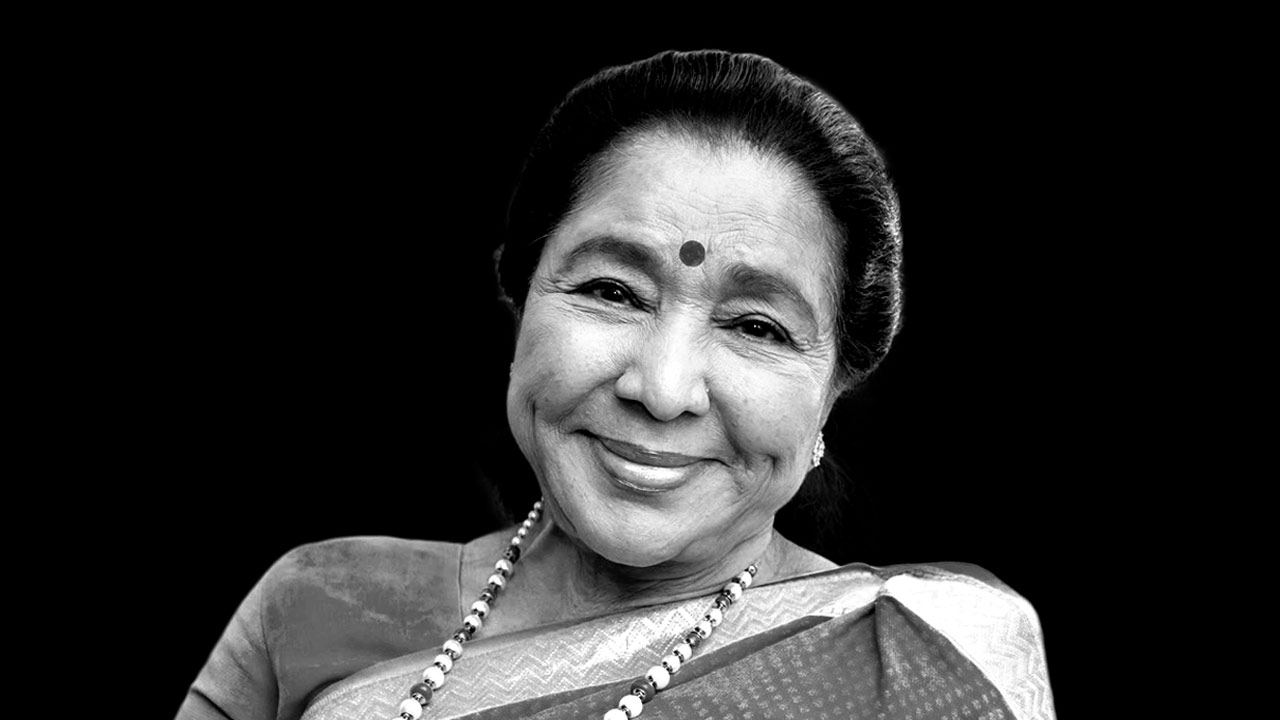
The death of legendary singer Asha Bhosle has cast a deep shadow over South Asian music, closing the chapter on a career that spanned decades and produced thousands of songs across genres. Revered as the “Queen of Melody,” she earned that title not only through popularity, but through a rare versatility that set her apart from her peers.
Born in 1933 in Sangli, Maharashtra, Asha grew up in a family steeped in music. Her father, Dinanath Mangeshkar, was a classical singer and theatre actor, and music shaped her life from an early age. She entered the world of singing in 1943, when she was just nine years old, following the path already being carved out by her elder sister, Lata Mangeshkar.
Her early years in the industry were far from easy. For a long time, she was seen mainly as “Lata’s younger sister,” and had to struggle to establish her own place in playback music. Though she found success with several songs in the 1950s, many still viewed her as limited to a narrow range of styles.
That perception began to change when she started working with composer O. P. Nayyar. Their collaborations produced a fresh, modern sound that quickly won audiences over and gave Asha a distinct musical identity. From there, her career moved steadily upward.
What made Asha Bhosle exceptional was her refusal to remain confined to one style. She moved effortlessly between cabaret numbers, folk-inspired songs, romantic melodies, and ghazals. In the 1960s and 1970s, she became one of Bollywood’s defining voices for dance songs, delivering a string of hits that remain iconic to this day. Her voice became especially associated with actress Helen, creating one of Indian cinema’s most memorable combinations of screen presence and playback singing.
Yet Asha repeatedly proved that she was much more than a singer of light or dance numbers. She broke that stereotype with her acclaimed ghazals in Umrao Jaan, which earned her a National Award, and later with the haunting emotional depth of songs in Ijaazat. These performances confirmed her stature as a truly multidimensional artist.
Another major chapter in her musical journey came through her partnership with composer R. D. Burman. Together they created many of the most beloved songs of their era, and their professional partnership later became a personal one as well.
Her personal life, too, was marked by struggle and resilience. After an early marriage to Ganpatrao Bhosle ended, she returned to her family with her children and rebuilt her life and career from the ground up. That story of reinvention only added to her legacy.
Asha Bhosle’s passing is not just the loss of a singer; it is the end of an era. Her voice, however, remains timeless—carrying across generations, still loved by listeners old and new, and securing her place forever in the history of music.