
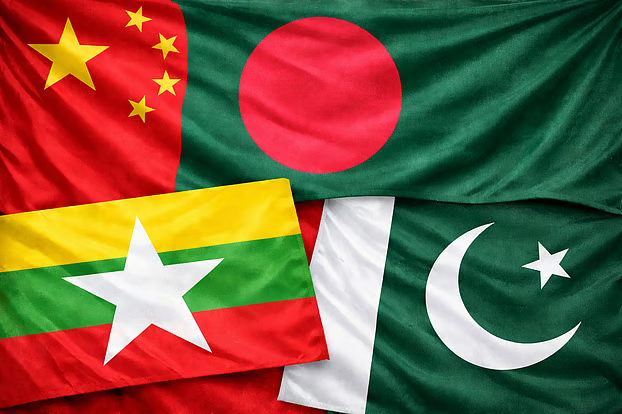
Pakistan has proposed a quadrilateral regional cooperation forum with Bangladesh, China and Myanmar, seeking to host an inaugural officials’ meeting in Islamabad as early as mid-February. Dhaka has responded positively in principle but indicated the talks should wait until after the February 12 election, according to senior diplomatic sources.
The initiative follows several January contacts between Pakistan’s deputy prime minister and foreign minister Ishaq Dar and Bangladesh’s foreign affairs adviser Md. Touhid Hossain. Beyond the proposed four-way format, the two discussed bilateral steps—including the resumption of direct Dhaka–Karachi flights after a 14-year gap, possible direct cargo shipping on the Karachi–Chattogram route, post-election high-level visits, expanded trade and investment, and defense-industrial items.
Ahead of Myanmar foreign minister Than Swe’s visit to Islamabad, Dar asked whether to raise the Rohingya issue; Hossain encouraged constructive engagement, officials said.
The Pakistani outreach comes after a Beijing-backed effort last year to launch a China–Bangladesh–Pakistan trilateral. Dhaka declined at the time, arguing any subregional platform would be more useful with a broader South Asian footprint (for example, by including Sri Lanka or Nepal). Pakistan renewed the push in January, first for a trilateral in Islamabad and then for a four-party meeting. Dhaka suggested starting at joint secretary level; Islamabad countered with additional-secretary rank. A tentative understanding emerged to meet in Islamabad at that level—timing subject to Bangladesh’s electoral calendar.
Former ambassador M Humayun Kabir cautioned that, amid intensifying great-power competition in the Bay of Bengal, it may be unwise for a caretaker administration to bind the next government to new regional constructs. He noted China’s heightened activism and Pakistan’s renewed diplomacy following Bangladesh’s political changes in August 2024.
If Bangladesh greenlights the concept post-election, Pakistan hopes to move quickly to convene the first session and define a working agenda spanning connectivity, trade logistics, and regional security concerns—including the protracted Rohingya crisis.