
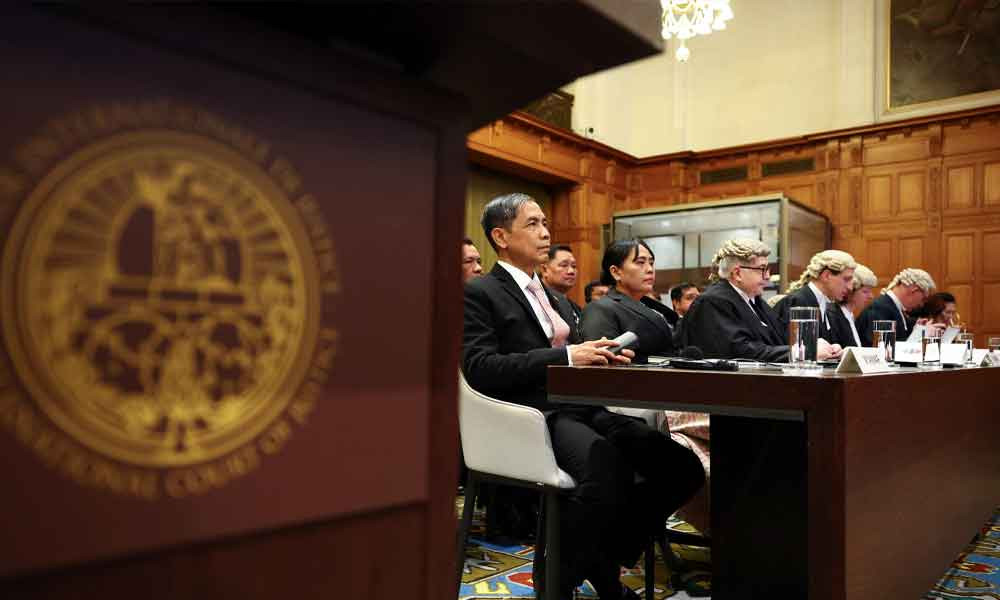
Bangladesh has lodged a strong protest after Myanmar referred to the Rohingya as “Bengali” during recent hearings in the International Court of Justice (ICJ) in the case brought by The Gambia over alleged genocide. In a statement on Friday, the Ministry of Foreign Affairs said the label is a deliberate attempt to fabricate a narrative of illegal immigration, distract from the 2016–17 atrocities, and reframe so-called “clearance operations” as counter-terrorism.
Reasserting that the Rohingya are a distinct ethnic group with centuries-old roots in Arakan (now Rakhine State)—well before its incorporation into the Burmese kingdom in 1785—the ministry cited historical records, colonial censuses, and independent scholarship. It noted that “Rohingya” evolved from earlier exonyms tied to the historic Rohang/Mrauk-U region and reflects the community’s own chosen identity.
Bangladesh argued that, until Myanmar’s 1982 Citizenship Law, Rohingya were integrated into the country’s political and administrative life and long exercised voting rights, which were fully stripped in the 2015 election. It described this disenfranchisement and broader marginalization as part of a systematic process culminating in expulsion and statelessness.
Calling the “Bengali” label a state strategy to deny citizenship and basic human rights, Dhaka pointed to the 1978 Bangladesh–Myanmar repatriation agreement, which recognized the Rohingya as Myanmar’s lawful residents. Whatever the nomenclature, subsequent bilateral understandings envisaged their equal reintegration into Myanmar society, the statement said.
Bangladesh also rejected a past Myanmar claim that around 500,000 Bangladeshis sought refuge in Rakhine during the 1971 Liberation War, saying the assertion lacks demographic evidence and would have triggered significant regional attention had it been true.
More than eight years after the mass exodus, Bangladesh accused Myanmar of failing to create conducive conditions in Rakhine for return—contravening bilateral accords signed in 2017–18—and said delays and pretexts could be read as evidence of intent to destroy the community.
Dhaka urged Myanmar and all authorities exercising control in Rakhine to recognize the Rohingya as an integral part of the state and to enable safe, dignified, voluntary, and rights-based repatriation and reintegration. It warned that identity denial remains central to the community’s destruction and diverts international attention from justice, accountability, and a durable solution.