
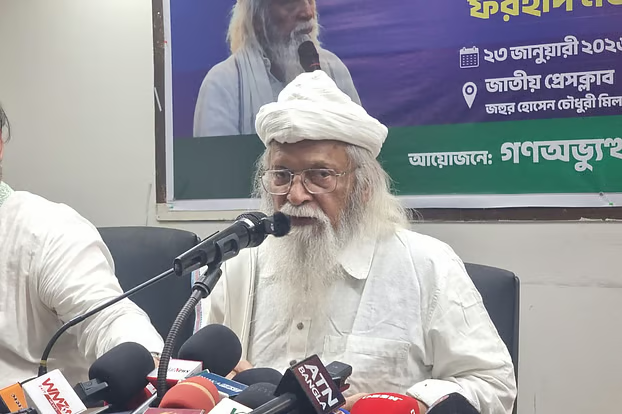
Poet and public intellectual Forhad Mazhar on Friday described what he called an existing relationship between the Bangladesh Jamaat-e-Islami and the United States as a “frightening, ominous signal,” urging politics to refocus on safeguarding people’s basic needs rather than external alignments.
Speaking at a discussion titled “Nationwide Crisis of Gas, Electricity and Safe Water: What Society Must Do” at the National Press Club, Mazhar was asked about a media report claiming Washington seeks “friendship” with Jamaat and would impose 100% tariffs if the party attempted to introduce Sharia law. He replied that “every party in Bangladesh is linked to the U.S. in some way—some directly, some indirectly,” adding that the post–August 5 upheaval amounted internationally to a U.S.-favored “regime change.”
Citing what he called a “harsh reality” of global power politics and disregard for international law, Mazhar said his concern is how 170 million Bangladeshis can “live on lentils and rice in peace,” not entering anyone’s wars. He argued Jamaat’s stance over issues such as Gaza indicates a policy relationship with Washington and called that “an ominous sign.”
Mazhar urged against attempts to drive a wedge between the armed forces and ordinary people, noting soldiers “are sons of farmers and workers,” and warned that any such divide would be dangerous. On Gaza, he said public opinion in Bangladesh would reject participation in any international military initiative seen as aligning with Israel and the U.S.
On domestic politics, Mazhar said the goal of the mass uprising was to build a state that secures people’s livelihoods, but that goal has been sidelined. “If looting structures aren’t dismantled first, elections won’t produce a people’s government,” he said, arguing for state reform before polls.
Turning to utilities, he called the crises in gas, electricity and water “structural and political,” alleging that despite expanded generation capacity, people still face outages while private producers receive payments from the treasury. He attributed water woes to state mismanagement, river grabbing and commercial plunder. “Real politics means establishing people’s control over food, water, energy and land,” he said.
The event was organized by the Gonobipplob Shurokkha Moncho (Mass Uprising Protection Platform). Among others, Ahmed Ferdous and Mohammad Romel addressed the session.
A news by Alisha Pradhan, General Secretary, HerNet Foundation