
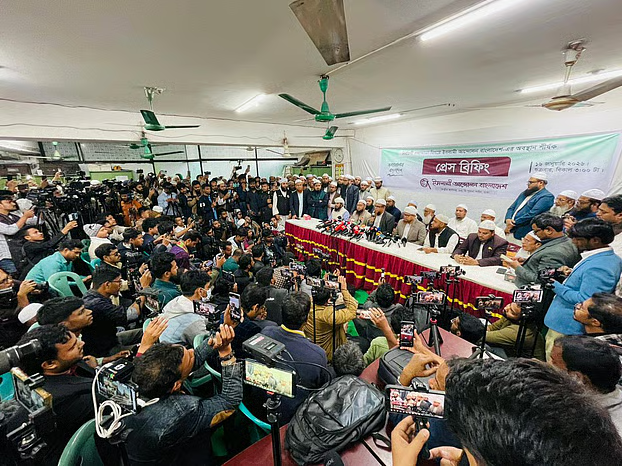
Islami Andolan Bangladesh (IAB) has pulled out of seat-sharing talks with the Jamaat-e-Islami–led bloc and will contest the February 12 general election independently, fielding candidates in 268 constituencies under its hand-fan symbol.
Announcing the decision at the party’s Purana Paltan headquarters on Friday, senior joint secretary-general and spokesperson Gazi Ataur Rahman said IAB had submitted nominations in 270 seats; two were later canceled on appeal, leaving 268 in the race. “None of our candidates will withdraw,” he stated, adding that in the remaining 32 constituencies the party will back contenders aligned with IAB’s “policy and ideals.”
The move follows days of wrangling over seat allocations within an 11-party Islamist-leaning platform. According to IAB, Jamaat had offered 40 seats while IAB sought 50. On Thursday, Jamaat and 10 partners unveiled their slate, leaving 47 seats open in hopes of keeping IAB in the fold. IAB’s Friday announcement closed that door.
Gazi cited the party’s earlier “one box policy” call to consolidate Islamist forces after last year’s mass uprising, arguing that late-stage political calculations by others had diverted that initiative. He also said IAB was “pained” by what it viewed as a drift from its principles, pointing to public assurances attributed to Jamaat leaders about governing strictly under existing statutes and comments from interfaith interlocutors that suggested no move toward implementing Shariah—a trajectory IAB argued was at odds with its own goals.
“We are contesting alone to establish justice and a discrimination-free society,” Gazi said, emphasizing that IAB is not “morally or ideologically weaker” than larger partners. He confirmed party organizers had instructed all 268 approved nominees to remain in the field through election day.
Senior IAB figures, including joint secretaries Sheikh Fazle Bari Masud and Ashraf-ul Alam, and other central leaders attended the press conference. The decision reshapes the Islamist vote ahead of the 13th parliamentary polls, complicating earlier expectations of a broad, unified slate against mainstream rivals.