
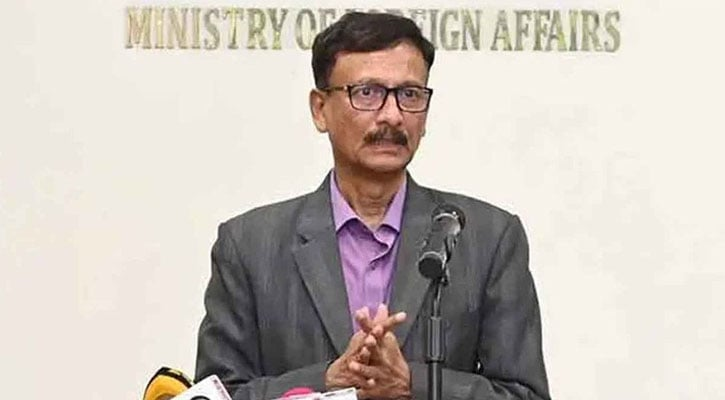
Bangladesh’s foreign affairs adviser Md. Touhid Hossain said the United States’ decision to require a refundable visa bond of up to $15,000 from applicants of certain countries is “regrettable but not unusual,” noting that the measure applies to 38 countries and is linked to U.S. concerns over irregular migration and overstays.
Speaking to reporters at the Foreign Ministry on Thursday, Hossain stressed the policy is not targeted solely at Bangladesh and has evolved over years. “If restrictions are imposed on several countries and Bangladesh is among them, it is painful but not unexpected,” he said, adding that responsibility for migration patterns spans successive governments and cannot be reversed “by one government alone.”
Hossain said the interim government opposes irregular migration and will continue to discourage risky journeys that have led to deaths in routes such as the Mediterranean. He cited cases of travelers using tourist visas to third countries as part of onward irregular travel, arguing that curbing such practices is essential.
On next steps, the adviser said Dhaka will pursue relief through diplomatic channels, aiming for Bangladesh’s removal from the bond regime. “We will proceed in the customary diplomatic way and try to secure an exemption,” he said.
According to the U.S. announcement earlier this week, the bond requirement—$5,000, $10,000, or $15,000 at a consular officer’s discretion—can apply to non-immigrant B1/B2 applicants from listed countries, with most effective Jan 21, 2026. The bond is paid via the U.S. Treasury’s Pay.gov and is refundable if a visa is refused or the holder complies fully with visa terms. The State Department has also reiterated in-person interviews and expanded background disclosures as part of broader screening.
The updated roster includes countries across Africa, Asia, Latin America, and the Pacific, among them Bangladesh, Algeria, Angola, Cuba, Fiji, Kyrgyzstan, Nepal, Nigeria, Senegal, Tajikistan, Turkmenistan, Uganda, Venezuela and Zimbabwe (with some nations’ start dates earlier than Jan 21). Hossain noted a similar bond proposal in the UK in 2013 was later shelved, underscoring that such measures are not without precedent.
“Stopping irregular migration is the only durable solution,” Hossain said, while emphasizing sympathy for victims of trafficking and dangerous journeys and a commitment to pursue lawful, orderly mobility.