
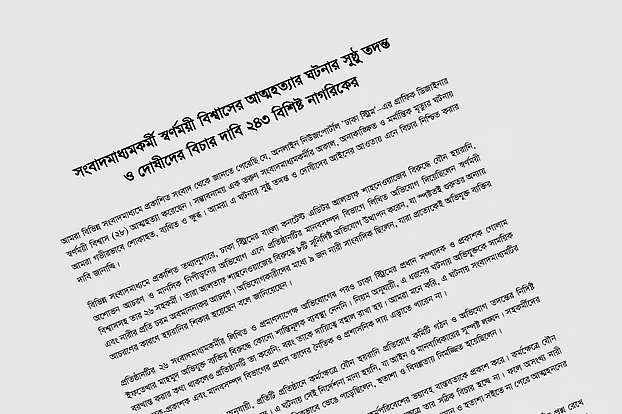
A total of 243 eminent citizens have issued a joint statement expressing alarm over the death by suicide of a female media professional in the capital and demanding a transparent, time-bound investigation that brings all responsible to justice. The statement, circulated to the press by Jahangirnagar University Associate Professor of Anthropology Rezwana Karim Snigdha and poet-journalist Girish Gairik, argues that the incident exposes the precarious realities faced by women in Bangladesh’s workplaces.
The woman’s body was recovered on Saturday evening from her residence in Sobhanbagh. She worked as a graphic designer at the online outlet Dhaka Stream and was among several staff who had recently lodged written complaints of sexual harassment against the organisation’s Bangla Content Editor, Altaf Shahnewaz.
Signatories—including human rights advocate Z. I. Khan Panna, economist Abdul Bayes, poet Nirmalendu Goon, Transparency International Bangladesh Executive Director Iftekharuzzaman, CPB General Secretary Abdullah Kafee Ratan, lawyer Jyotirmoy Barua, academics Zobaida Nasreen, Samina Luthfa and Kamarul Hasan Mamun, writer Gultekin Khan, Kasfia Nahrin, and Mahmudul Suman—criticised the company’s response. Citing 26 employees’ written and evidence-backed complaints, they said Editor-in-Chief Golam Iftekhar Mahmud failed to take interim disciplinary action against the accused as standard procedure requires, instead keeping him in his role. For this, they asserted, Dhaka Stream’s editor-publisher and head of human resources share moral and administrative responsibility.
According to the statement, eight specific allegations were submitted against Shahnewaz. Nine of the complainants were women journalists who described experiencing harassment due to his behaviour. The signatories demanded that, following an impartial inquiry, the accused and any other implicated individuals be prosecuted under the law, and that the role and negligence of Dhaka Stream’s authorities be brought under scrutiny.
The statement further urged all institutions to rigorously enforce workplace policies against sexual harassment to ensure women’s safety, dignity, and access to justice, warning that ignoring such complaints undermines both employee welfare and public trust in the media sector.