
One hundred years ago, in the serene landscapes of Narail, a legend was born—Sheikh Mohammed Sultan, better known as SM Sultan. An artist whose work defied convention, Sultan remains one of the most important artistic voices in the Indian subcontinent. His bold brushstrokes, deep connection to the soil, and unshakable commitment to portraying the dignity of rural life have immortalized him as the “Renaissance man” of Bengal.
Sultan’s paintings—graceful figures, vibrant with life and vigor—were free from mystifying symbolism, relying instead on the raw, inherent logic of aesthetics. His peasants, his muses, stood tall with stoic valor, embodying resilience, survival, and devotion to the land. He worked like the earth itself—steadfast, generous, and unpretentious.
By the early 1950s, the man affectionately known as “Laal Miah” had already exhibited alongside the likes of Pablo Picasso, Salvador Dali, Matisse, and Van Gogh. Yet, he chose to live simply, playing the flute on the banks of the Chitra River, painting with homemade colors, teaching village children, and keeping the company of cats and farmers. Despite international acclaim—from The New York Times to Le Monde—he shunned fame, never painting for prestige but for truth.
Even as his works were celebrated across India, Pakistan, the USA, Britain, and Europe, many of his early paintings vanished—lost to his nomadic lifestyle and disregard for preservation. Sultan valued ideas over legacy, humanity over possession. His art, as eminent critic Mario Palma once wrote, was “the greatest interpretation of the soil and spirit of Bangladesh.”
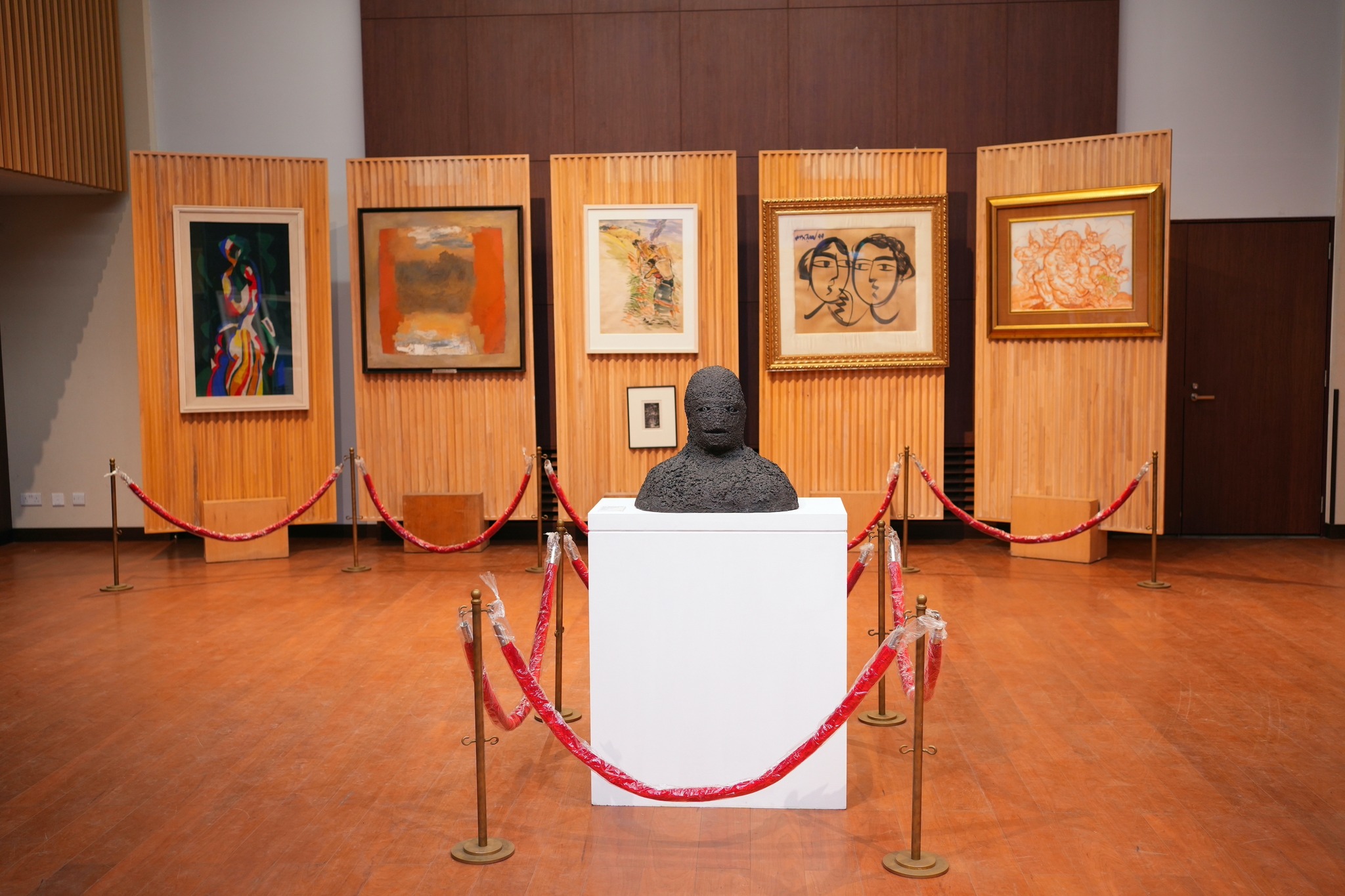
In 2025, marking the centenary of his birth, HerNet Fine Arts, an initiative of HerNet Foundation, became the first private organization to formally pay tribute to SM Sultan’s towering legacy. This homage was part of “Origins of Vision”, an unprecedented exhibition organized in collaboration with the Embassy of Japan in Bangladesh. The tribute showcased rare archival references and celebrated Sultan’s timeless contribution to the nation’s artistic identity, placing him alongside Bangladesh’s other founding luminaries of art—Zainul Abedin, SM Sultan, Mohammad Kibria, Novera Ahmed, Rashid Choudhury, Quamrul Hassan, and Safiuddin Ahmed.
Through this landmark tribute, HerNet Fine Arts sought not only to remember Sultan but to reaffirm the power of art as a tool for cultural diplomacy and heritage preservation. A century after his birth, SM Sultan’s vision still breathes—reminding us that the heart of Bengal beats in its people, in its soil, and in the art that dares to speak for both.