
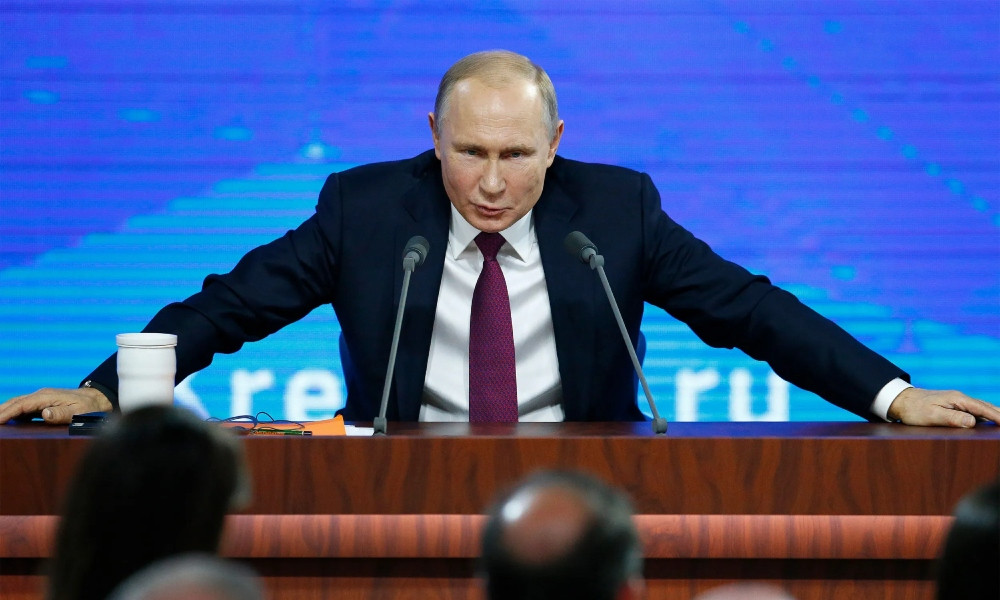
Vladimir Putin’s rise to power is a story marked by hardship, discipline, and an unflinching belief in strength. Born in 1952 and raised in a dilapidated communal apartment in Leningrad—now St. Petersburg—Putin grew up amidst the wreckage of post-World War II Soviet Union. His childhood was shaped by poverty, frail health, distant parents, and a violent environment where, as he once recalled, chasing rats was a regular pastime. In one defining moment, he was cornered and attacked by a large rat, a memory that, in his own words, taught him what it meant to be truly cornered. That rat, many believe, became a metaphor for how Putin has approached politics ever since: strike back when there’s no escape.
Putin’s early life was a crucible of adversity. By his teens, he began training in judo and sambo, martial arts that gave him physical resilience and a sense of control. His judo partner and lifelong friend Arkady Rotenberg later became a key figure in Putin’s inner circle. Excelling in German, Putin joined the KGB, serving in Dresden during the collapse of East Germany. That collapse—swift and brutal—shaped his worldview. It showed him how quickly power could disintegrate and left him deeply distrustful of mass movements and revolutions.
Upon returning to Russia, Putin began his political journey in St. Petersburg under Mayor Anatoly Sobchak before gradually moving up the ranks in Moscow. He gained the confidence of then-President Boris Yeltsin and was appointed head of the FSB in 1998. A year later, on New Year’s Eve of 1999, Putin assumed the presidency of Russia.
One of Putin’s earliest moves as leader was a fierce crackdown on the Chechen rebellion, which significantly boosted his popularity. He signaled a new era of assertive leadership—one that many Russians saw as a much-needed antidote to the chaos of the 1990s. He quickly made it clear that the oligarchs who had profited immensely in the post-Soviet vacuum would no longer influence Russian politics. The arrest of tycoon Mikhail Khodorkovsky sent a chilling message: in Putin’s Russia, there would be no power center outside the Kremlin.
Though he initially courted the West, Putin’s outlook shifted dramatically in the early 2000s. The 2003 U.S.-led invasion of Iraq and the 2004 Orange Revolution in Ukraine reinforced his view that Western democracies were not partners but meddlers. His distrust turned into confrontation as he reoriented Russian policy toward reasserting dominance. The annexation of Crimea in 2014 and the full-scale invasion of Ukraine in 2022 made it evident that Putin’s ambition was to restore Russia’s status as a global superpower—regardless of the human or geopolitical cost.
At 72, Putin remains firmly in control of the Russian state. Observers who have followed his career closely say he still carries the mindset of the scrappy schoolboy who needs to prove he’s the strongest in the room. For now, the future of Russia—its democracy, economy, and place in the world—rests in the hands of one man who views himself not just as a ruler, but as the guardian of the Russian state.
After 25 years in power, Putin’s journey is far from over. Whether the world is heading toward reconciliation or deeper conflict remains uncertain. One thing is clear: Vladimir Putin continues to shape history with the same fierce resolve that defined his first encounter with a rat in a cramped childhood hallway.