
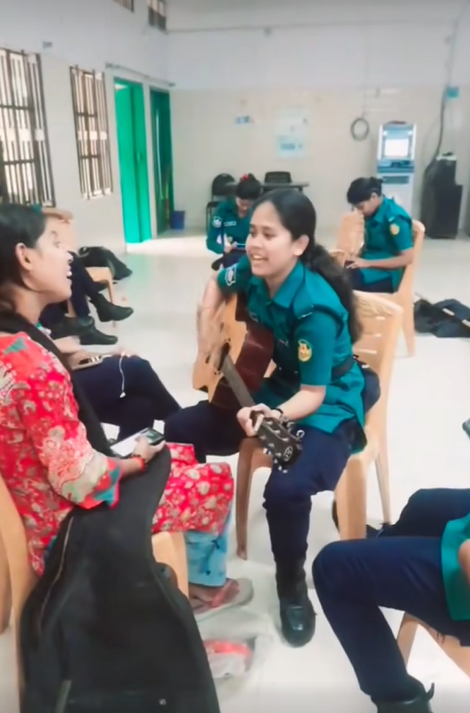
In a recent viral video, a female police officer in Bangladesh has captured the heart of the nation. The clip, which showcases her soulfully singing a song by the legendary Bengali singer Ayub Bacchu, is more than just a display of her musical talent; it represents a poignant statement about the resilience and independence of women in a society currently undergoing significant socio-political shifts.
The officer, whose identity remains undisclosed to maintain her privacy, chose to perform “Sei Tumi Keno Eto Ochena Hole,” a song that resonates deeply with themes of love and introspection, echoing the sentiments of many who find solace in art amidst the rigors of daily life. Her performance, captured during a brief respite in her duties, highlights how police officers, particularly women, balance their demanding jobs with personal expressions of freedom and creativity.
This moment is particularly symbolic given the recent political upheavals in Bangladesh, marked by the popular movement that led to significant governmental changes. These movements have also reignited conversations around women’s rights and their roles within professional spheres traditionally dominated by men. The video of the singing officer is not just entertainment; it acts as a metaphor for the ongoing struggle for gender equality in Bangladesh. It underscores the importance of safeguarding spaces where women can freely express their individuality and artistic passions without judgment or restraint.
Furthermore, the choice of Ayub Bacchu’s song—a tune steeped in the cultural fabric of Bangladesh—amplifies the message of resilience and hope. Bacchu, who was revered for his poetic lyrics and profound music, often sang about life’s trials and the strength found in perseverance. By singing his song, the officer not only connects with a wider audience but also revitalizes a sense of community and shared heritage at a time when the country is grappling with its identity and future direction.
This instance of a female officer stepping into the limelight through art reflects a broader shift in societal attitudes towards women in Bangladesh. It challenges the traditional narratives confined to domestic spheres and highlights the diverse capabilities of women in public and professional domains. Moreover, it serves as a source of inspiration for young girls across the nation, demonstrating that their aspirations need not be confined by their gender.
As Bangladesh continues to navigate through its socio-political changes, moments like these serve as crucial reminders of the progress that has been made and the work that still lies ahead. It is a call to action for continued support of women’s rights and a celebration of their contributions to all aspects of life, including the arts and law enforcement.
The singing policewoman becomes a beacon of empowerment and hope, proving that personal expression and professional duty can coexist, paving the way for a more inclusive and equitable society. As the nation watches and listens, her voice becomes more than just a melody—it becomes a powerful symbol of women’s enduring spirit and their right to live and express freely.