
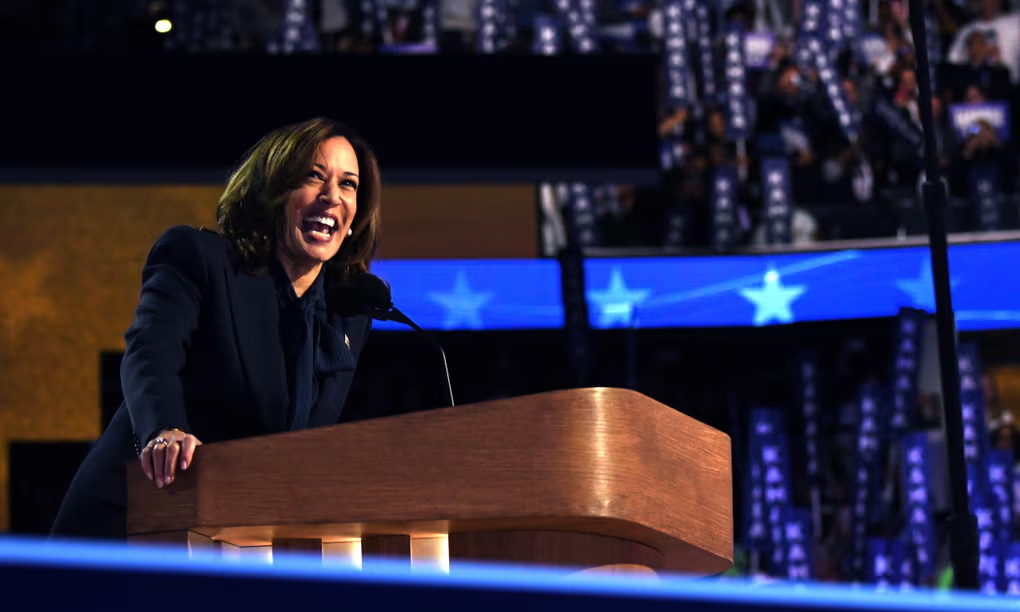
At this year’s Democratic National Convention, the stage wasn’t just set for speeches—it was a grand display of celebrity and cultural prowess, with figures like Nancy Pelosi and Kamala Harris drawing comparisons to dramatic personas from popular culture, including “Mother of Dragons” and “brat,” a term redefined for confidence and rebellion.
The convention has transformed into a spectacle of meme-worthy moments and celebrity endorsements, underlining the Democrats’ strategy to captivate voters through a cultural lens. Kamala Harris, in particular, has been revamped from a vice-president seen as having low impact to a figure of significant cultural resonance—dubbed the “Beyoncé of politics,” a nod to the artist’s influential presence.
The transformation is steeped in urgency, given the perceived threat of a second term for Donald Trump, who has maintained a strong narrative presence since his tenure. An assassination attempt on Trump only solidified his image as a resilient contender, heightening the stakes for the Democrats.
Nesrine Malik of The Guardian discusses how the Democrats are leveraging cultural symbols and memes to engage voters, a risky move that could shift voter perception and sway the election’s outcome. The emphasis on creating a “president of joy” in Harris contrasts starkly with the darker tones of the Trump campaign, betting heavily on the power of positive vibes to secure electoral success.
However, Malik warns that relying solely on cultural resonance and emotional appeal, without substantive political engagement, might not be enough to sustain voter interest or loyalty. The strategy of appealing to the electorate as consumers of spectacle rather than as participants in a democratic process reflects a critical gamble in a deeply polarized environment.
This approach highlights a broader shift in political communication, blurring the lines between entertainment and serious political discourse. As the Democrats position Harris as a symbol of hope and renewal, the success of this strategy remains to be seen, with the potential to either redefine political campaigning or serve as a cautionary tale of style over substance.
A news by Alisha Pradhan, General Secretary, HerNet Foundation