
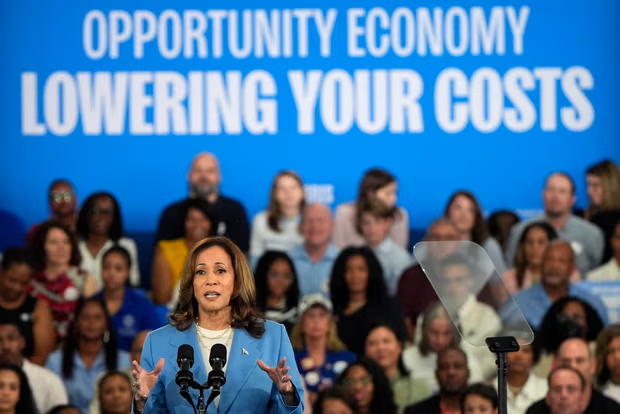
Democratic presidential candidate Kamala Harris has introduced her economic plan aimed at creating what she terms an “opportunity economy,” which focuses on improving the lives of the middle class. Speaking at a rally in Raleigh, North Carolina, Harris outlined a vision where “no child should grow up in poverty” and where hard-working individuals can “retire with dignity” and have the freedom to join unions.
During her speech, Harris emphasized her commitment to reducing bureaucracy and red tape, enforcing stricter regulations on anti-competitive practices within the food industry, and instituting a federal ban on price-gouging, particularly in food, to make living costs more manageable for Americans.
Highlighting recent economic improvements, Harris noted that inflation has dropped below 3% for the first time since early 2021, although she criticized the persistently high prices and record profits being reported by major food companies. “While many grocery chains pass along these savings, others still aren’t,” Harris commented, underscoring the need for vigilance and action against companies that do not play by the rules.
With the Democratic national convention approaching next week in Chicago, Harris’s economic agenda is anticipated to be a central topic. Her visit to North Carolina, a state narrowly won by Barack Obama in 2008 and seen as a battleground in the 2024 election, underscores its strategic importance. Harris revealed that she had visited the state 16 times during her tenure as vice-president.
Reflecting on her personal experiences, Harris shared anecdotes from her youth working at McDonald’s and her tenure as California’s attorney general where she tackled issues like high drug prices and predatory lending. She detailed her plans to address the housing market’s challenges, including a promise to end America’s housing shortage by facilitating the construction of three million new affordable homes and rentals by the end of her first term.
In addition to housing, Harris is pushing for substantial tax relief measures, including a return of the earned income tax credit and child tax credit, along with a new $6,000 tax credit for new parents. She contrasted her economic strategies with those of Donald Trump, particularly criticizing his support for the FairTax proposal which she argued would lead to higher taxes for average Americans while providing substantial cuts to billionaires and corporations.
In her campaign efforts, Harris is clearly positioning herself as a champion of the middle-class, aiming to differentiate her policies sharply from those of her Republican counterpart as the race heats up heading into the election season.
A news by Alisha Pradhan, General Secretary, HerNet Foundation