
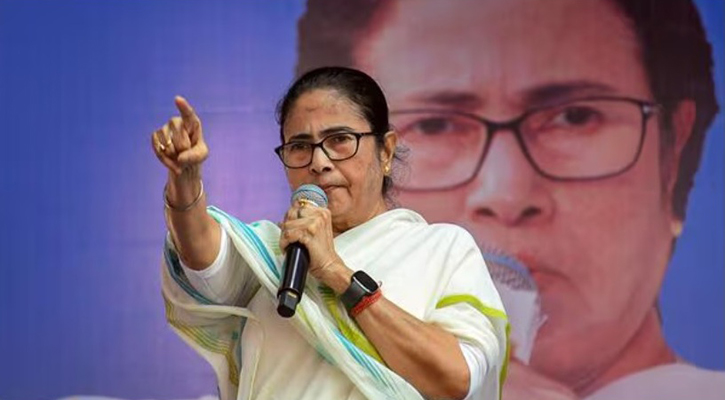
Kolkata: The ongoing student movement in Bangladesh demanding quota reforms has become a point of contention recently. West Bengal’s Chief Minister, Mamata Banerjee, found herself in the midst of controversy over comments she made about the situation. Now, she has reignited the issue with a firm response.
In a recent visit to Delhi on Friday (26th July), Mamata addressed the issue head-on. Her comments have sparked a stern reaction from India’s Ministry of External Affairs, to which Mamata replied decisively.
During a press interaction in Delhi, the Chief Minister expressed her extensive knowledge and experience in federal structures, asserting her expertise in foreign policy. “I have served as a Member of Parliament seven times and was a Central Minister twice. I understand foreign policy better than most, and there is no need for anyone to teach me,” she stated emphatically.
Mamata emphasized that her comments were made considering humanitarian aspects, suggesting that it is Delhi, not her, that needs to learn and adapt to changing systems. She highlighted her extensive experience in governance and policy-making, which, she believes, equips her well to handle foreign policy matters without external guidance.
Her response came after the Ministry of External Affairs took issue with her earlier statements made during a function on 21st July, where she said, “I cannot speak on Bangladesh. However, if someone seeks refuge in West Bengal from that country at this moment, I will not turn them away.”
The Chief Minister clarified that she could not discuss the matter further as Bangladesh is an independent country and any diplomatic comments should come from the Indian government.
This statement from Mamata led to confusion and was promptly criticized by BJP leader and former Union Minister Ravi Shankar Prasad. Even the Governor of West Bengal, CV Ananda Bose, called for a report on her remarks.
The Bangladesh government also reacted sharply to her comments, prompting the Indian Ministry of External Affairs to reiterate during a briefing that the Central Government exclusively holds the power to decide on foreign matters related to neighboring countries, as stipulated by the Indian Constitution.
Mamata’s assertive stance in Delhi highlights her insistence on her understanding of complex international matters, particularly concerning neighboring Bangladesh, and her refusal to be schooled on foreign policy by the Central Government.
A news by Alisha Pradhan, General Secretary, HerNet Foundation