
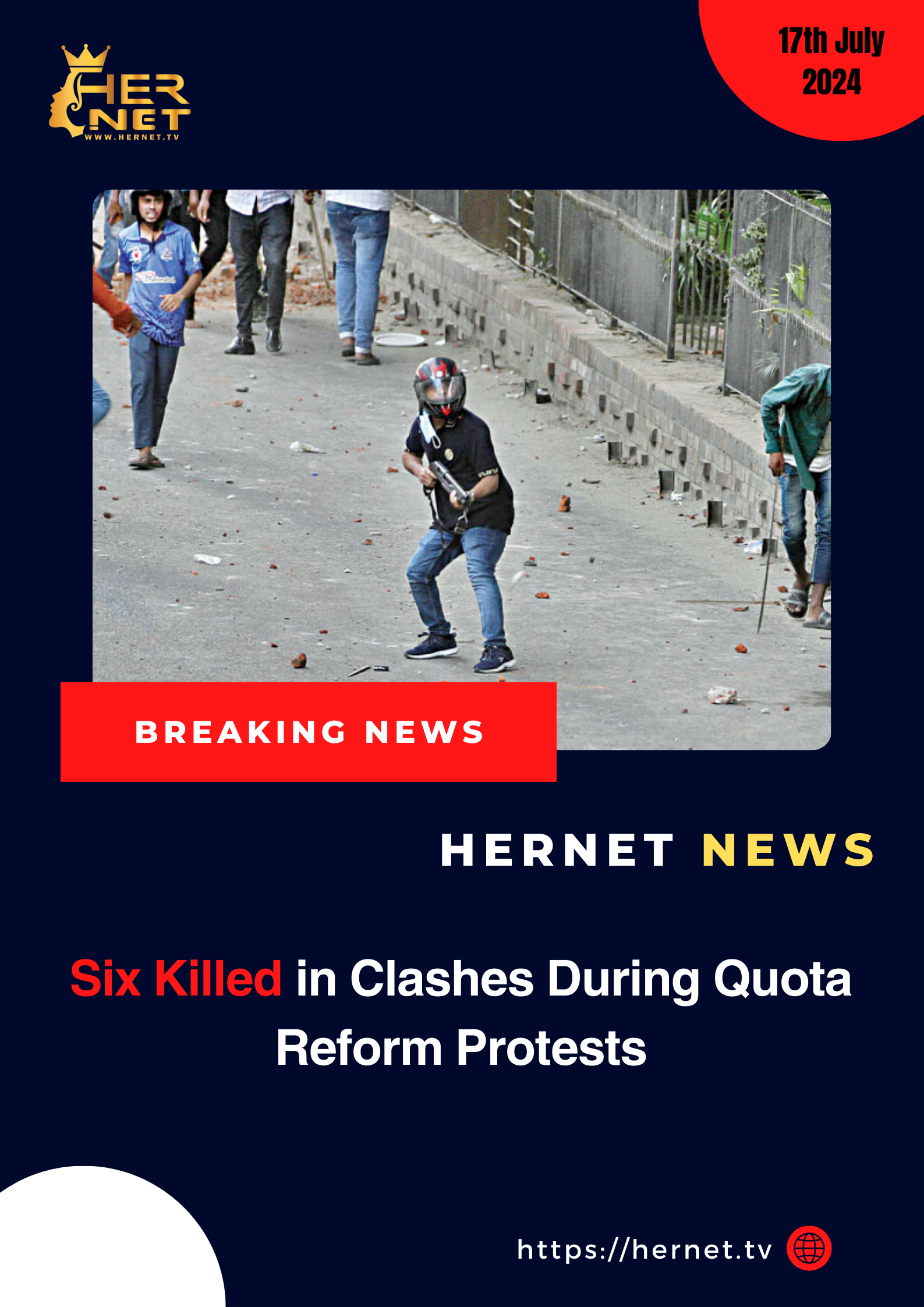
During the ongoing protests demanding quota reforms in government jobs across Bangladesh, violent clashes have erupted between students, police, and members of the youth wings of political parties. According to reports from bureau offices and correspondents, these confrontations have resulted in six fatalities.
The clashes, which took place on Tuesday afternoon, July 16, 2024, led to two deaths in Dhaka, three in Chittagong, and one in Rangpur. Among the deceased were two students, a pedestrian, a hawker, while the identities of the remaining two are yet to be confirmed.
In response to the escalating violence, the Border Guard Bangladesh (BGB) has been deployed in Dhaka, Chittagong, Rangpur, Bogura, and Rajshahi to restore order and ensure public safety.
Chittagong: The conflict began around 3 PM in areas like Muradpur and Sholoshahar, leading to the deaths of three individuals. Among them were Faruk, a furniture shop worker from Comilla, and Wasim Akram, a third-year sociology student at Chittagong College. The third individual, Faisal Ahmed Shanta, remains unidentified. All three bodies are currently held at the Chittagong Medical College Hospital (COMEC). The hospital’s director reported that all three victims were gunshot victims.
Dhaka: Clashes in the Dhaka College and Science Lab areas resulted in one unidentified young man being declared dead at the hospital. According to police, the youth was involved in a physical altercation before being taken to Dhaka Medical College Hospital, where he succumbed to his injuries.
Rangpur: In Rangpur, a student named Abu Said from Begum Rokeya University was killed during a clash with police around 2:30 PM. Said, a student of the English department, was part of a protest march from the Lalbag area to the university campus when the confrontation occurred. Witnesses reported that the police fired rubber bullets during the clash, which led to Said’s fatal injury.
The deployment of BGB across major cities is a measure to manage the law and order situation as the quota reform protests, initially started by university students, have seen participation from various educational institutions, escalating tensions across the country.