
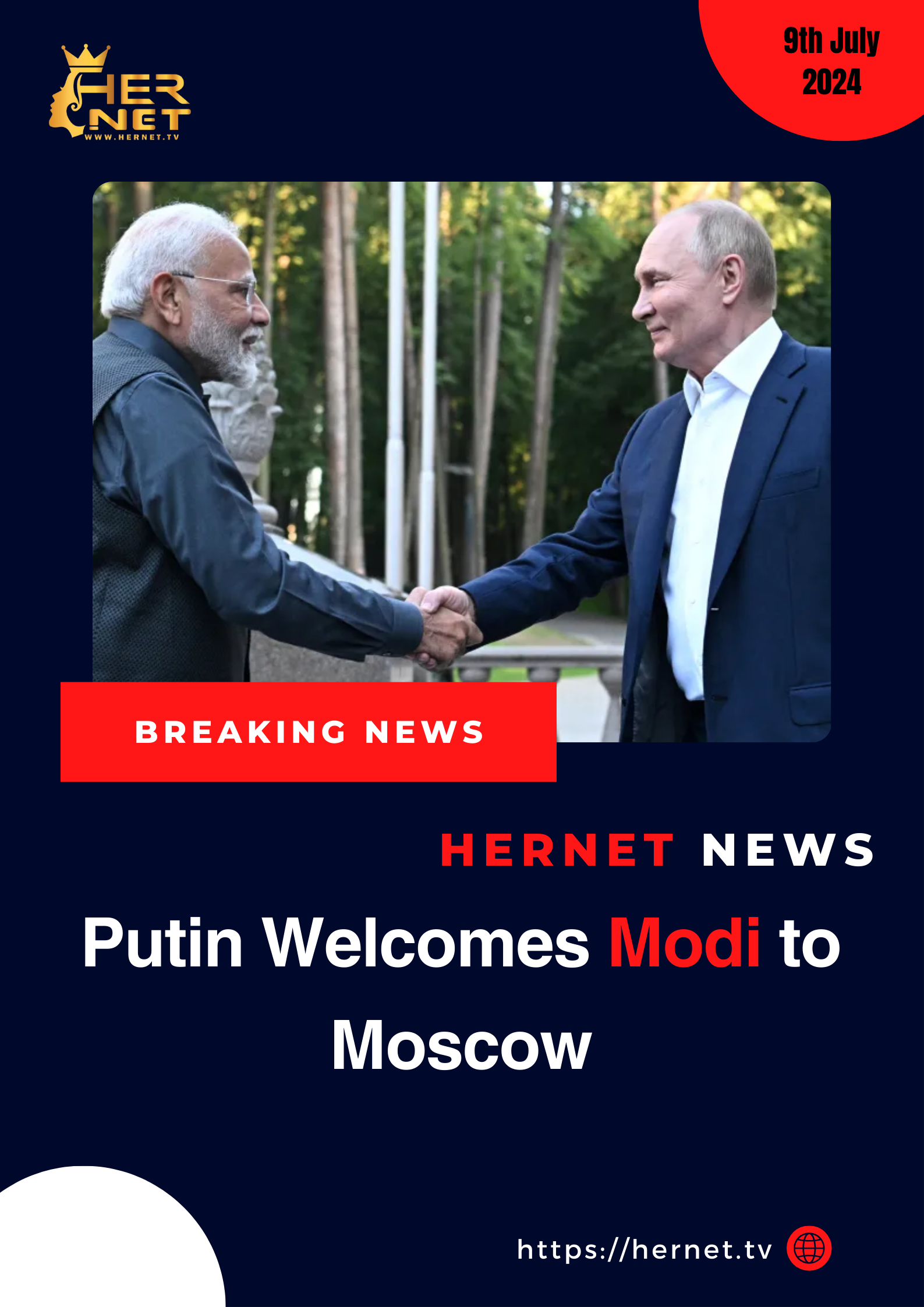
In a significant diplomatic gesture, Russian President Vladimir Putin warmly received Indian Prime Minister Narendra Modi at his Novo-Ogaryovo residence near Moscow on July 8, 2024. This marks Modi’s first visit to Russia since the onset of the Ukraine conflict, highlighting the delicate balance India seeks to maintain in its international relations.
The meeting underscored the deep-rooted ties between Russia and India, with both leaders expressing a strong desire to further enhance their “Special and Privileged Strategic Partnership.” Modi’s visit is particularly noteworthy as it comes at a time when global dynamics are increasingly complex, with India managing its relationships with both traditional allies like Russia and newer partners in the West.
During his visit, Modi is set to engage in formal discussions at the Kremlin, focusing on strengthening bilateral cooperation across various sectors. Russia, a crucial supplier of energy and military equipment to India, continues to play a significant role in India’s strategic calculations, especially given the geopolitical shifts prompted by the Ukrainian conflict and Russia’s growing proximity to China.
The leaders’ interaction also included informal discussions, where they addressed key issues in a “comfortable, cozy setting,” as described by Putin. This informal dialogue underscores the personal rapport between the two leaders, facilitating open and frank discussions on matters of mutual interest.
Moreover, Modi’s visit is significant in the context of the ongoing tensions along the China-India border, which adds a layer of complexity to India’s foreign policy strategy. With India part of the Quad alliance, aimed at countering Chinese influence in the Asia-Pacific, Modi’s navigation of the relationship with Russia reflects a nuanced approach to diplomacy, balancing between traditional alliances and emerging global partnerships.
The outcomes of this visit are expected to have far-reaching implications, not only for India-Russia relations but also for the broader geopolitical landscape involving the West, China, and other global powers. The discussions are likely to cover defense cooperation, trade, energy, and more, setting the stage for future engagements and potentially reshaping regional dynamics in a significant way.