
Delivering three headline climate pledges—tripling global renewables, doubling energy efficiency by 2030, and slashing methane—would shave 0.9°C off projected temperature rise this century and put the world within striking distance of the Paris Agreement’s 1.5°C goal, according to new analysis unveiled at the Cop30 summit.
The assessment, by the Climate Action Tracker coalition (including Climate Analytics and NewClimate Institute), estimates that achieving these measures across G20 economies alone would cut emissions by 18 billion tonnes in 2035, reducing the rate of warming by one-third in the next decade and by half by 2040. “If governments achieve this by 2035, it would be a gamechanger,” said Bill Hare, CEO of Climate Analytics, who said the pathway would lower end-century warming from about 2.6°C to ~1.7°C.
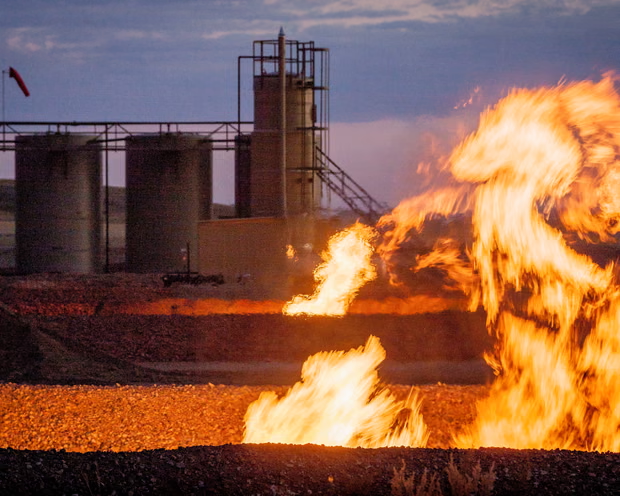
The three targets are not new: countries agreed at Cop28 (Dubai, 2023) to triple renewable capacity and double efficiency improvements by 2030, while more than 160 governments signed the Global Methane Pledge to cut emissions 30% by 2030 from 2020 levels. Implementation, however, remains uneven. Renewable investment surged to more than $2 trillion last year—over twice fossil fuel spending—with China racing ahead and India hitting some goals early. But methane emissions continue to rise amid underreporting and slow action to curb leaks from oil, gas and abandoned coal sites in major emitters, including Russia, China and the U.S.
At Cop30, governments are grappling with a response to current national plans that still chart a course to roughly 2.5°C. A fresh draft decision from the Brazilian presidency is expected to address the promised “transition away from fossil fuels,” a phrase secured in last year’s global stocktake but fiercely opposed by petro-states. Niklas Höhne of NewClimate Institute argued that delivering on renewables, efficiency and methane “would actually trigger the transition away from fossil fuels,” with numbers showing steep declines in fossil use by the mid-2030s.
Hare framed the challenge as political rather than technical: governments must resist fossil-fuel industry pressure and wealthier nations must accelerate finance for those that need it. He added that halting deforestation—critical to preserving carbon sinks—must complement the energy and methane push.
With the Cop30 theme pivoting to implementation, the analysis offers a rare dose of optimism: the fastest wins on clean power, smarter energy use and methane could decisively bend the warming curve—if countries now move from pledges on paper to results on the ground.