
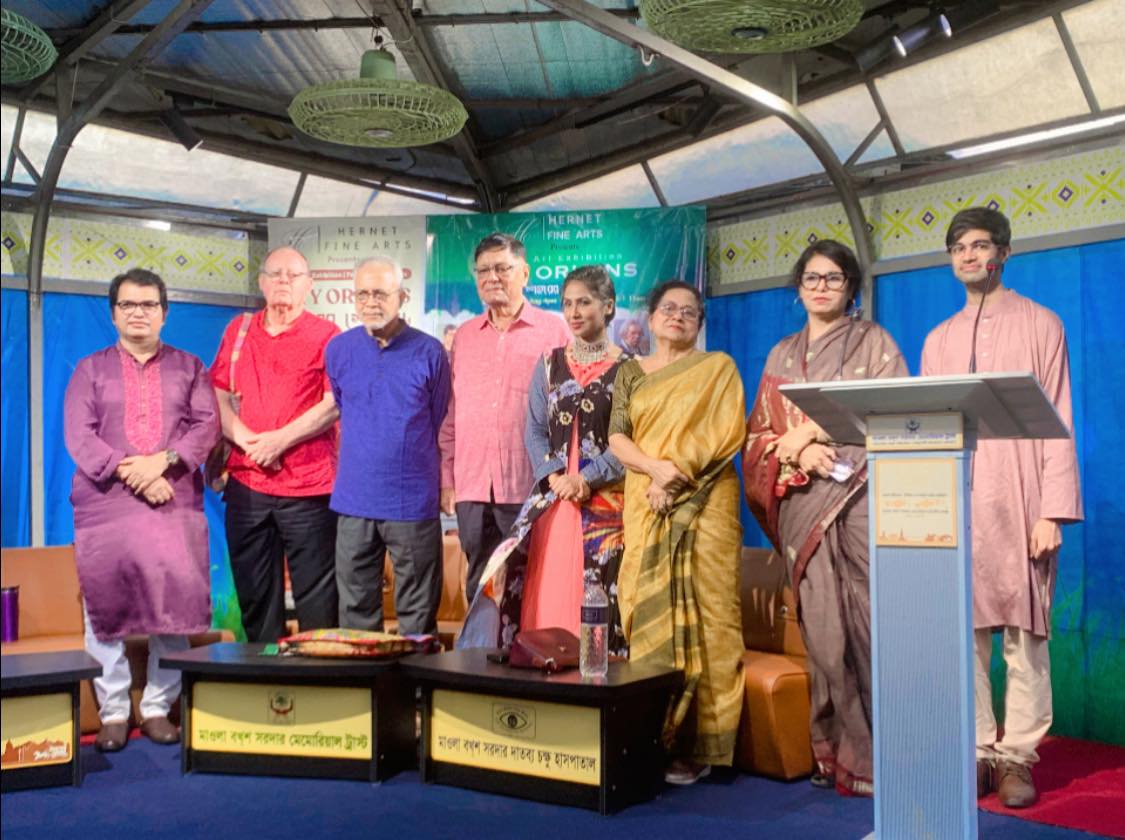
The historic halls of Dhaka Kendro, a cultural heritage site at the heart of Old Dhaka, came alive this evening with the opening of City Origins, an art exhibition dedicated to exploring the essence of Dhaka’s history, memory, and identity through creative expression.
The exhibition was inaugurated in the presence of distinguished guests, artists, diplomats, academics, and cultural figures, making the event a powerful confluence of art, heritage, and dialogue.
The exhibition is curated by Ms. Alisha Pradhan, Founder and General Secretary of the HerNet Foundation and Chief Curator of HerNet Fine Arts. Over the last six years, Ms. Pradhan has made invaluable contributions to social development, particularly in empowering women and children, advancing the Sustainable Development Goals (SDGs), and engaging in policy advocacy. With City Origins, she furthers her pursuit of globalizing Bangladeshi art and culture. Under her leadership, HerNet Fine Arts has organized numerous initiatives that have enriched Bangladesh’s art landscape, bridging advocacy, creativity, and community empowerment.
The exhibition’s Advisor, Ms. Dilruba Latif, offered her reflections on the artistic journey that culminated in City Origins, underscoring its importance in connecting contemporary art to the cultural roots of Dhaka.
Featured artists Khaja Kaium and Sultanul Islam shared their inspirations, offering personal insights into how the city of Dhaka continues to shape their creative expression.
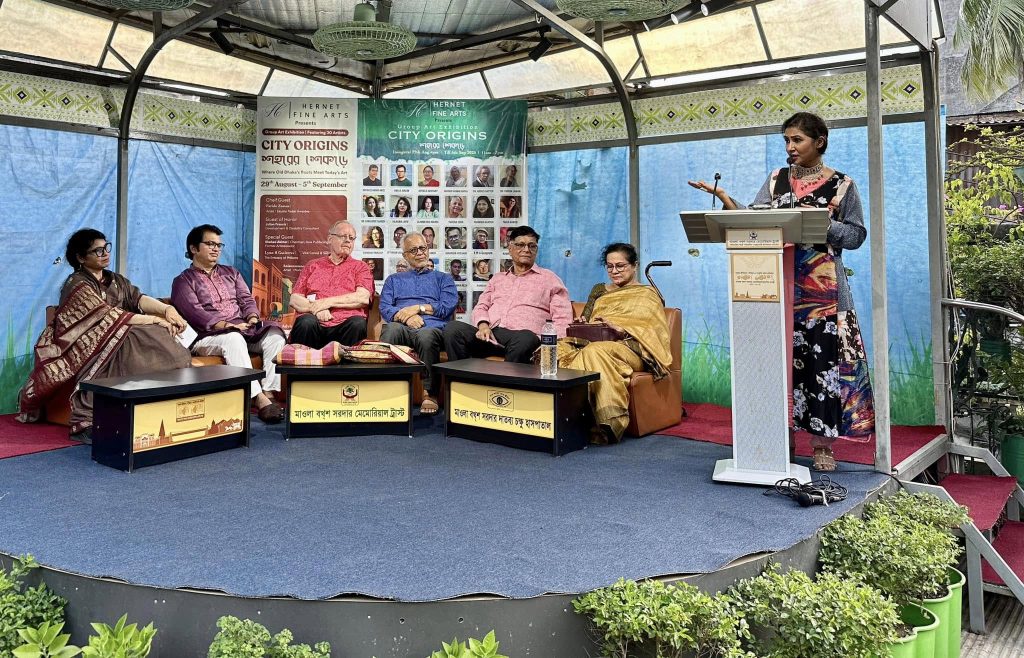
Adding an academic dimension to the evening, Professor Anisuzzaman Anis of Dhaka University’s Institute of Fine Arts delivered a thoughtful address on the evolving relationship between art, heritage, and the lived history of the city.
Mr. Julian Francis, Development and Disability Consultant—honoured with the Friends of Liberation War Honour and Citizenship of Bangladesh by the Government of Bangladesh, and awarded the OBE by the British Government for his services to development—spoke of the enduring power of art in promoting inclusivity, resilience, and social development.
The exhibition proudly showcased artworks contributed by a vibrant and diverse group of artists, reflecting the richness of contemporary Bangladeshi creativity. Participating artists include:
Abdul Halim, Abdus Satter, Afroza Akhtery, Akhinur Jhorna, Dilruba Latif, Elham Huq, Fahmida Khatun, Faiza Ahmed, Fareha Zeba, Farida Zaman, Gonshai Pahlavi, Iftikhar Ahmed, Jahangir Hossain, Jamal Ahmed, Kamal Uddin, K M A Quayyum, Mohammad Eunus, Naima Haque, Priti Ali, Rania Alam, Rezauzzaman, Sanjib Saha, Shibnath Biswas, Soikat Hossain, Subhasree Gunjan, Sultanul Islam, Sushanta Kumar Adhikary, Sumon Halder.
Their collective contributions created a vibrant dialogue between tradition and modernity, capturing the spirit, history, and evolving culture of Dhaka.
Ambassador Shahed Akhtar, former Ambassador of Bangladesh and Chairman of Asia House, addressed the gathering with reflections on the intersection of diplomacy, literature, and cultural identity, highlighting the need to support spaces where creativity and dialogue meet.

The event’s Chief Guest, Professor Farida Zaman, a leading figure in the arts, delivered the keynote address. She praised the exhibition for its role in reconnecting people with the origins of Dhaka while also creating space for contemporary interpretations. Her words set an inspiring tone, reaffirming the critical role of art in shaping cultural consciousness.
The evening concluded with expressions of gratitude to all participants and an open invitation for guests to immerse themselves in the works on display. City Origins at Dhaka Kendro stands as both an artistic and cultural milestone—celebrating not just the heritage of Old Dhaka but also the power of art to transcend time, borders, and generations.