
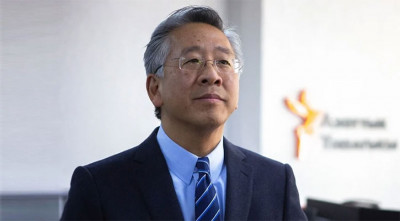
A high-level delegation from the United States, led by Donald Lu, Assistant Secretary of State for South and Central Asian Affairs, is set to meet Bangladesh’s interim Chief Advisor Dr. Muhammad Yunus. This will mark the first official U.S. visit since Dr. Yunus assumed office in the wake of political upheaval in Bangladesh following the fall of Sheikh Hasina’s government on August 5, 2024.
The meeting is scheduled to take place at the State Guest House, Jamuna, at 10:55 AM on Sunday. The U.S. delegation’s visit is of considerable importance as it signifies renewed efforts by the United States to support Bangladesh during its transitional period, focusing on economic stability, political reform, and bilateral cooperation.
The delegation will include other prominent U.S. officials, such as Brent Neiman, Deputy Under Secretary for International Finance at the U.S. Department of the Treasury, and Lindsay W. Ford, Deputy Assistant Secretary of Defense for South and Southeast Asia. Representatives from USAID, the U.S. Department of Commerce, and the U.S. Treasury Department will also be present.
Prior to his arrival in Dhaka, Donald Lu visited New Delhi, where he attended bilateral defense and foreign ministry meetings, further underscoring the geopolitical significance of his trip to South Asia. U.S. diplomatic sources have highlighted that the evolving situation in Bangladesh has prompted discussions between Washington and New Delhi in recent weeks.
U.S. Engagement in Bangladesh’s Transition
Since Sheikh Hasina’s departure, Bangladesh has seen significant political changes, leading to the formation of an interim government headed by Dr. Yunus. The U.S. delegation’s visit comes at a pivotal moment as both nations aim to strengthen their partnership. The United States is keen to assist Bangladesh in navigating its economic challenges and implementing democratic reforms.
Key areas of focus for this visit include the restoration of financial stability, curbing corruption, and fostering a conducive environment for foreign investment. Reports indicate that the U.S. is particularly interested in working with Bangladesh on issues such as monetary management and repatriating funds that have been illegally transferred abroad.
The United States is also expected to announce a $2 billion technical assistance agreement with USAID, focusing on economic development, in addition to exploring further opportunities for collaboration in the financial and energy sectors. The U.S. is a key partner in Bangladesh’s energy sector, with companies like Chevron and Excelerate Energy contributing significantly to the country’s energy supply.
Strengthening Bangladesh-U.S. Relations
Washington is committed to bolstering economic and political ties with Bangladesh. U.S. diplomatic sources have emphasized the strategic importance of supporting the current transitional government, while also encouraging India to maintain cooperative relations with its eastern neighbor. The U.S. hopes to facilitate meetings between Dr. Yunus and Indian Prime Minister Narendra Modi during the upcoming United Nations General Assembly in New York, fostering continued diplomatic dialogue between the two South Asian nations.
The visit, however, is not only about economic collaboration. The political climate, especially post-Hasina, remains a crucial factor in the dynamics of U.S.-Bangladesh relations. U.S. officials have indicated that while economic assistance remains a priority, political stability in Bangladesh will significantly influence future cooperation between the two countries.
Meetings and Further Discussions
The U.S. delegation will meet with key figures in the interim government, including Foreign Affairs Advisor Md. Tawhid Hossain and Commerce and Finance Advisor Salehuddin Ahmed. They are expected to discuss Bangladesh’s urgent economic needs and explore areas of technical collaboration. Additionally, a meeting is scheduled between Brent Neiman and Bangladesh Bank Governor Ahsan H. Mansur to discuss financial stability and reforms in the banking sector.
While budget support or direct loans from the U.S. are not currently under discussion, the U.S. aims to support Bangladesh through technical assistance, particularly in navigating International Monetary Fund (IMF) and World Bank programs. Washington remains focused on improving Bangladesh’s investment environment and combating financial crimes such as money laundering.
Conclusion
The high-level U.S. visit signifies Washington’s growing interest in supporting Bangladesh during this critical transitional period. With an emphasis on economic cooperation and political reform, the U.S. delegation’s discussions with Bangladesh’s interim government are expected to pave the way for deeper bilateral ties, contributing to regional stability and prosperity.