
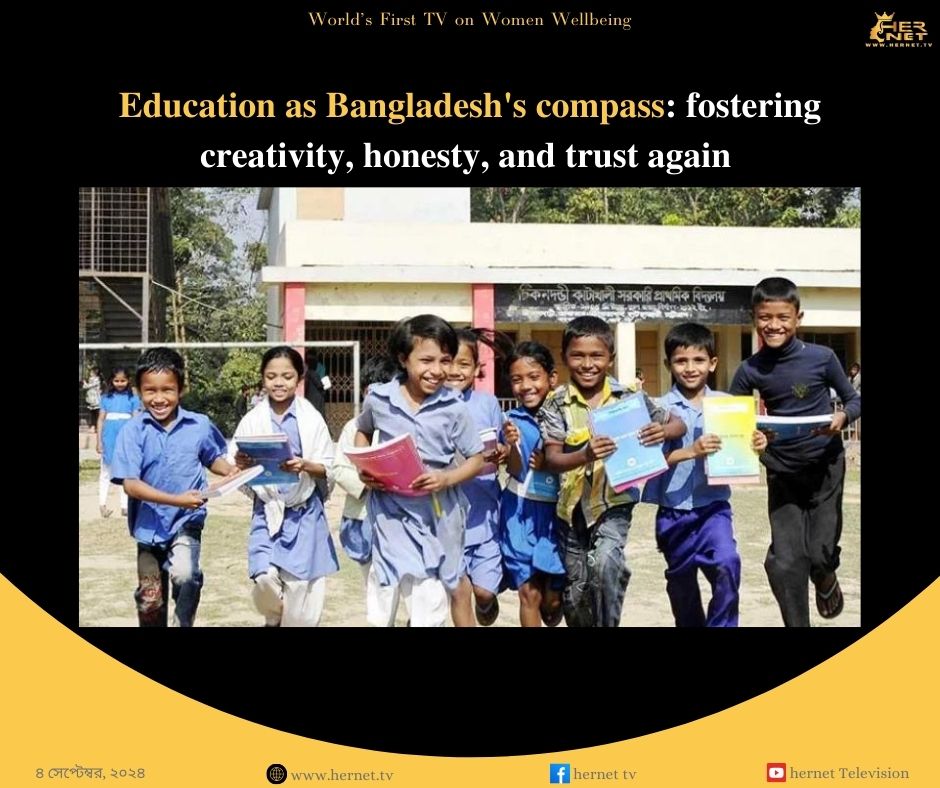
Bangladesh is at a crossroads. The nation, while resilient, is grappling with deep-rooted social maladies: Endemic corruption, widespread poverty, and an ever-growing trust deficit that spans the public and private spheres. These issues are not new, but they have reached a tipping point, threatening the progress Bangladesh has made over the last few decades. The breakdown of trust — between citizens and government, within communities, and even between the education system and the job market — has led to a disillusioned society where cynicism and resignation prevail over hope and possibility.
After the watershed moment of August 5, 2024, when the younger generation rose up to demand change, eventually succeeded in toppling the country’s worst dictator, Bangladesh finds itself in a period of renewed democratic aspiration. This pivotal moment must be met with a clear and strategic vision for the future, and central to this vision is the transformation of the education system. Reforming education is not merely about improving literacy rates or modernizing curricula — it is about restoring trust, fostering integrity, and unleashing the innovative potential of the nation. With the right vision, education can become the catalyst for the national renewal that Bangladesh so desperately needs.
The crisis of trust
To understand why education is so vital, we must first understand the depth of the crisis we face. Corruption is pervasive, reaching into every level of society, from local businesses to national politics. This corruption has created a culture of mistrust, where citizens are skeptical of their leaders and public institutions. According to Transparency International, Bangladesh consistently ranks among the most corrupt countries in the world. For many, corruption is seen not just as a problem, but as a way of life — a necessity for survival in a system that seems to reward dishonesty and punish integrity.
This mistrust extends beyond the realm of politics. In daily life, the bonds of trust that hold communities together have frayed. People are wary of one another, and this wariness breeds division. The education system, once a pillar of national unity, has become disconnected from the realities of the job market. Graduates leave universities ill-prepared for employment, leading to widespread frustration and a sense that the system is failing them.
Perhaps most critically, there is a profound lack of trust between the governed and the government. Citizens feel alienated from their leaders, and this alienation fuels political instability and social unrest. Without trust, it is difficult for any society to function effectively, let alone thrive.
Education as the foundation for a new Bangladesh
Education can mend these fractures. But not just any education — a reimagined system that prioritizes trust, integrity, and innovation. This new vision for education draws on the ideas of global educational thinkers like John Dewey, Paulo Freire, and Maria Montessori, while also addressing the unique challenges and strengths of Bangladeshi society.
At its core, this vision is about rebuilding the foundations of trust. Schools must be places where children learn not only academic skills but also the values of integrity, empathy, and social responsibility. From the earliest stages of education, students should be encouraged to think critically, to question the status quo, and to understand the importance of democratic accountability, their roles as citizens, and the importance of transparency and accountability. These are not just abstract concepts — they are the building blocks of a functioning democracy and a just society.
In this new system, moral education will be as important as academic achievement. Both religious and Western philosophical tradition (Rousseau et al) can guide this focus on moral development of students. Students will be taught the importance of ethical behavior and the long-term consequences of corruption. Through role-playing, simulations, and real-world case studies, they will come to understand how small acts of dishonesty can have far-reaching effects on society as a whole. The goal is to create a new generation of leaders who value integrity over self-interest and who are committed to the public good.
Aligning education with the market and society
One of the most significant challenges facing Bangladesh today is the misalignment between the education system and the needs of the job market. Universities produce thousands of graduates each year, yet many of them struggle to find employment. This disconnect not only undermines the value of higher education but also contributes to the broader sense of disillusionment and frustration.
To address this, the new education policy must focus on practical, skills-based learning that prepares students for the realities of the modern economy. Drawing from famous American educationist John Dewey’s philosophy of experiential learning, universities should partner with industries to create programs that blend academic knowledge with hands-on experience. Internships, apprenticeships, and project-based learning should become the norm, ensuring that students graduate with the skills and knowledge they need to succeed in the job market.
But this alignment should not be limited to economic outcomes. Education must also prepare students to contribute meaningfully to society and governance. Civic education will be reoriented to teach students about their rights and responsibilities as citizens, emphasizing the importance of public service and active participation in democracy. Schools will encourage dialogue between students and local government officials, helping to bridge the gap between the governed and the government.
Higher education institutions will also play a critical role in driving innovation — scientific, social, and political. Universities should be seen as hubs of creativity and problem-solving, where students and faculty work together to address the pressing challenges facing the nation. Whether through research in renewable energy, social entrepreneurship, or political reform, higher education must be at the forefront of national progress.
It is time to change the world, starting with our schools
Addressing poverty through empowerment
Poverty remains one of the most significant barriers to social cohesion in Bangladesh. Education can be a powerful tool for breaking the cycle of poverty, but only if it is accessible to all. The new education policy must prioritize equity, ensuring that students from marginalized communities have the resources and support they need to succeed.
Special scholarship programs will be introduced to support students from low-income families, and vocational training programs will be expanded to provide practical skills that lead directly to employment. Education should empower individuals to lift themselves out of poverty by equipping them with the knowledge and skills they need to succeed in a rapidly changing economy.
Moreover, education must address the social and structural factors that perpetuate poverty. Drawing from Paulo Freire’s pedagogy of the oppressed, schools will empower students to critically examine the systems that have marginalized them and to advocate for change. By fostering a sense of agency and empowerment, education can help break down the barriers that keep so many trapped in poverty.
Leveraging Bangladesh’s strengths
While Bangladesh faces many challenges, it also has significant strengths that can be leveraged to support educational reform. One of the most important of these strengths is resilience. Time and again, Bangladeshis have demonstrated their ability to overcome adversity, whether in the face of natural disasters, economic crises, or political turmoil. This resilience is a testament to the strength of the nation’s social fabric, and education can help to reinforce and build upon this foundation.
Bangladesh’s relatively homogenous society also presents an opportunity. Unlike many other nations, Bangladesh has few ethnic, religious, or social fault lines. This homogeneity can be a source of national unity, but only if it is nurtured and maintained through education. Schools must promote inclusivity and social harmony, ensuring that all citizens feel valued and respected, regardless of their background.
Intercultural and interfaith dialogue programs will be incorporated into the curriculum, allowing students to engage with diverse perspectives and prevent the rise of divisive ideologies. Education will not only celebrate Bangladesh’s cultural heritage but also promote a forward-looking vision of national unity and social cohesion.
The path forward
Bangladesh stands at a critical juncture. The choices made today will determine the future of the nation for generations to come. Education holds the key to that future. By reimagining the education system as a foundation for trust, integrity, and innovation, Bangladesh can address its deep-rooted social maladies and build a more just, prosperous, and united society.
But this vision will require bold leadership and sustained commitment. Reforming the education system is not a quick fix — it is a long-term investment in the nation’s future. It will require collaboration between the government, educators, private sector leaders, and civil society. And most importantly, it will require a recognition that education is not just a tool for individual advancement, but a cornerstone of national progress.
The time to act is now. Bangladesh has the potential to be a leader in South Asia, not just in terms of economic growth, but in terms of social cohesion, innovation, and democratic governance. Education can be the catalyst for that transformation, but only if we are willing to rethink and reshape it to meet the needs of the future.
In the words of Paulo Freire, “Education does not change the world. Education changes people. People change the world.” It is time to change the world, starting with our schools.